Basement waterproofing in Richmond Hill solves a problem many homeowners discover after a spring thaw or a summer storm: water on the basement floor, a damp smell or a stain creeping up the wall. The town spans clay soils in the south and the sandy, water-rich ground of the Oak Ridges Moraine in the north, and it has houses from the 1950s in Richvale alongside 2000s homes in Jefferson and Oak Ridges. Why water gets in, and the best way to stop it, depends on both the ground and the house.
TGV Construction Group Inc. is a licensed and insured contractor that has completed more than 300 projects across the GTA and Ontario since 2017, including basement repairs, waterproofing and finishing. Our head office in Concord is a short drive away.
Why basement waterproofing in Richmond Hill matters
A wet basement is more than an inconvenience. Water damages finishes and stored belongings, encourages mould, and over time can weaken a foundation. Insurance companies also ask about water history, and repeated claims can affect coverage. Fixing the cause, rather than drying out after each storm, protects the house and the people living in it.
The ground in Richmond Hill plays a big part. In the south, heavy clay drains slowly and holds water against the foundation after rain. In the north, near the moraine, the groundwater can sit close to the basement floor, especially in spring. Both conditions put pressure on foundation walls and floors.
How water gets in
Cracks. Poured concrete walls crack as they cure and as the house settles. Most cracks are harmless structurally but can let water through.
The floor-wall joint. Water under pressure can push up through the joint between the floor slab and the wall.
Failed damp-proofing. Older homes often have a thin tar coating on the outside of the foundation that has broken down over decades.
Grading and downspouts. Ground that slopes toward the house, or downspouts that empty next to the wall, send water straight to the foundation.
Window wells. Wells without drains or covers fill with water and leak through the window.
Sewer backup. During heavy storms, municipal sewers can back up into the basement through floor drains if there is no backwater valve.
What to do, in order
- Find where the water comes in. Note when it happens (after rain, during snowmelt, all the time) and where it appears (a crack, the floor joint, a window well, a pipe).
- Check the outside first. Look at downspouts, grading, window wells and the driveway slope. Many leaks start here and are the cheapest to fix.
- Protect your belongings. Move items off the floor, run a dehumidifier and remove wet carpet or drywall to stop mould.
- Get a professional inspection. A contractor can see crack patterns, test the drainage and tell you whether the problem is local or around the whole house.
- Choose the right repair. Crack injection for single cracks, interior drainage for widespread seepage, exterior membrane for the most complete protection.
- Add backup protection. A sump pump with a battery backup and a backwater valve protect against heavy storms and sewer backup.
- Fix the finishes last. Only rebuild walls and floors once the basement has stayed dry through a few heavy rains.
The main repair options
Crack injection. For a single crack in a poured concrete wall, polyurethane or epoxy injection from the inside seals it. It is the least disruptive repair. Our article on foundation crack repair explains how it works.
Interior drainage. A channel is cut along the inside of the foundation walls, a drain pipe is laid in gravel and connected to a sump pit, and the floor is restored. Water that reaches the wall is collected and pumped away. It avoids digging up landscaping and driveways. See interior basement waterproofing for more detail.
Exterior waterproofing. The soil is excavated down to the footing, the wall is cleaned and repaired, a waterproof membrane and drainage board are applied, and new weeping tile is installed. It stops water before it reaches the wall and is the most complete solution, especially for older homes with failed damp-proofing.
Grading and drainage outside. Re-sloping soil, extending downspouts and adding window well drains and covers are often the first and least expensive steps.
Sump pump and backwater valve. A sump pump removes water collected by the drainage system. A backwater valve on the main drain stops sewer water from flowing back into the house. Our guide to backwater valves and sump pumps covers both.
Before you finish the basement
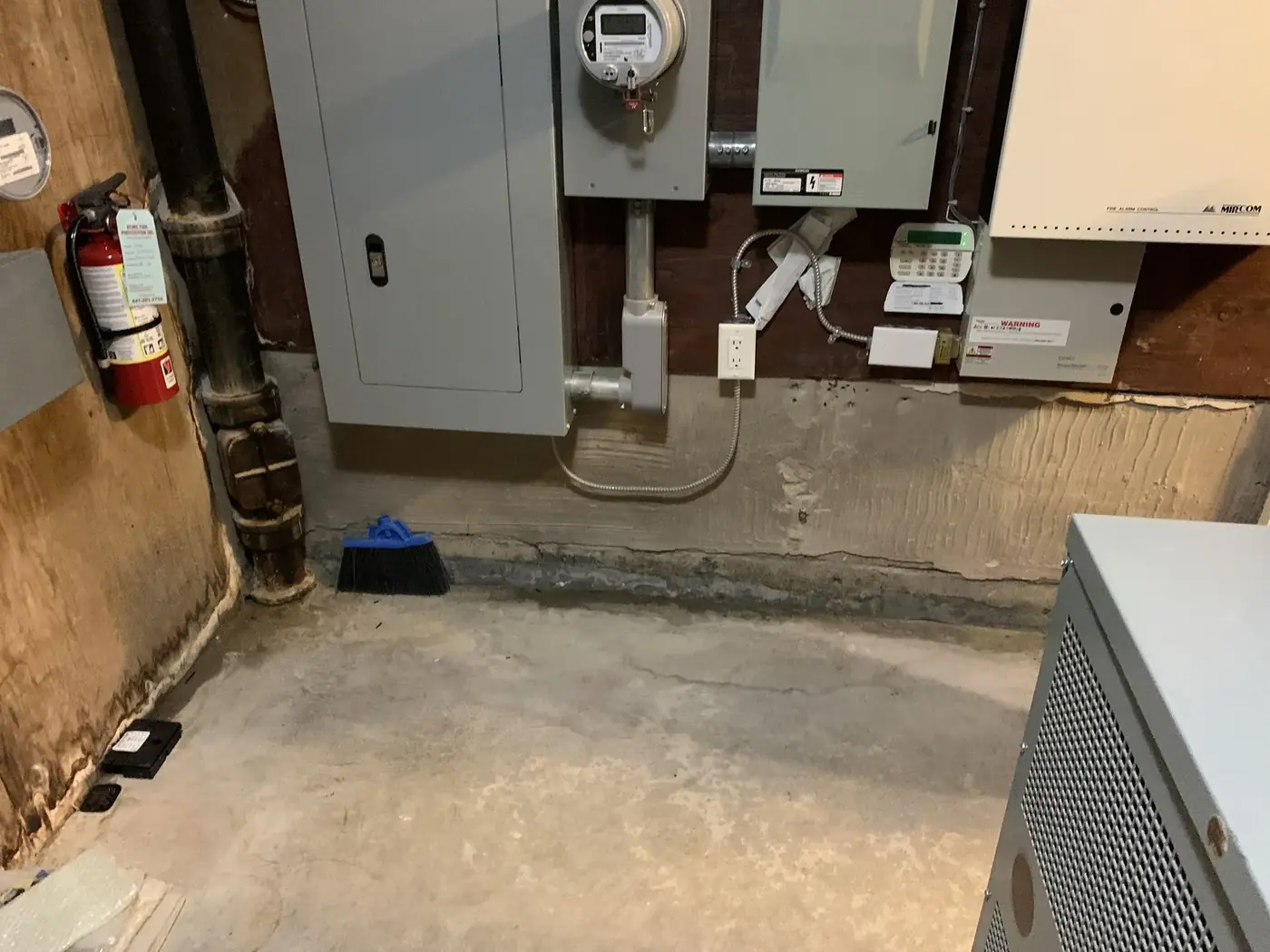
If you plan to finish your basement, waterproof it first. Once drywall, flooring and a bathroom are installed, every repair means removing and replacing finishes. A basement that has stayed dry through at least one spring thaw and a few heavy rains is ready for finishing. Insulating the walls with rigid foam against the concrete and using a moisture-tolerant floor, such as vinyl plank over an insulated subfloor, add another layer of protection.
Check with the City of Richmond Hill whether any program or permit applies to work such as a backwater valve or a new sump connection. Rules change from time to time, and a quick call before you start can save trouble later.
Signs your basement needs attention
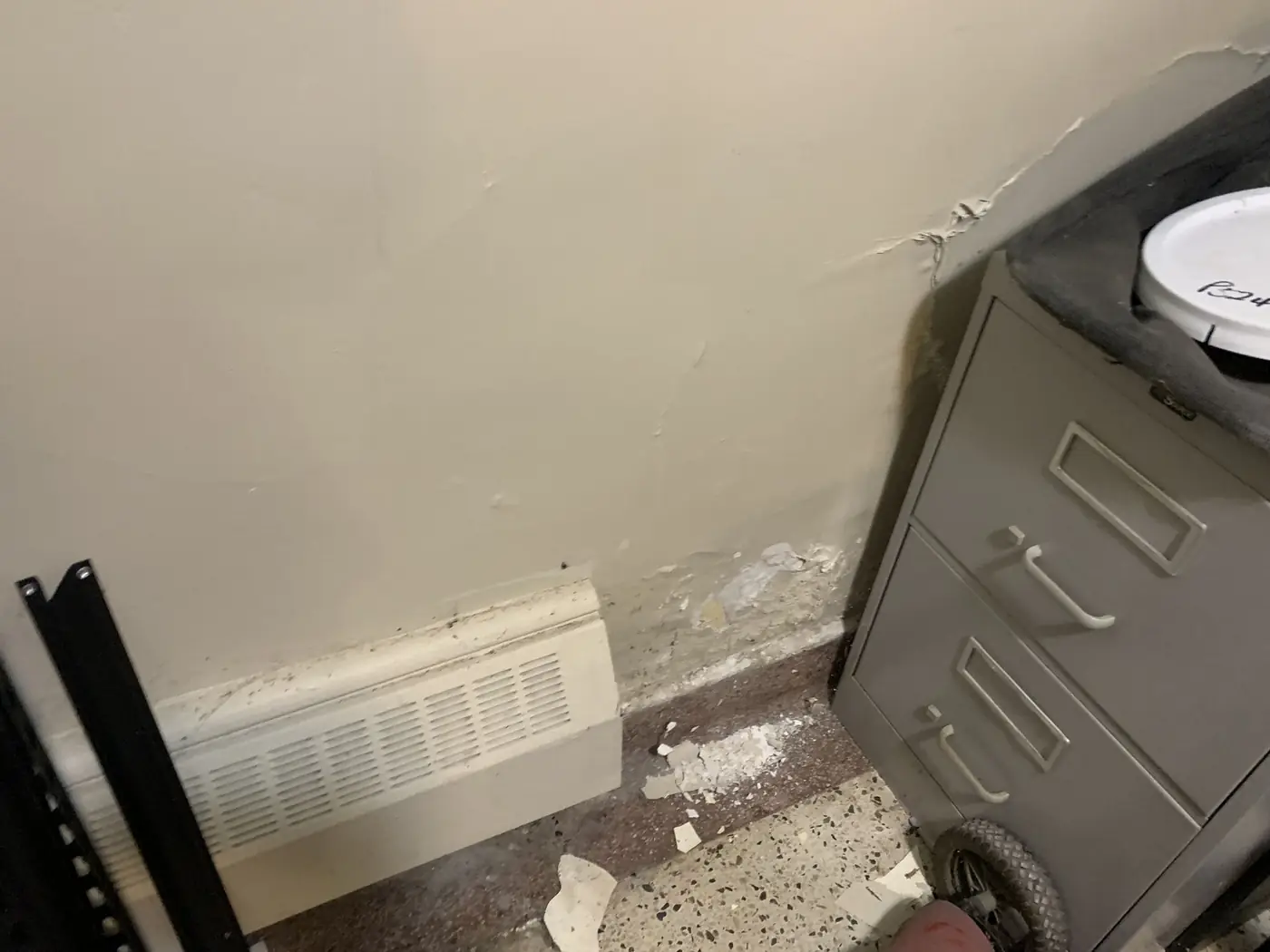
Not every problem shows up as a puddle. White, chalky deposits on concrete walls mean water has passed through and evaporated. Peeling paint, rust on the bottom of metal shelving, warped baseboards and a musty smell that returns after cleaning all point to moisture. A hygrometer showing indoor humidity above sixty per cent in the basement for long periods is another warning. Catching these signs early usually means a smaller, cheaper repair.
A typical Richmond Hill job
A 1980s house near Bayview Avenue gets water along one basement wall every spring. Outside, a downspout empties next to the foundation and the soil slopes toward the house. Inside, there is a vertical crack in the poured wall. The fix is to extend the downspout, regrade the soil, inject the crack from inside and add a window well cover. The following spring, the basement stays dry, and the owners go ahead with finishing it.
Basement waterproofing in Richmond Hill: frequently asked questions
Why do basements in Richmond Hill leak?
Common causes are cracks in the foundation, failed exterior damp-proofing on older homes, poor lot grading, downspouts draining next to the wall, blocked weeping tiles and, in some areas near the Oak Ridges Moraine, a high water table.
Is interior or exterior waterproofing better?
Exterior waterproofing stops water at the outside of the wall and is the most complete fix. Interior drainage manages water that gets in and directs it to a sump pump, with less digging outside. The right choice depends on the house, the yard and the cause of the leak.
Do I need a sump pump?
If the house has interior drainage, or the water table is high, yes. A battery backup keeps it running during power cuts, which often happen in the same storms that cause flooding.
Should I waterproof before finishing my basement?
Yes. Waterproofing is far easier and cheaper before walls, flooring and a bathroom go in, and it protects that investment.
Can a single crack be fixed without digging?
Often, yes. Many single vertical cracks in poured concrete can be sealed from inside with injection. Wider cracks, or cracks in block walls, may need exterior work.
Get your basement checked
We look at your basement inside and out, explain what is causing the water and recommend the repair that fits your house. You receive a written quote with a clear scope before any work starts. If water is coming in right now, see our water damage restoration services.
Phone (365) 363-6995, email estimating@tgvconstructiongroup.ca, or tell us about your basement on the Get a Quote page.
Related reading: basement waterproofing in Markham, basement waterproofing in Vaughan and what to do after a flooded basement.