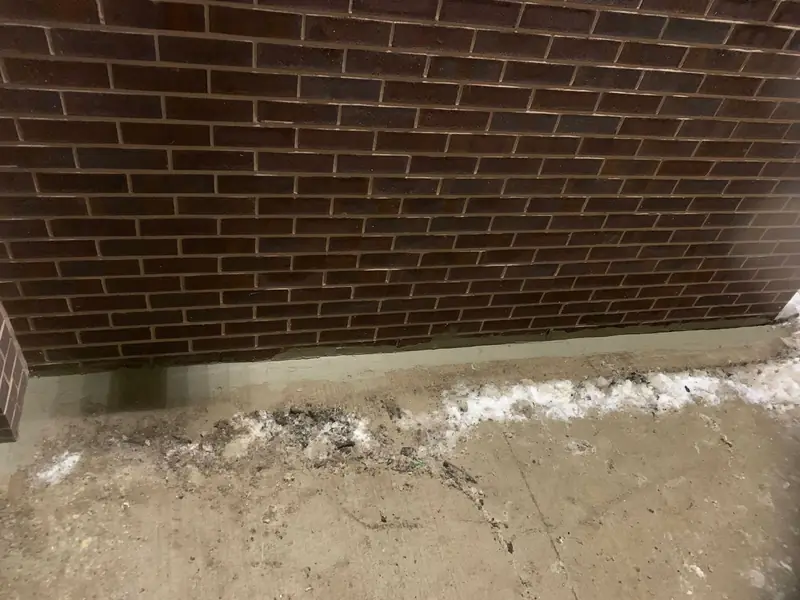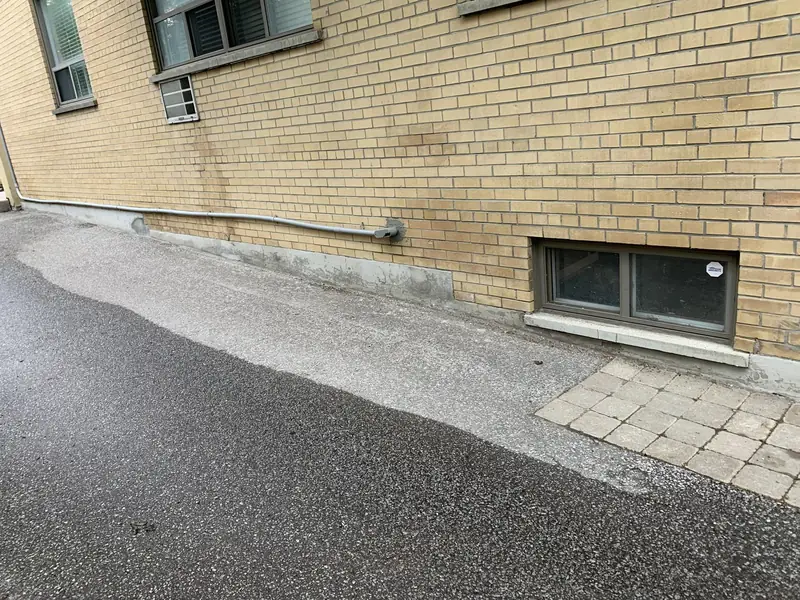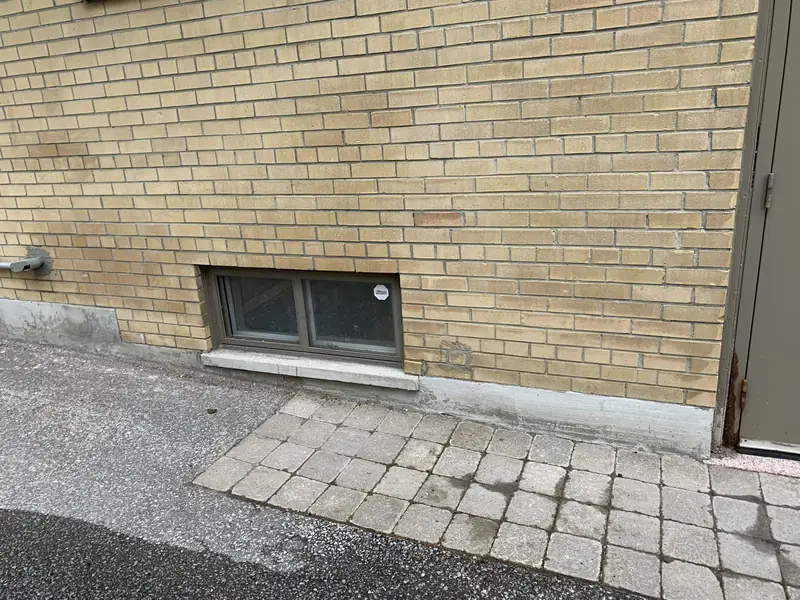
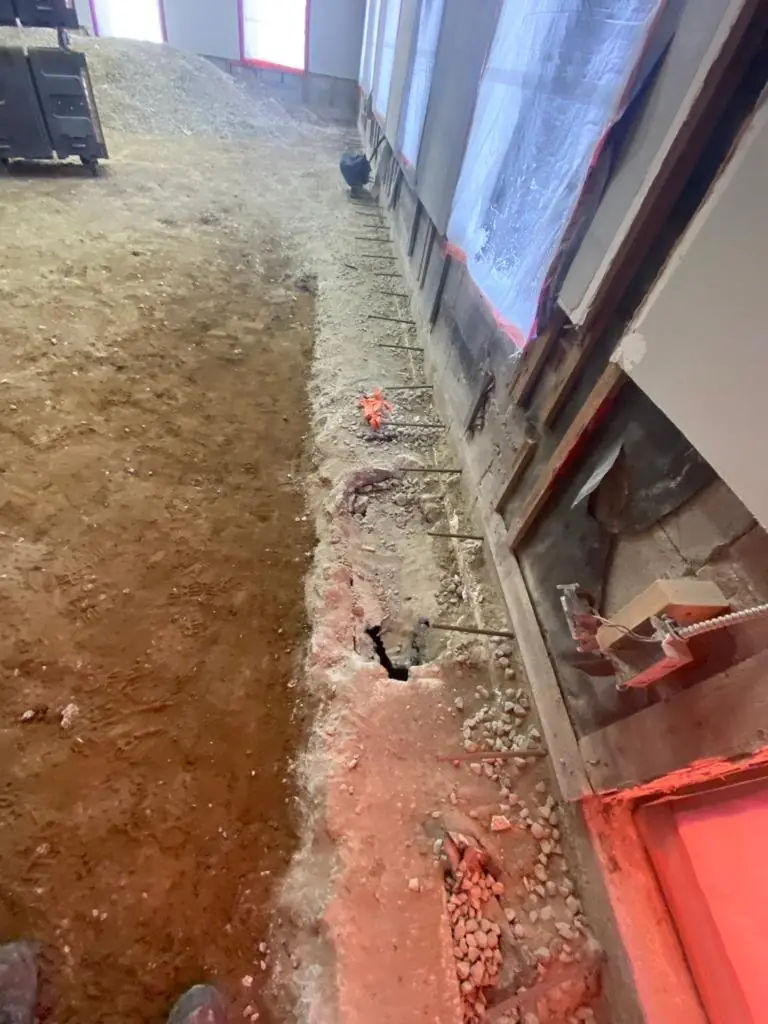
Basement waterproofing in Vaughan is often about newer houses, and owners are surprised that a home from the 1990s or 2010s leaks at all. Poured concrete foundations are strong, but they have weak points: holes left by the form ties, shrinkage cracks at window corners, openings for pipes and cables, and the joint where the wall meets the floor. Add backfill that settles over the years and window wells that silt up, and a basement in Maple or Vellore Village can take water in a heavy rain just like a house sixty years older.
We are based in Concord, inside Vaughan, and TGV Construction Group Inc. has completed more than 300 projects across the GTA and Ontario since 2017. For finishing work after the repair, see the Vaughan basement renovation guide; if water is already on the floor, our water damage restoration crew comes first.
Where newer Vaughan basements take water
Tie-rod holes. The steel ties that held the concrete forms leave small holes across the wall. They are sealed at construction; years later, some of those seals fail and each hole becomes a small, steady leak in a neat row.
Window corners. Concrete shrinks as it cures, and the corners of a window opening are where it cracks. Many Vaughan basements have large windows for light, which means more corners.
Window wells. Builder window wells are often galvanized steel set in the soil, sometimes with a drain to the weeping tile that has since filled with silt and leaves. A well that holds water pushes it straight at the frame.
Settled backfill. The soil placed against the foundation after construction settles over the first years. Once the ground slopes toward the house, every rain runs to the wall.
Openings. Gas lines, water service, air conditioner lines and cable entries all pass through the wall, and each is a possible path.
Older parts of Vaughan
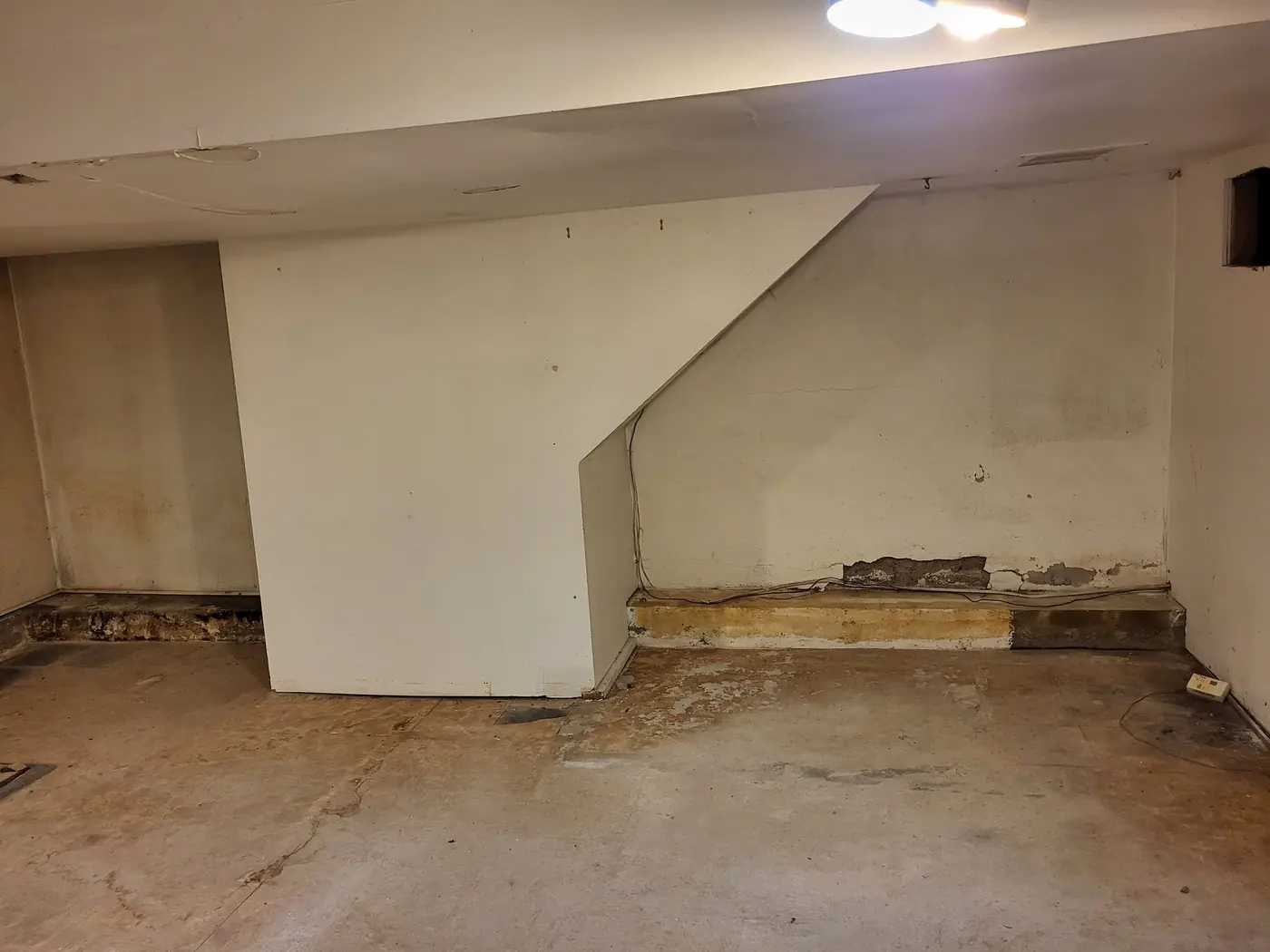
Woodbridge and parts of Concord and Thornhill have houses from the 1970s and 1980s, and their problems look different: older weeping tile, wider cracks, and basements that have been refinished more than once. There the choice between an interior drain and exterior excavation matters more, and our Mississauga waterproofing article explains how we choose. Houses near the Humber River and the many creeks that cross the city can also see higher ground water in spring.
Basement waterproofing in Vaughan, step by step
- Map the wet spots. We mark every stain, damp patch and drip, then check them against what is outside that wall: a window well, a downspout, a hose bib, a gas line or a deck.
- Check the builder details. Tie-rod holes, the joint between wall and floor, window bucks and every pipe or cable that passes through the foundation are inspected one by one.
- Look at the grading. Ten or twenty years after construction, backfill along the walls often settles and leaves soil sloping toward the house. We measure it.
- Agree on the repair. You get a written scope that names each leak point and the repair for it.
- Open finished walls. Only the sections that are wet or need access are removed; wet insulation and drywall go out so the wall can dry.
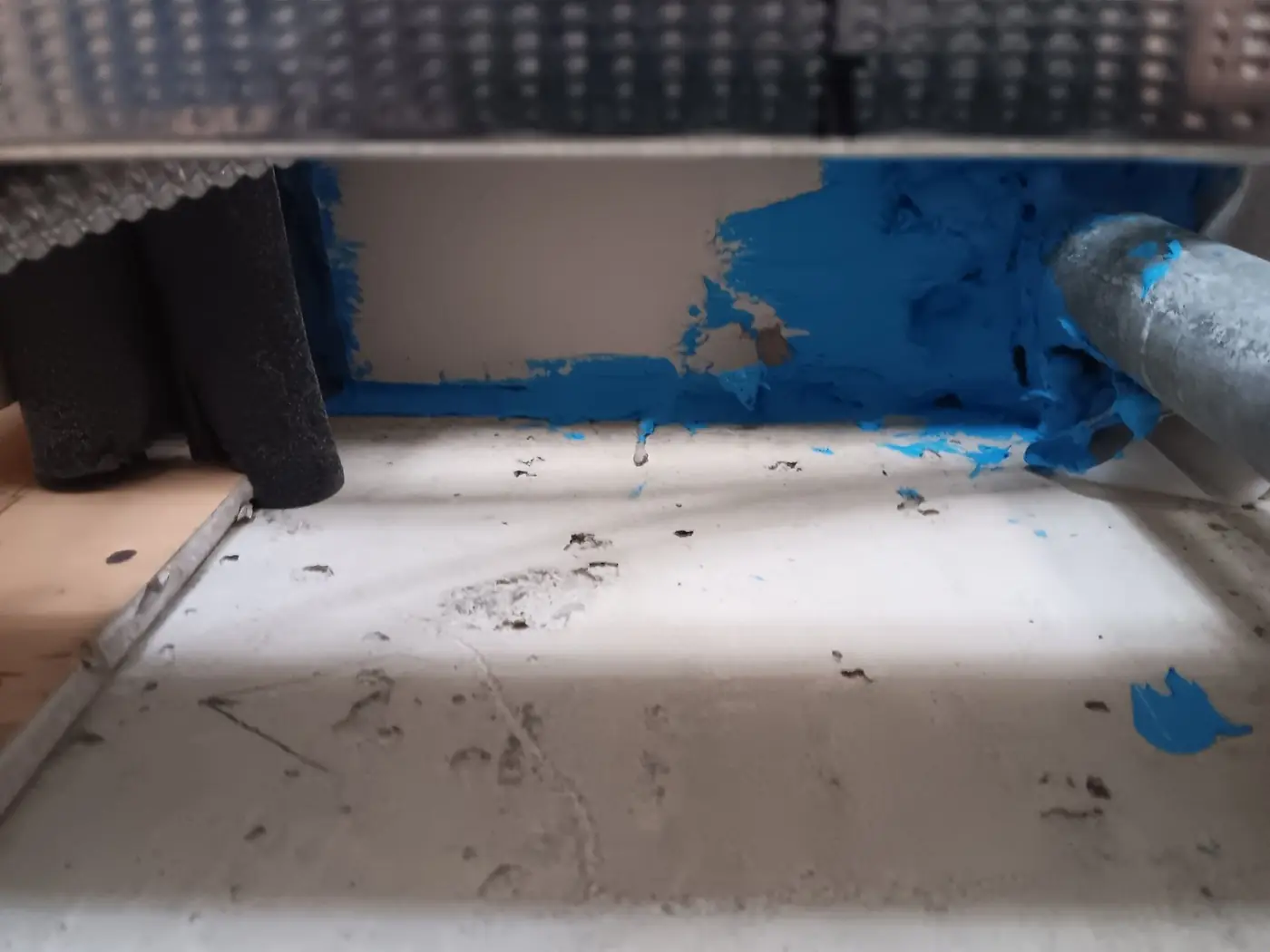
- Seal leak points from inside. Cracks, tie-rod holes and pipe openings are sealed through the wall rather than just covered on the surface.
- Dig where the outside fails. Where a window well or a wall section keeps taking water, we excavate, repair the wall, apply a membrane and drainage board and install a drained window well.
- Restore the slope. Soil is regraded to run away from the foundation and downspouts are extended.
- Test before closing. Repaired areas are checked with water and left visible until they stay dry.
- Rebuild the finish. Insulation, vapour control and drywall go back, and we hand you photos of the repairs.
Fix the small things first
A surprising number of Vaughan leaks stop with simple outside work: extend the downspouts at least a couple of metres from the wall, regrade a flower bed so it slopes away, clean or replace a window well and give it a drain, and seal the gap where a driveway or a walkway meets the house. These are inexpensive, and we always look at them before suggesting excavation. When they are not enough, the leak points are repaired one by one.
Before you finish the basement
Many Vaughan owners finish the basement for a family member, an office or a legal second unit. Do the waterproofing first. A leak that shows as a small stain on bare concrete becomes mould behind drywall and a ruined floor once the room is finished. Before framing, we check every wall, seal the leak points, and make sure the floor drain and the sump, if there is one, work. If you are adding a separate entrance or a walkout, plan its drainage with the rest of the job. The basement renovation page shows what a full project includes.
An example from Maple
A 2005 house in Maple shows a damp patch on the carpet under the family room window each spring. Inside, removing the drywall below the window reveals a crack running down from the corner of the opening and two tie-rod holes with old staining. Outside, the window well is full of silt and the soil beside it slopes toward the wall. The repair: the crack and tie-rod holes are sealed through the wall, the window well is replaced with a drained one, the soil is regraded and the downspout extended, and the wall is rebuilt. The rest of the basement was dry and is left alone.
Frequently asked questions
My Vaughan house is only fifteen years old. Why does the basement leak?
Newer houses leak at their details: tie-rod holes left by the concrete forms, cracks at window corners where concrete shrinks, pipe openings, and backfill that settled and now slopes toward the house. These are usually local repairs, not a full system.
Is a basement leak covered by the new-home warranty?
Ontario new homes have a statutory warranty administered by Tarion, and water penetration through the basement is covered for a limited period after possession. Check your dates and Tarion's rules before paying for repairs; if you are outside the coverage, we can help.
Do you waterproof finished basements in Woodbridge and Maple?
Yes, often. We remove only the finished wall around the leak, repair it, and rebuild it to match. Our office is in Concord, so Woodbridge, Maple, Kleinburg and Thornhill are close.
Should I waterproof before finishing a new basement?
Yes. Fix every known leak point before framing. A finished basement hides water for months, and the drywall, insulation and flooring are what you end up paying to replace.
Do you dig on the outside in Vaughan?
When the cause is outside, yes: a failed window well, a wall section with a membrane gap or a weeping tile problem. We protect landscaping and interlock, and we put them back after.
Waterproofing inspection in Vaughan
We inspect leaking basements in Vaughan, Woodbridge, Maple, Kleinburg, Concord and Thornhill, and explain the cause before we price a repair. Related reading: foundation crack repair and preventing mould after a flood.
Phone (365) 363-6995, email estimating@tgvconstructiongroup.ca, or tell us about your basement leak in Vaughan on the Get a Quote page.