Mould removal in Brampton most often starts in the basement. The city has a very large number of finished basements and legal second suites, from 1960s and 1970s houses in Bramalea to newer homes in Springdale, Castlemore, Credit Valley and Mount Pleasant. A small foundation leak, a bathroom without a working fan or a laundry vented badly can keep a corner damp for months behind drywall, and mould grows there long before anyone sees it. This guide explains where mould hides in Brampton homes, how proper remediation works and how to keep it from returning.
TGV Construction Group Inc. has completed more than 300 projects in the GTA and Ontario since 2017, including water damage restoration and mould remediation. Our mould removal page describes the service, and our guide to water damage cleanup in Brampton covers the step before it.
Where mould grows in Brampton homes
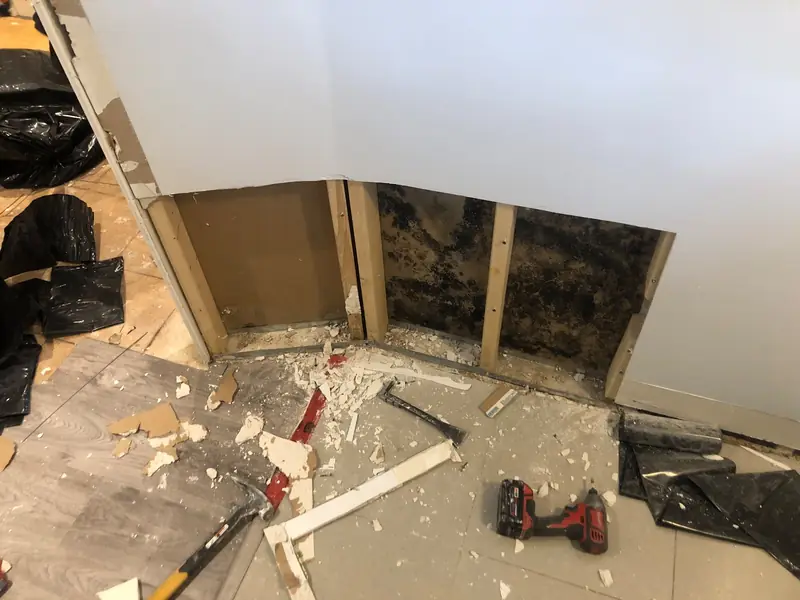
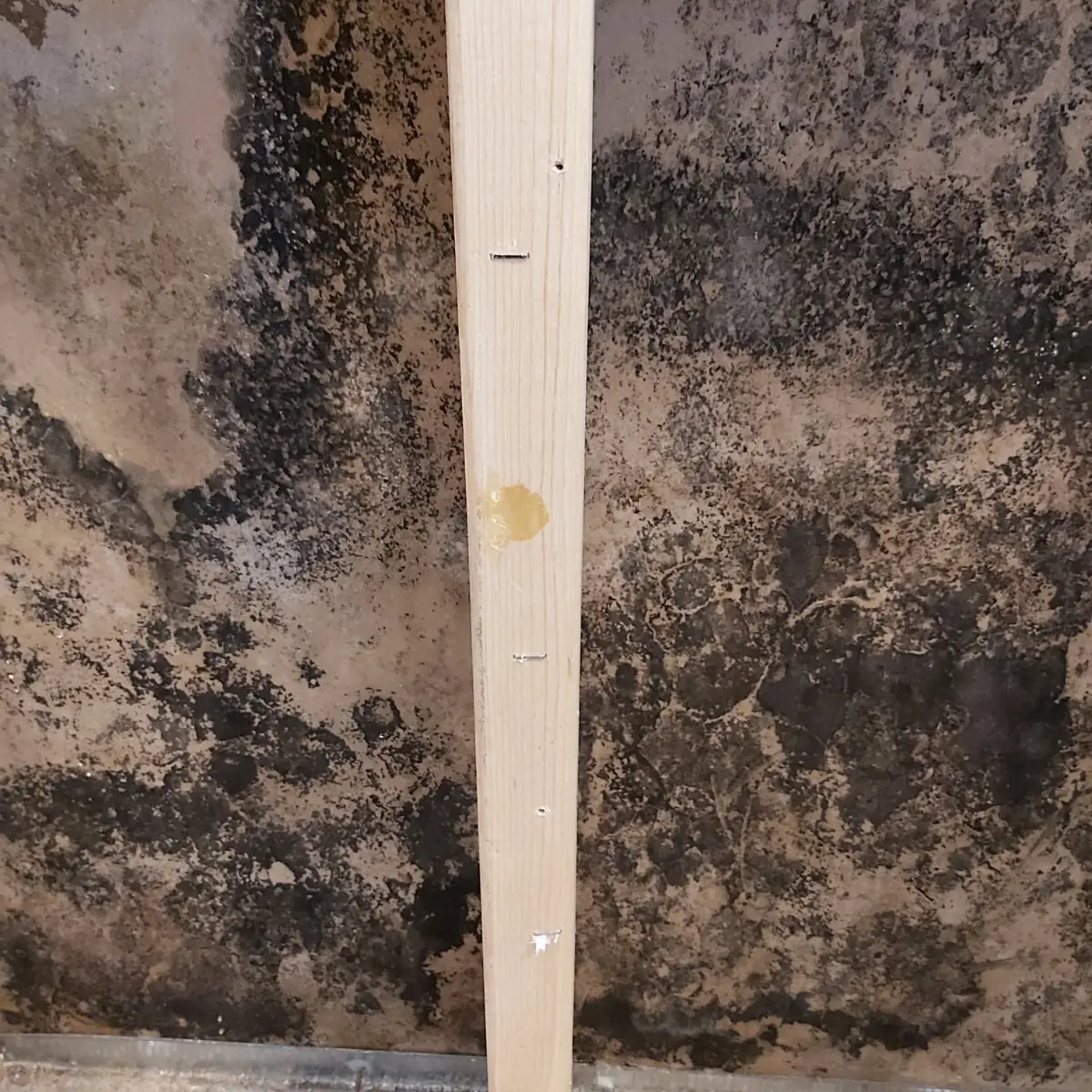
Basement walls. Drywall and insulation built tight against a foundation wall that is slightly damp. The back of the drywall and the bottom plate stay wet while the room looks fine.
Basement suites. Second units add bathrooms, kitchens and laundry to a space with small windows and little air movement. Showers without proper exhaust and dryers that leak warm, moist air raise humidity in the whole suite.
Bathrooms on any floor. Fans that are too small, never switched on, or vented into the attic, and slow leaks behind tub surrounds and shower walls.
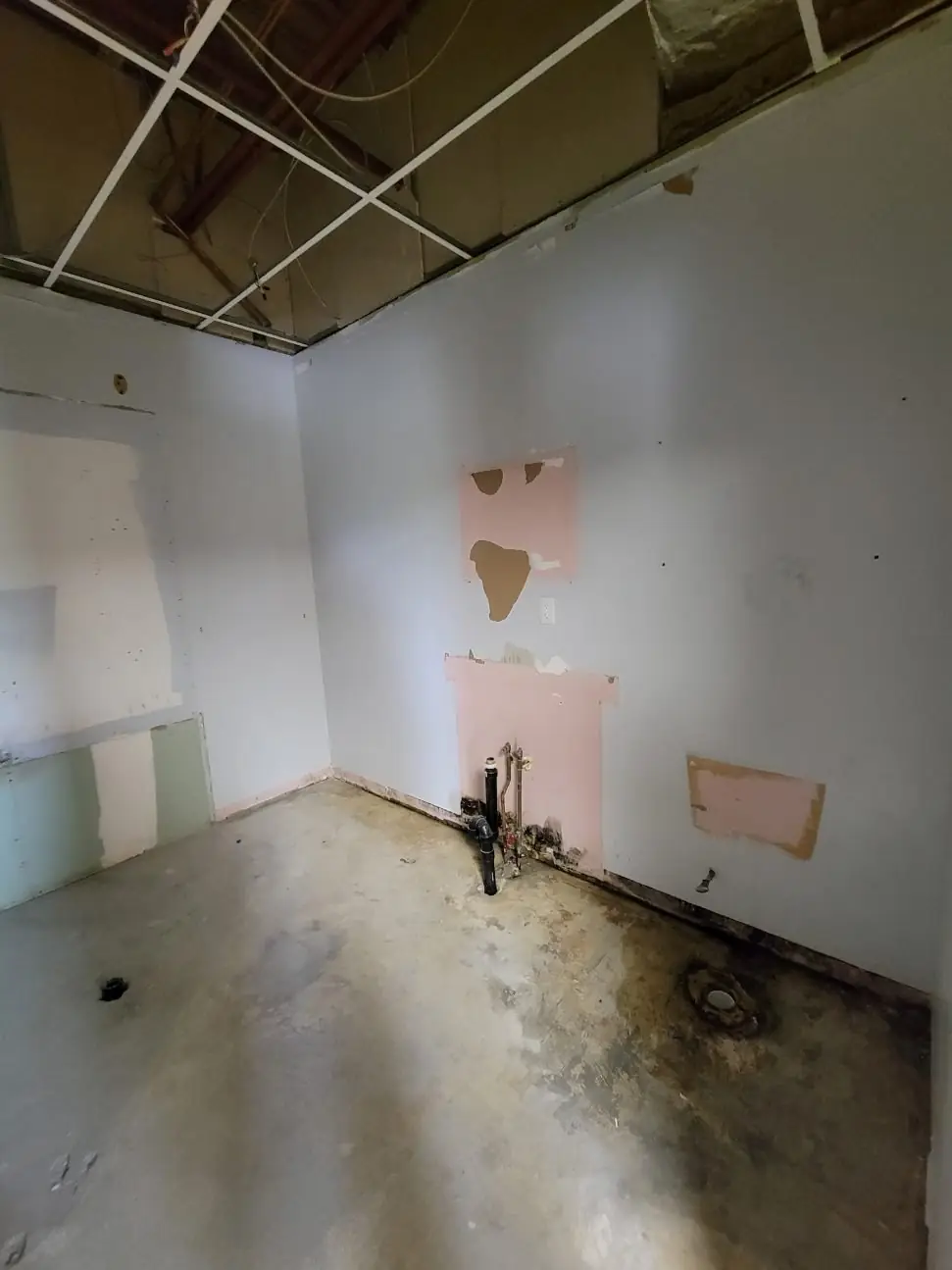
Under flooring. Carpet, underlay and laminate over concrete that wicks moisture, or over a spot where a pipe leaked.
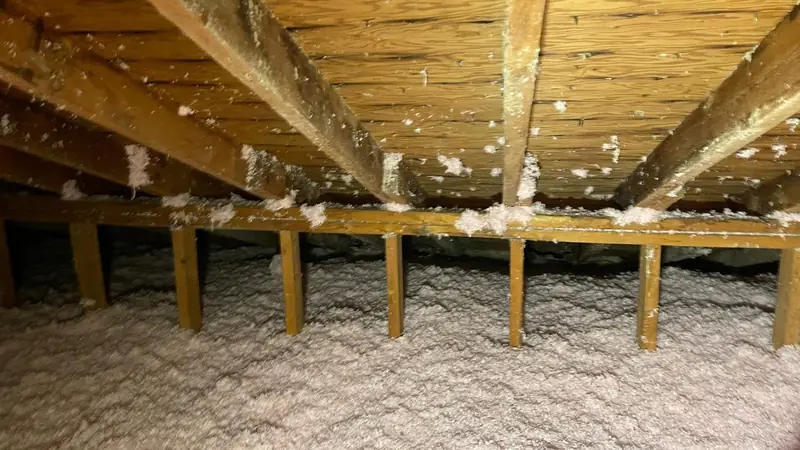
Attics and closets on outside walls. Condensation on cold surfaces where air does not move.
When to call a professional
A small spot on a hard surface, such as a window frame or a bathroom ceiling, can usually be cleaned with soap and water. Call a professional when the area is larger than a small patch, when it is inside a wall, ceiling or floor, when it follows a flood or sewer backup, when it keeps coming back, or when someone in the home has asthma, allergies or a weakened immune system. Disturbing a large area of mould without containment spreads spores through the house. Our article on signs you need mould remediation lists the warning signs.
Mould removal in Brampton: how remediation is done
- Find the water behind the mould. Every mould problem has a moisture source: a leak, a damp foundation, condensation or poor ventilation. We locate it before anything is removed.
- Map how far it goes. Moisture readings and small inspection openings show the size of the affected area behind walls, ceilings and floors.
- Test suspect materials in older houses. Before opening walls in homes built before the 1990s, materials that may contain asbestos are tested; our workers are trained for asbestos work under Ontario rules.
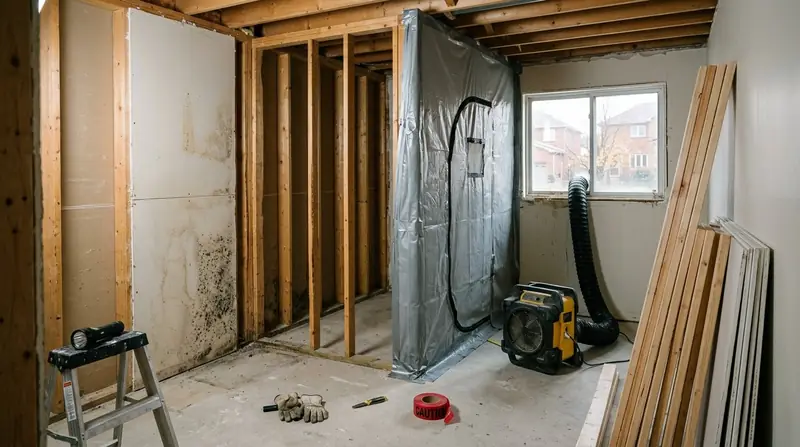
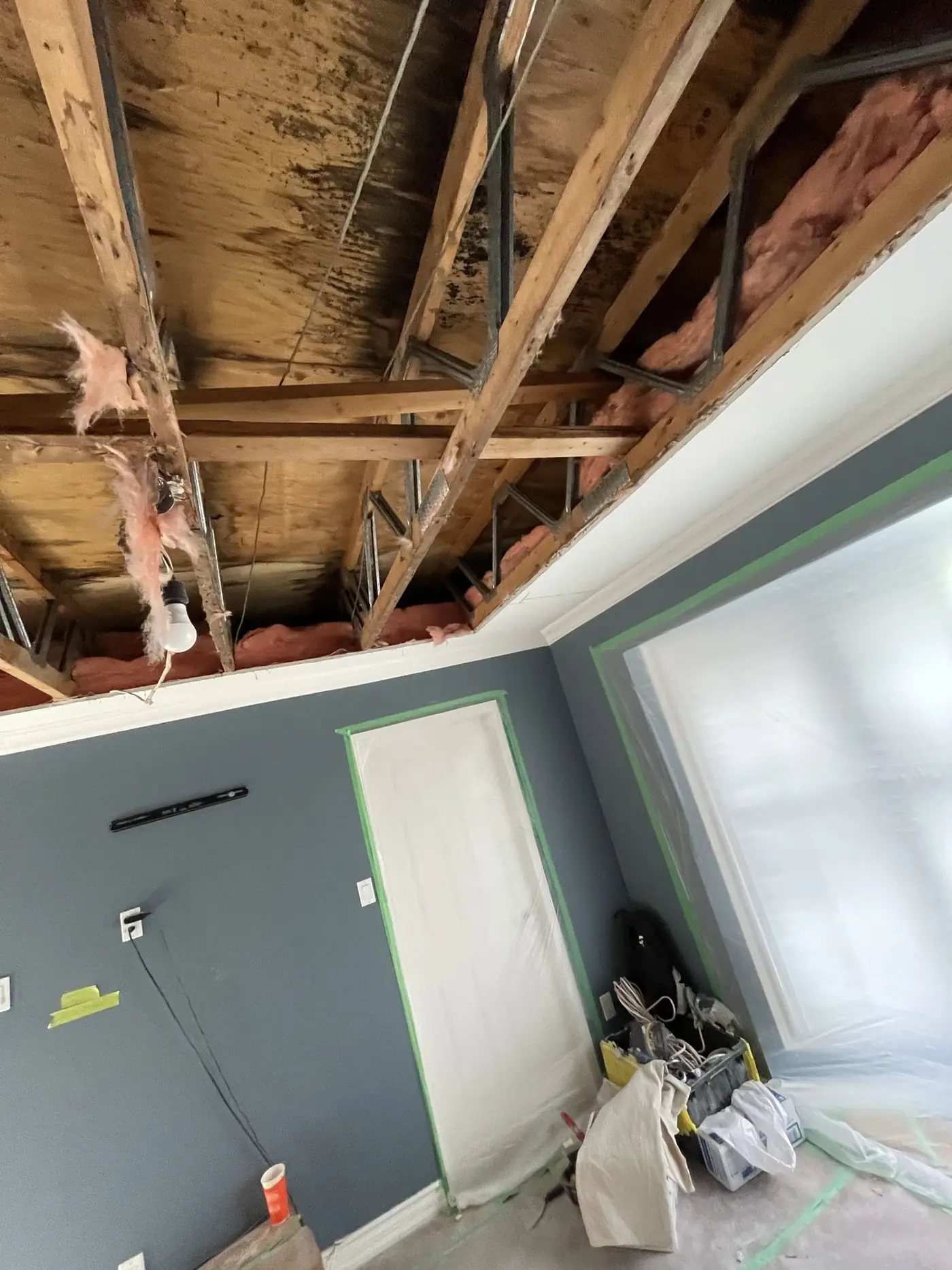
- Contain the work area. Plastic sheeting and zippered doors seal the room, and heating and cooling vents are closed off so spores do not travel through the house.
- Run HEPA air filtration. Air scrubbers keep the contained area under negative pressure and clean the air during the work.
- Remove what cannot be cleaned. Mouldy drywall, insulation, carpet and underlay are cut out, bagged inside the containment and taken away.
- Clean what stays. Studs, joists and concrete are HEPA-vacuumed and cleaned.
- Dry everything. Dehumidifiers and air movers bring materials back to normal moisture, checked with a meter.
- Repair the cause. The leak, the foundation seepage, the ventilation or the drainage problem is fixed.
- Rebuild the room. Insulation, drywall, paint, flooring and trim are put back, with moisture-resistant materials where they help.
Fixing the cause so it stays gone
Removing mould without fixing the moisture is money spent twice. The most common causes we find, and their fixes:
- Foundation seepage: crack sealing, regrading and downspouts, or interior drainage; see basement waterproofing.
- Bathroom humidity: an exhaust fan sized for the room, ducted outside, ideally on a timer or humidity switch.
- Plumbing leaks: repaired at the source, with the wet materials around them replaced.
- Basement humidity: a dehumidifier set to keep relative humidity moderate in summer, and air movement in closed rooms.
- Dryer venting: a sealed duct that ends outside, never in the basement or the attic.
Older Bramalea homes and asbestos
Houses in Bramalea, Peel Village and downtown Brampton built before the 1990s may have asbestos in drywall joint compound, textured ceilings, old floor tiles or vermiculite insulation. Opening those materials for mould work without testing can release fibres. We test suspect materials first and, if asbestos is present, remove it safely before the mould work continues. Our asbestos removal article explains the process.
An example from a Springdale basement suite
A tenant in a basement suite reports a musty smell and black spots on the bathroom ceiling and along the bottom of the bedroom wall. The bathroom fan turns out to be ducted into the joist space instead of outside, and a small crack in the foundation behind the bedroom wall lets in water during long rain. The bathroom ceiling and the lower bedroom wall are opened inside containment, the mouldy drywall and insulation are removed, the framing is cleaned and dried, the crack is sealed, the fan is ducted outside, and both rooms are rebuilt and painted. The suite was back in use as soon as the rebuild was finished.
What decides the size of the job
Two mould problems that look the same from the room can be very different jobs. What matters is how far the growth reaches behind the surface, which materials are affected, and what caused it. Mould on the paper face of drywall near a leak may mean one wall section; mould that has spread through the insulation of an exterior wall, or under a floor across a whole basement, means several rooms. The height of the space, access for containment, whether the suite is occupied, the age of the house and the need for asbestos testing all change the work too. Fixing the cause, such as a foundation crack or a fan ducted to nowhere, is part of the quote, as is the rebuild. After the inspection you receive a written scope that names the rooms, the materials to be removed and the repair, so you can see exactly what is being done and why.
Frequently asked questions
Is mould in a basement apartment the landlord's problem?
In Ontario, landlords are generally responsible for keeping a rental unit in good repair, and that includes fixing leaks and moisture that cause mould. Tenants should report it in writing. Either way, the fix is the same: remove the mould and stop the moisture.
How do I know if mould is inside the wall?
A persistent musty smell, stains or peeling paint at the base of a wall, swollen baseboards, or mould coming back on the same spot after cleaning all suggest growth behind the surface. Moisture readings and a small inspection opening confirm it.
Can I just paint over mould?
No. Paint, even mould-resistant paint, hides the stain but does not remove growth on or inside the material, and it does nothing about the moisture. The mould returns, usually worse.
Does home insurance pay for mould removal in Brampton?
Coverage depends on the policy and the cause. Mould that follows a sudden, covered event such as a burst pipe may be included in that claim; mould from long-term humidity or slow leaks often is not. Call your insurer early; we can document what we find with photos.
Can you remove mould and finish the basement in one job?
Yes. Once the mould is removed, the cause is fixed and the area is dry, we rebuild the space, and we can finish it fully if you were planning a renovation anyway.
Book a mould inspection in Brampton
We inspect and remove mould across Brampton, from Bramalea and Heart Lake to Springdale, Castlemore, Fletcher's Meadow and Mount Pleasant, and we fix the moisture that caused it. For urgent water damage, call any hour. Related reading: mould removal in Oakville and bathroom renovation in Brampton.
Phone (365) 363-6995, email estimating@tgvconstructiongroup.ca, or tell us about your mould problem in Brampton on the Get a Quote page.