Attic mold removal in Toronto and the GTA is one of the most common calls we get in late winter, when homeowners go up for something else and find the underside of the roof spotted black or grey. The good news is that attic mold is usually a ventilation and air-leak problem, not a sign the roof is failing, and it can be cleaned and stopped. The bad news is that cleaning alone never works: unless the moisture is dealt with, it comes back the next winter. This guide explains why attic mold appears in GTA houses, how to recognise it and how professional attic mold removal is done.
TGV Construction Group Inc. has completed more than 300 restoration and renovation projects across the GTA since 2017. For mold elsewhere in the house, see our mould removal service and the article on signs you need mold remediation.
Why attics in the GTA grow mold
In a Toronto winter the roof sheathing is the coldest surface in the house. Warm indoor air carries moisture; when it leaks into the attic and touches that cold wood, the moisture condenses or turns to frost. In spring the frost melts, the wood stays damp for weeks, and mold grows. The black staining is often worst on the north-facing slope, which gets the least sun and dries the slowest.
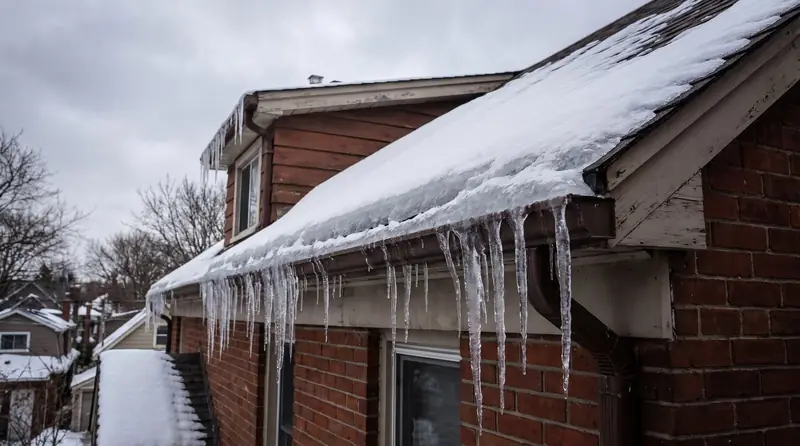
The moisture gets there in a handful of predictable ways. A bathroom or kitchen fan duct ends in the attic instead of outside, or its duct has slipped off the vent. Pot lights, the attic hatch, plumbing stacks and wiring holes leak warm air upward. Soffit vents are blocked by insulation or paint, so no fresh air comes in at the eaves. And older houses with thin insulation lose so much heat into the attic that snow melts on the roof and refreezes at the edge, forming ice dams that push water back under the shingles. Our article on ice dams on Ontario roofs covers that last one.
Signs you need attic mold removal
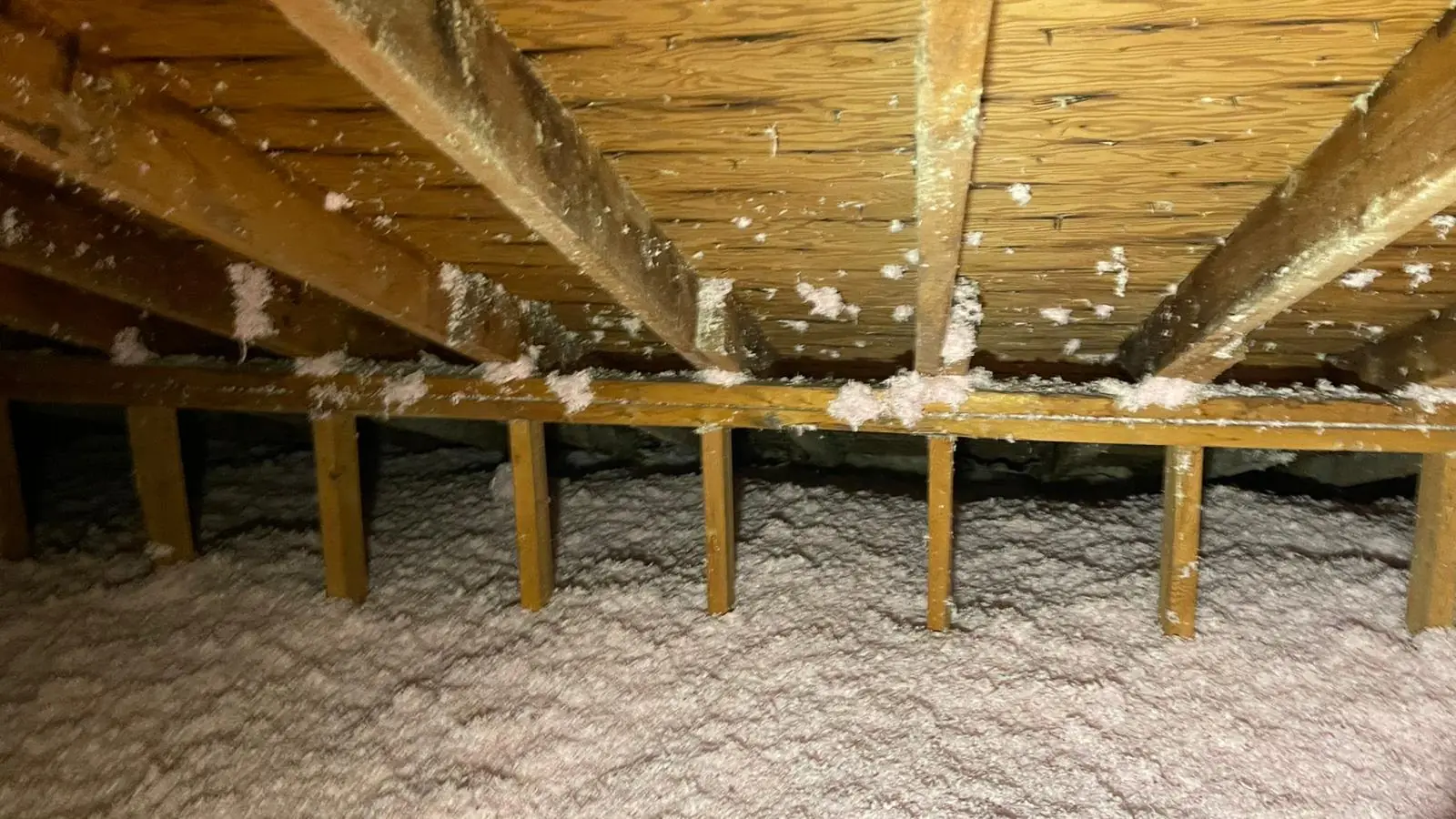
- Black, grey or green spotting on the roof sheathing, often in streaks between the rafters or trusses.
- Frost on the nails and sheathing in cold weather, or water dripping from the nail tips when it warms up.
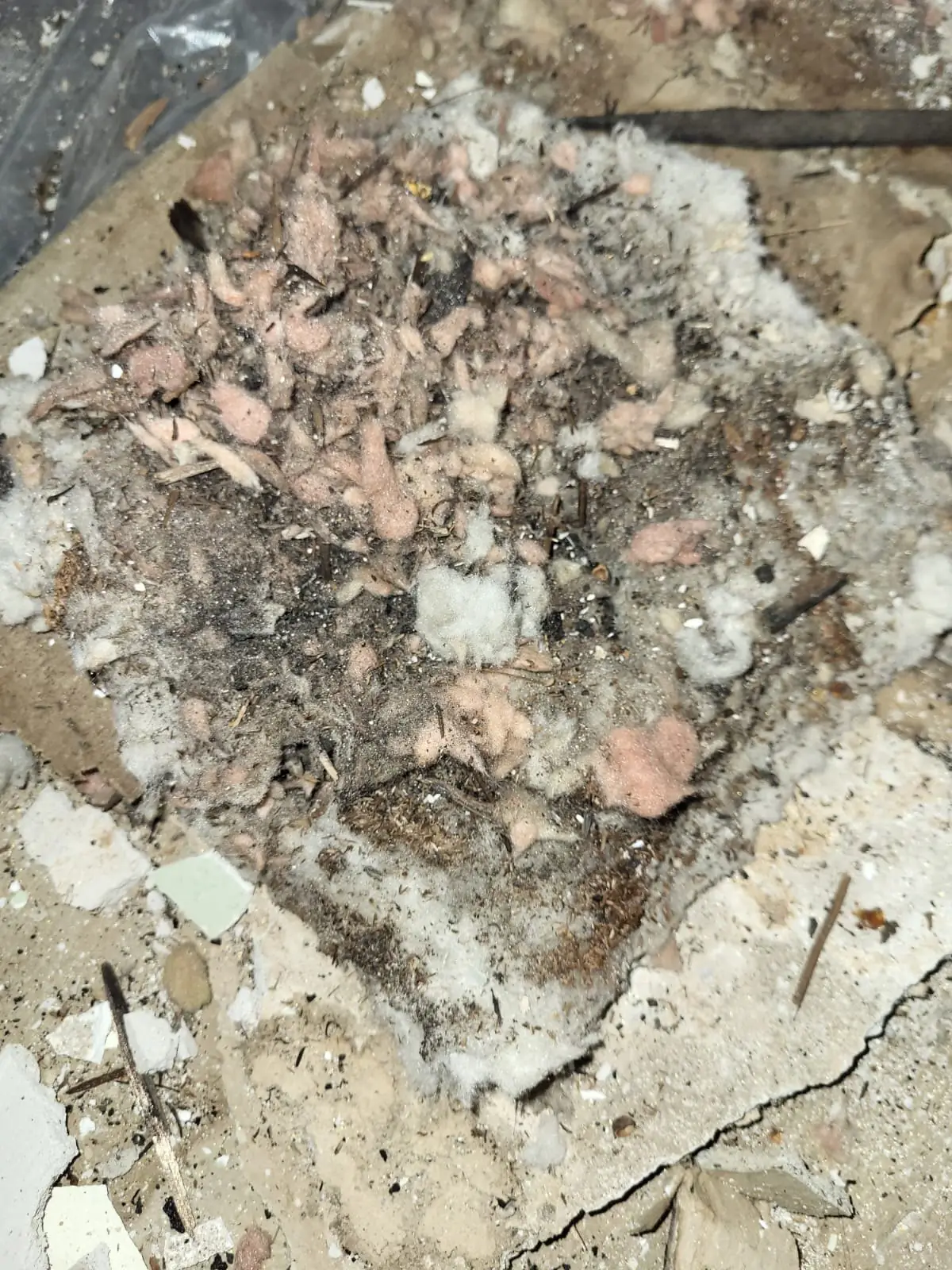
- Damp, compressed or stained insulation, especially around the hatch and above the bathroom.
- A musty smell when the hatch is opened, or in the top-floor rooms on humid days.
- Water stains on the top-floor ceiling or peeling paint near the outside walls.
- Ice dams and long icicles at the eaves every winter.
Not every dark mark is active mold. Old staining from a leak that was fixed years ago can look the same. Moisture readings and a closer look tell the difference, which is why the first step is always an inspection.
How attic mold removal works, step by step
- Inspection. We check the sheathing, the insulation, the vents, the bathroom and kitchen fan ducts and every hole into the attic, and take moisture readings to find out whether the mold is active.
- Find and fix the moisture source. Fans are ducted outside, soffit vents cleared, air leaks from the house sealed; without this step the mold returns.
- Containment and protection. The attic hatch area is sealed off, the room below protected, and the crew works with respirators and protective suits.
- Remove contaminated insulation. Wet or mouldy insulation is bagged and taken out; dry, clean insulation can sometimes stay.
- Clean the wood. Mold is removed from the sheathing and framing by HEPA vacuuming, wiping, sanding or blasting, depending on how much there is.
- Treat and seal where needed. An antimicrobial treatment and, where it helps, a sealer go onto the cleaned wood.
- Check the result. The cleaned surfaces are inspected; moisture readings must be back to normal before anything is closed.
- Air seal and re-insulate. Gaps around pot lights, the hatch, plumbing stacks and wiring are sealed, then new insulation brings the attic back to the right level.
- Balance the ventilation. Soffit and roof vents are adjusted so outside air moves through the attic and carries moisture out.
Cleaning methods for attic sheathing
Light surface growth is usually HEPA-vacuumed and wiped with a cleaning solution. Heavier growth over large areas is removed with media blasting, such as dry ice or soda, which cleans the wood quickly without soaking it; the choice depends on the attic, the access and how much there is. Wood that is soft or delaminated from long-term moisture is replaced rather than cleaned. A sealer or encapsulant on the clean wood is a finishing step, not a substitute for cleaning.
Stopping attic mold from coming back
The removal is the visible part of the job; the prevention is what you pay for. Every bathroom fan should be ducted to a roof or wall cap outside with an insulated duct. The ceiling below the attic should be air sealed around every light, pipe, wire and the hatch before more insulation goes on top. Soffit vents need baffles so insulation cannot block them, and the roof needs enough exhaust venting at the top. Indoor humidity matters too: running the fan during and after showers and keeping winter humidity moderate keeps the moisture load down. Our mold prevention tips for Ontario homes go into humidity in more detail.
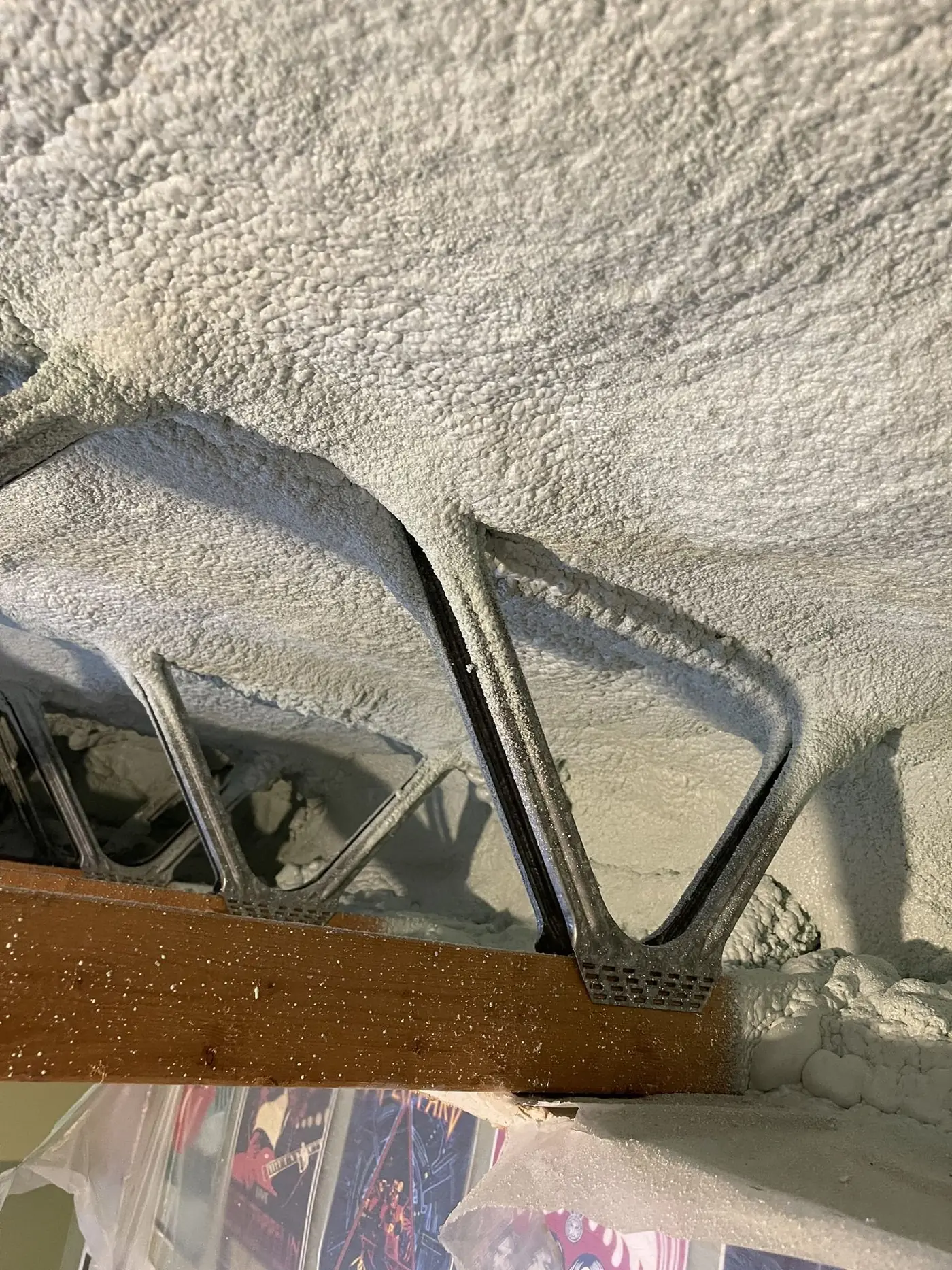
When to call a professional
A few small spots near the hatch can be cleaned by a careful homeowner. Call a professional when the staining covers more than a small patch, when insulation is wet or contaminated, when anyone in the house has asthma or a weakened immune system, or when you cannot find the moisture source. Attics are hot, cramped and full of fibreglass; working there with a respirator for hours is not a weekend project. Ontario has no separate licence for mold remediation, so ask any company how they contain the work, what they do with the insulation and how they will fix the cause.
Insurance and attic mold
Home insurance in Ontario usually covers sudden and accidental damage, and many policies exclude mold that developed slowly from condensation. If the mold followed a specific event, such as storm damage to the roof, report it as part of that claim and keep photos. We document what we find, with moisture readings and photos, so you have what the adjuster needs.
A typical GTA attic job
A common case is a 1980s two-storey in Scarborough where the owner noticed a musty smell in the upstairs hallway. The attic shows dark staining on the north slope, damp insulation above the main bathroom and a bathroom fan duct lying loose on the insulation. The fan is ducted to a new roof cap, the wet insulation is removed, the sheathing is cleaned and treated, the ceiling is air sealed around the pot lights and the hatch, baffles go in at the soffits and new insulation is blown in. One inspection the following winter confirms dry sheathing and no frost on the nails.
Frequently asked questions
What causes mold in an attic?
Almost always warm, moist air from the house that condenses on the cold underside of the roof in winter. Bathroom fans that vent into the attic, blocked soffit vents, gaps around pot lights and the hatch, and too little insulation are the usual culprits. Roof leaks and ice dams are the other common cause.
Can I remove attic mold myself?
A small spot can be cleaned by a careful homeowner wearing an N95 or better, gloves and eye protection. Health Canada's guidance treats larger areas as a job for professionals, and in an attic the cause has to be fixed too or the mold returns.
How much does attic mold removal cost?
It depends on how much sheathing is affected, whether insulation has to come out and what it takes to fix the ventilation. We price it after an inspection, in a free written quote.
Is attic mold covered by home insurance?
Policies differ. Mold from slow condensation over years is often excluded; mold after a sudden event such as a roof leak in a storm may be covered as part of that claim. Check your policy and call your insurer early.
Will painting over attic mold fix it?
No. Paint or sealer over active mold hides it while the moisture keeps feeding it. The source is fixed first, the wood is cleaned, and only then is a sealer used.
Book an attic mold inspection
TGV Construction Group Inc. handles attic mold removal across Toronto and the GTA, from the inspection and cleaning to the venting, air sealing and insulation that keep it from returning.
Call us at (365) 363-6995, email estimating@tgvconstructiongroup.ca or send your details through the Get a Quote page.