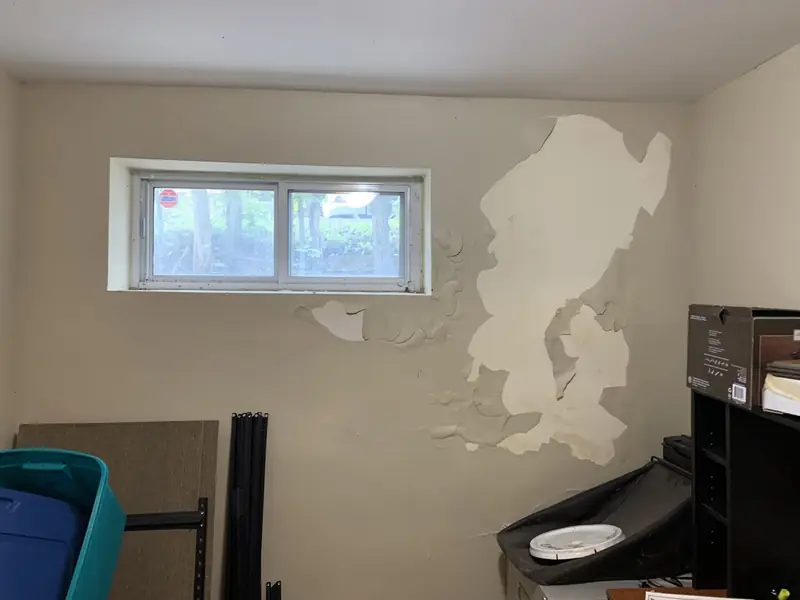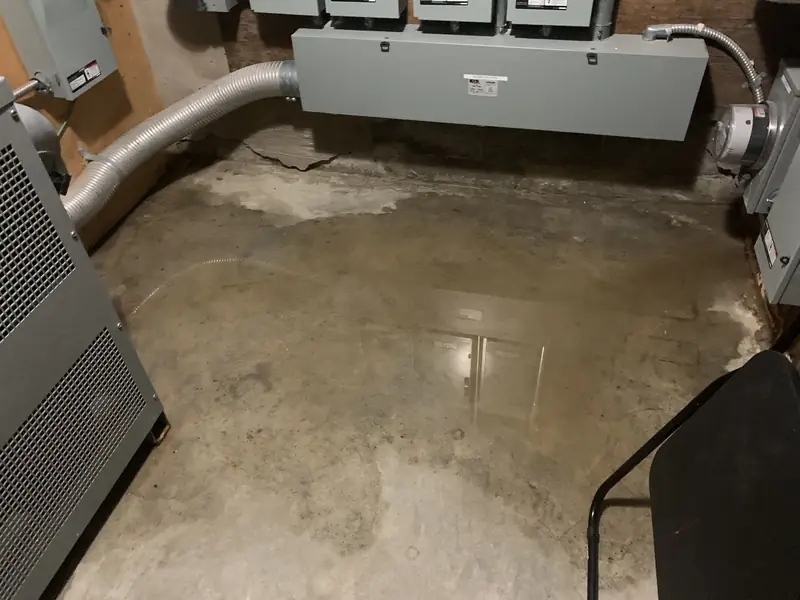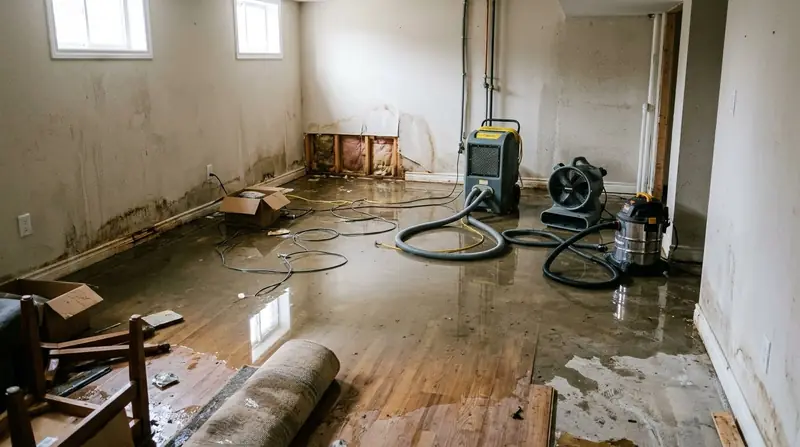
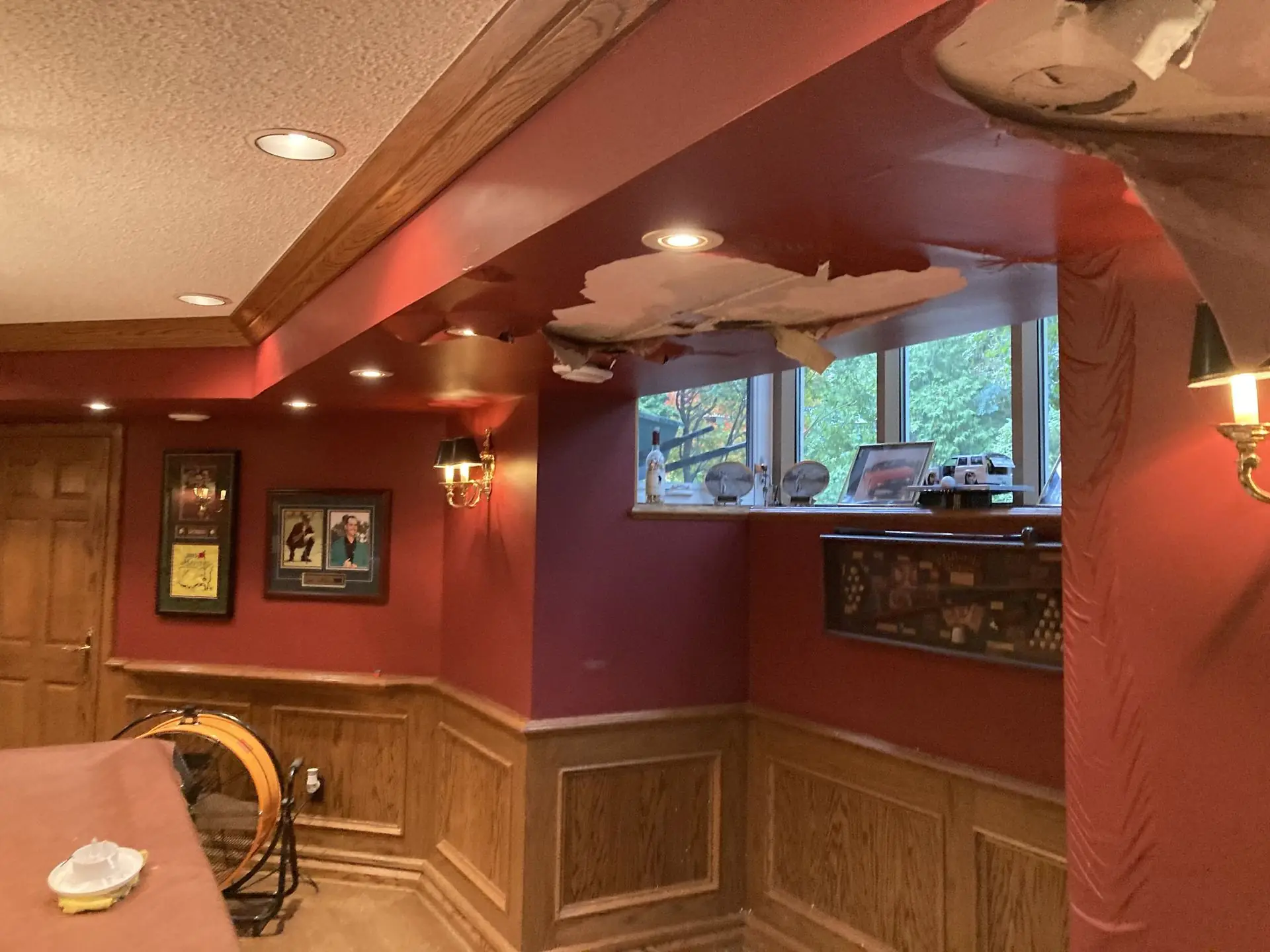
Water damage restoration in Oakville usually costs between $2,500 and $15,000 for the emergency part of the job: extracting water, removing what cannot be saved, drying the structure and checking for mould. Repairs to drywall, floors and cabinets come after and are priced on their own. Where your job lands depends on how much got wet, how long it sat and whether the water was clean or contaminated. This guide explains the water damage restoration cost in Oakville, what to do in the first hours and how the work and the insurance claim usually go.
TGV Construction Group Inc. handles both the restoration and the rebuild, so one team takes the job from the first call to the last coat of paint. We have completed more than 300 projects across the GTA and Ontario since 2017. Also read what to do when the basement floods, our Mississauga water damage cost guide and the water damage restoration service page.
Why water damage happens in Oakville homes
Older plumbing. In Old Oakville, Bronte and other older neighbourhoods, galvanized supply pipes, aging cast-iron drains and older water heaters fail more often than modern piping. A slow leak inside a wall can run for weeks before a stain appears.
Appliances. Washing machine hoses, dishwasher connections, fridge water lines and water heaters are the most common sources of sudden water in newer homes across Glen Abbey, River Oaks and North Oakville.
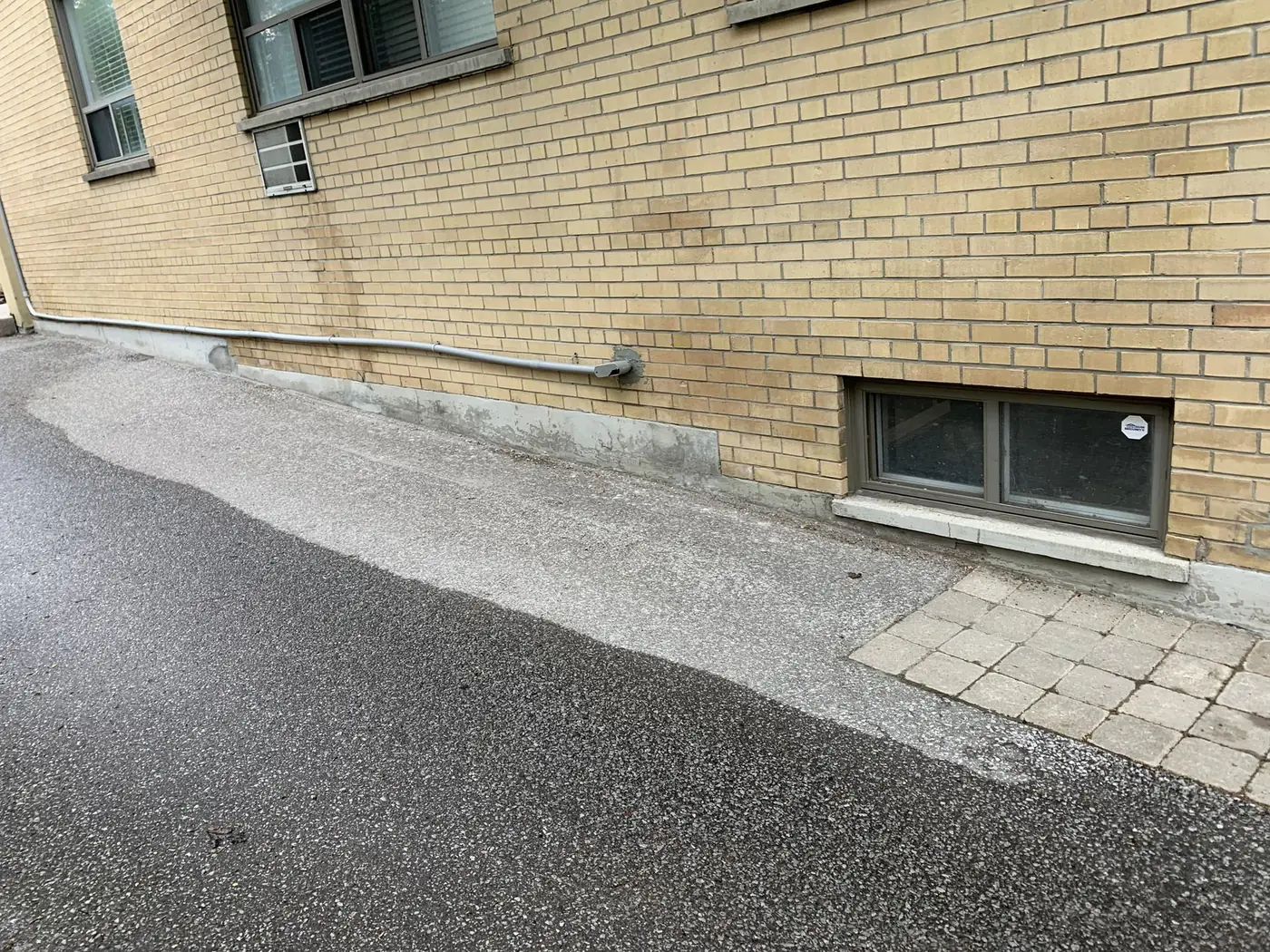
Basements in heavy rain. Intense summer storms can overload drains and push water back up through floor drains in houses without a backwater valve, or in through cracks and window wells where the ground slopes toward the house.
Winter. Frozen pipes in exterior walls, garages and crawlspaces burst during cold snaps, and ice dams on roofs push meltwater under shingles into ceilings. See our article on frozen pipes.
What to do in the first hours
- Stay safe. If water is near outlets, cords or the electrical panel, do not walk in it; call for help and have the power shut off.
- Stop the water. Close the main shut-off valve, usually where the water line enters the house in the basement.
- Take photos and video of everything before moving or throwing anything away.
- Call your insurer and note the claim number.
- Move valuables, documents and electronics to a dry place; lift furniture off wet carpet.
- Call a restoration company early. Drying started in the first day costs less than drying started on day three.
What drives the water damage restoration cost in Oakville
Area affected. One wet bathroom floor is a small job. A finished basement where water spread under walls into several rooms is a large one, with more extraction, more removal and more drying equipment.
Type of water. Clean water from a supply line is the simplest to handle. Grey water from appliances needs more cleaning. Sewage or floodwater is contaminated, so porous materials it touched are removed and the area is sanitised, which raises the cost.
Time before drying. Water that sat for days wicks higher into drywall, swells cabinets and floors and lets mould start. Early response is the single biggest saving.
Materials. Hardwood, plaster and built-in cabinets are harder and slower to dry than vinyl and drywall, and sometimes cannot be saved.
Mould. If mould has started, it is removed under containment before rebuilding, adding to the job.
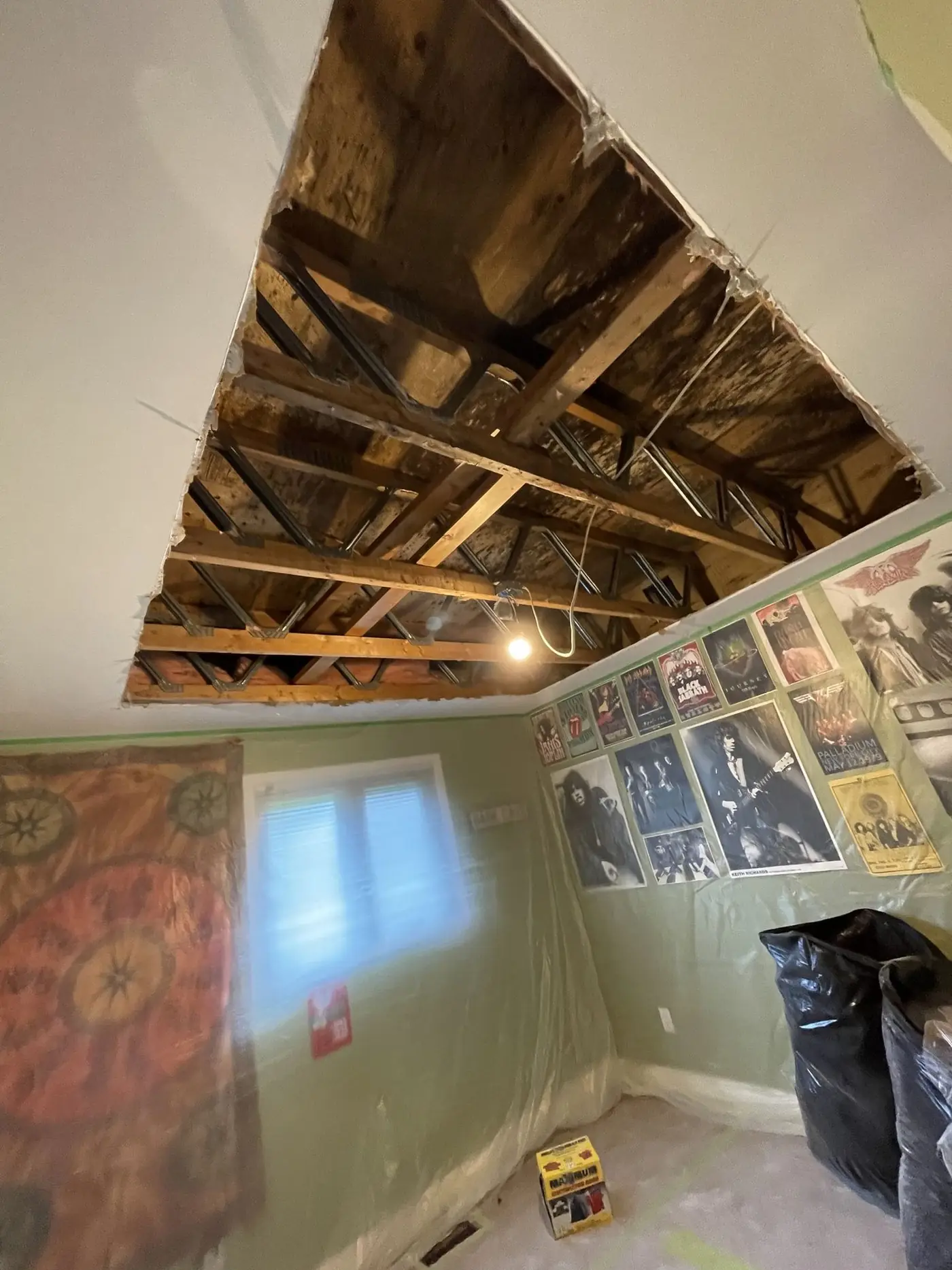
Access. Water under a finished floor, inside a ceiling or behind a shower wall means opening surfaces to dry the cavity properly.
The restoration process, step by step
- Stop the source. The water supply, the appliance, the roof leak or the drain backup is stopped, and power is shut off to wet areas if there is any risk.
- Document. Photos and video of every wet area, moisture readings and a list of damaged contents, for your insurer and for the drying record.
- Extract standing water. Pumps and extractors remove water from floors and carpets; wet carpet pad usually comes out.
- Remove what cannot be dried. Swollen particleboard, soaked insulation and drywall that has wicked water are cut out above the waterline.
- Set up drying. Air movers and dehumidifiers are placed for the room size and the materials, with the space closed off to control humidity.
- Monitor daily. Moisture readings in walls, subfloors and framing are taken and logged until they reach dry standard.
- Clean and treat. Affected surfaces are cleaned; after a sewer backup, contaminated materials are removed and the area is sanitised.
- Check for mould. Hidden cavities are checked, and any mould found is removed under containment.
- Repair. Insulation, drywall, flooring, trim, cabinets and paint are put back, matching the rest of the room.
- Prevent the next one. A backwater valve, a sump pump with a battery backup, a water-leak shut-off or downspout changes, depending on what caused it.
How long it takes
The emergency phase, extraction and setting up drying, usually happens on the first day. Drying typically takes three to five days, longer for dense materials. Repairs start after the moisture readings confirm the structure is dry, and take from a few days for a single room to several weeks for a finished basement with new flooring and cabinets. Insurance approval of the repair estimate can add time between drying and rebuilding.
Insurance and paperwork
Most home policies cover sudden and accidental water damage, such as a burst pipe. Sewer backup and overland water are separate coverages that have to be added to the policy; check yours before you need it. Insurers want proof: photos, moisture logs, a list of removed materials and an itemised estimate. We provide these records as we work, which keeps the claim moving. You choose your restoration contractor; the insurer's adjuster reviews the scope and price.
Preventing the next leak
- Backwater valve and sump pump. A backwater valve stops sewer water from coming back up the floor drain; a sump pump with a battery backup handles groundwater during storms. Read about backwater valves and sump pumps.
- Replace rubber appliance hoses with braided steel ones, and check them once a year.
- Install a leak detector or automatic shut-off near the water heater and washing machine.
- Keep downspouts and grading working, so roof water drains away from the foundation.
- Insulate pipes in exterior walls and unheated spaces before winter.
A typical Oakville water damage job
A washing machine supply hose bursts in a 1980s house in Glen Abbey while the family is out. Water spreads across the laundry room, under the wall into a finished basement family room, and drips through the ceiling of the room below the main-floor laundry. On the first day we stop the water, extract it, remove the wet carpet pad and the bottom section of drywall, and set up air movers and dehumidifiers. Moisture readings reach dry standard on the fourth day. The emergency part of the job lands in the middle of the Oakville range; the ceiling patch, new baseboard, drywall, paint and replacement flooring are then rebuilt under the insurance claim.
Frequently asked questions
How much does water damage restoration cost in Oakville?
Most water damage cleanup and drying in Oakville costs between $2,500 and $15,000, depending on how much area got wet, how long it sat, what kind of water it was and what has to be removed. Rebuilding drywall, floors and cabinets afterwards is priced separately. After a free assessment you get the figure in writing.
Does home insurance cover water damage in Oakville?
Sudden and accidental leaks, such as a burst pipe or a failed appliance hose, are usually covered. Sewer backup and overland flooding are separate coverages that you have to have added to the policy. Gradual leaks and lack of maintenance are usually excluded. Call your insurer early and keep photos and receipts.
How long does it take to dry a water-damaged room?
Most rooms reach dry standard in three to five days with professional drying equipment. Dense materials like hardwood, plaster or thick subfloors can take longer. Repairs start only after the readings say the materials are dry.
Is water from a sewer backup dangerous?
Yes. Sewage contains bacteria and other contaminants. Keep children and pets away, do not handle wet materials without protection, and have the area cleaned and sanitised by professionals. Porous materials it touched usually have to be removed.
Can mould grow after a leak?
Yes, often within 24 to 48 hours if wet materials are not dried. That is why fast extraction and drying matter more than any other step.
Call for water damage restoration in Oakville
We handle water damage cleanup, drying, mould removal and repairs in Oakville, Burlington, Mississauga and across the GTA, and we work with your insurer on the paperwork.
Phone (365) 363-6995, email estimating@tgvconstructiongroup.ca, or tell us about your Oakville water damage project on the Get a Quote page.