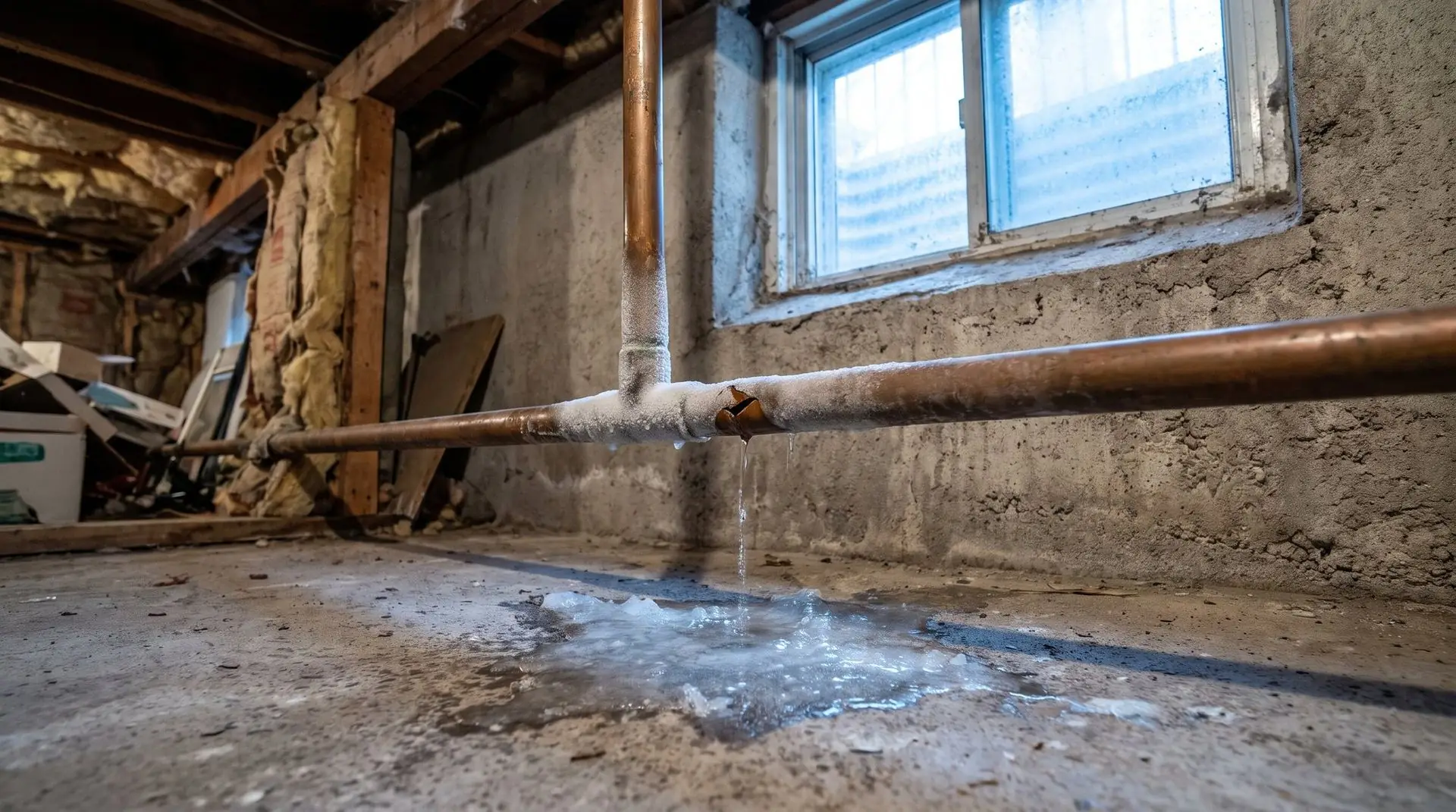
Frozen pipes are one of the most common causes of winter water damage in Toronto homes. When water freezes it expands; the pressure splits the pipe, and when the ice thaws the water pours out - often inside a wall or ceiling, and often while nobody is home. A few simple steps before the first deep freeze prevent most of it.
TGV Construction Group Inc. has completed more than 300 projects across the Greater Toronto Area since 2017, with a restoration team that answers 24/7. Every quote is free - start yours on our Get a Quote page.
Which pipes freeze first
- Pipes on exterior walls, especially behind kitchen and bathroom sinks.
- Pipes in unheated spaces: garages, crawl spaces, cold rooms and attics.
- Outdoor faucets (hose bibs) and the pipe that feeds them.
- Pipes near drafts - around a dryer vent, a basement window or a gap in the foundation.
How to prevent frozen pipes
- Shut off and drain outdoor faucets before winter, and disconnect garden hoses.
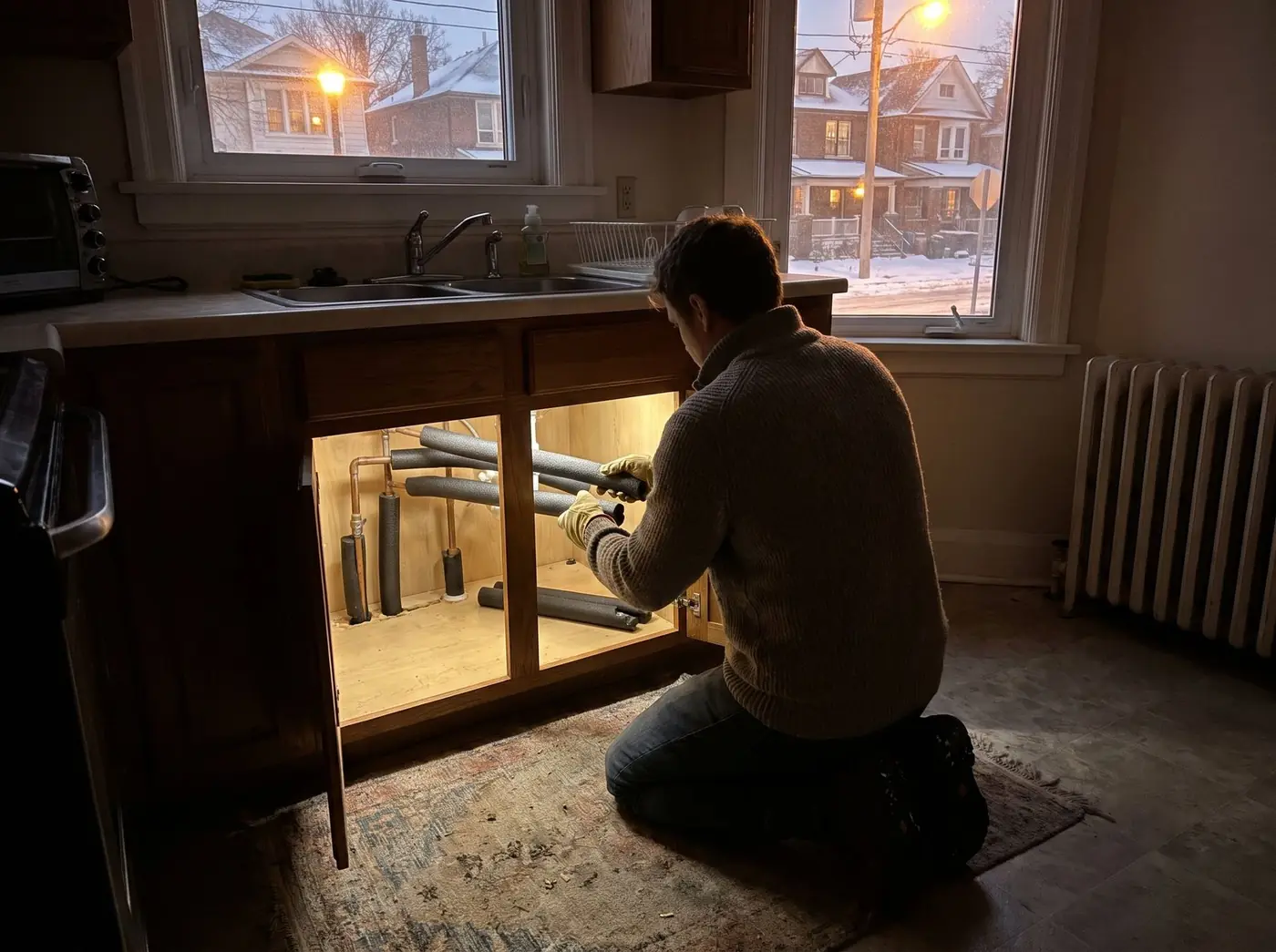
- Insulate exposed pipes in unheated areas with foam pipe sleeves.
- Seal drafts near pipes - gaps around vents, windows and the rim joist.
- Keep the heat on, even when you are away. Do not turn the thermostat right down to save money.
- Open cabinet doors under sinks on outside walls during a cold snap, so warm air reaches the pipes.
- Let a tap drip on the coldest nights if that pipe has frozen before - moving water freezes more slowly.
- Know where your main shut-off valve is and make sure it turns.
- Going away? Ask someone to check the house, and read your insurance policy's conditions for winter absences.
How to thaw a frozen pipe
If a tap gives only a trickle, a pipe is probably frozen. Open the tap, then warm the pipe slowly with a hair dryer, a heating pad or warm towels, working from the tap back toward the frozen section. Never use an open flame or a torch. If you cannot find the frozen spot, it is inside a wall, or the pipe is already split, shut off the main valve and call a plumber.
What to do if a frozen pipe bursts
- Shut off the main water valve. Do it the moment you see a split pipe or water. Everyone in the house should know where the valve is - usually in the basement on the front wall.
- Turn off power to wet areas. Only if you can reach the panel safely from a dry spot.
- Open the taps. Opening cold and hot taps drains the system and relieves pressure.
- Photograph the damage. Take photos before anything is moved, for your insurer.
- Call a plumber and a restoration team. The plumber repairs the pipe; the restoration team removes the water and dries the walls and floors.
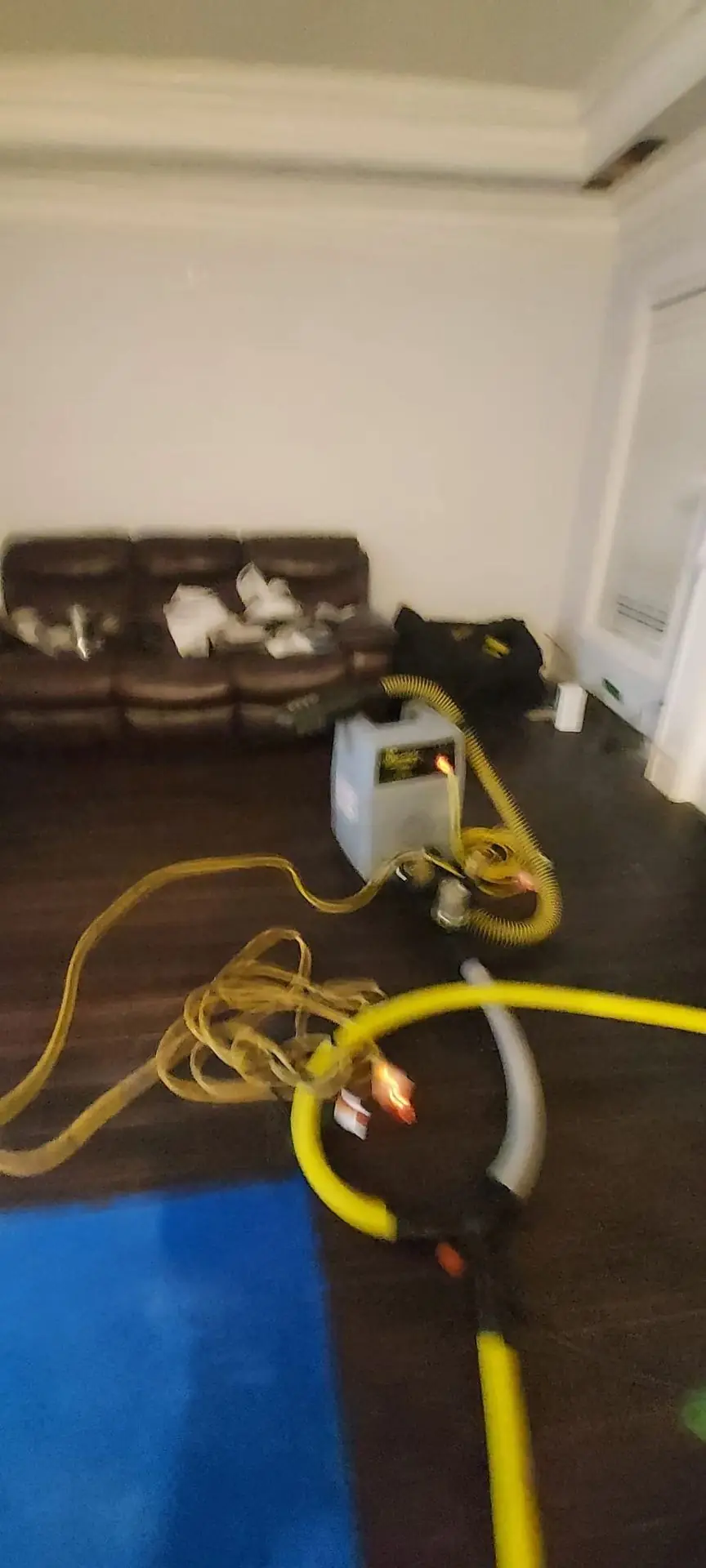
Water from a burst pipe travels inside walls and under floors. Even after it stops, the structure needs professional drying - commonly three to seven days with air movers, dehumidifiers and daily moisture readings - before walls are closed up again. Read our flooded basement guide for the steps after the water is off.
Frequently asked questions
At what temperature do pipes freeze?
Pipes in unheated or poorly insulated spots can freeze when the outside temperature stays well below freezing for several hours, especially with wind. Pipes on exterior walls, in crawl spaces, garages and under sinks on outside walls are most at risk.
How do I know if a pipe is frozen?
A tap gives only a trickle or nothing at all, frost is visible on the pipe, or the pipe bulges. Check the pipes that run along outside walls first.
How do I thaw a frozen pipe safely?
Open the tap it feeds, then warm the pipe slowly with a hair dryer, a heating pad or warm towels, starting near the tap. Never use an open flame or a torch. If you cannot find or reach the frozen section, call a plumber.
Does insurance cover a burst frozen pipe?
A sudden burst is commonly covered, minus your deductible. Many policies require the heat to be kept on, or someone to check the home, while you are away in winter - read the conditions in your policy before you travel.
What does it cost to repair water damage from a burst pipe?
Emergency mitigation and drying typically run between $2,500 and $15,000, depending on how far the water spread. Repairs to drywall, flooring and trim are quoted separately once drying is confirmed.
Burst pipe? Call us 24/7
Our water damage restoration team answers day and night across Toronto and the GTA: water extraction, structural drying, insurance documentation and the repairs afterwards. For planned work, ask for a free quote.