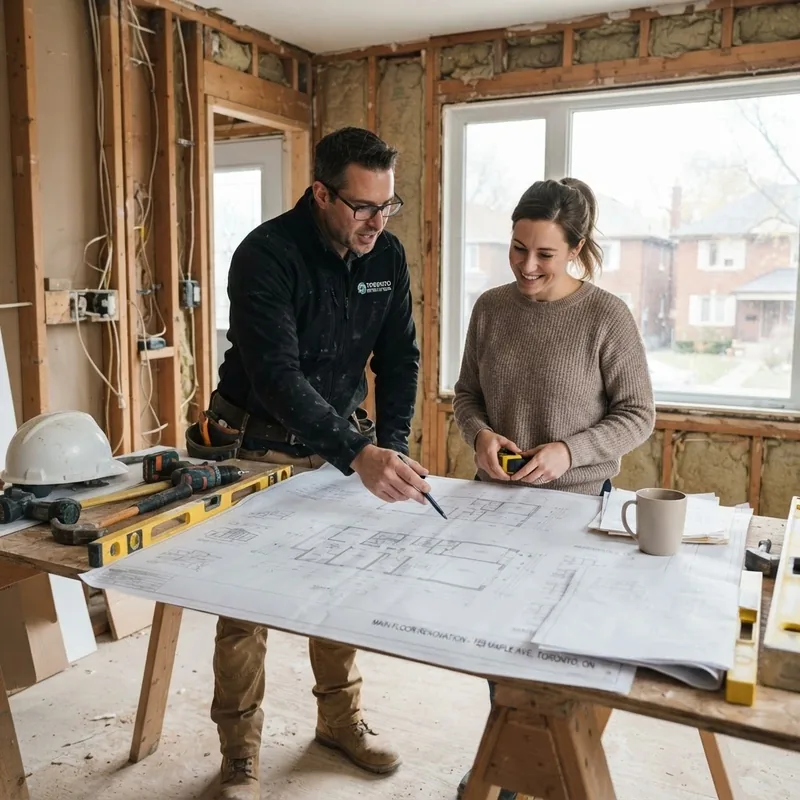
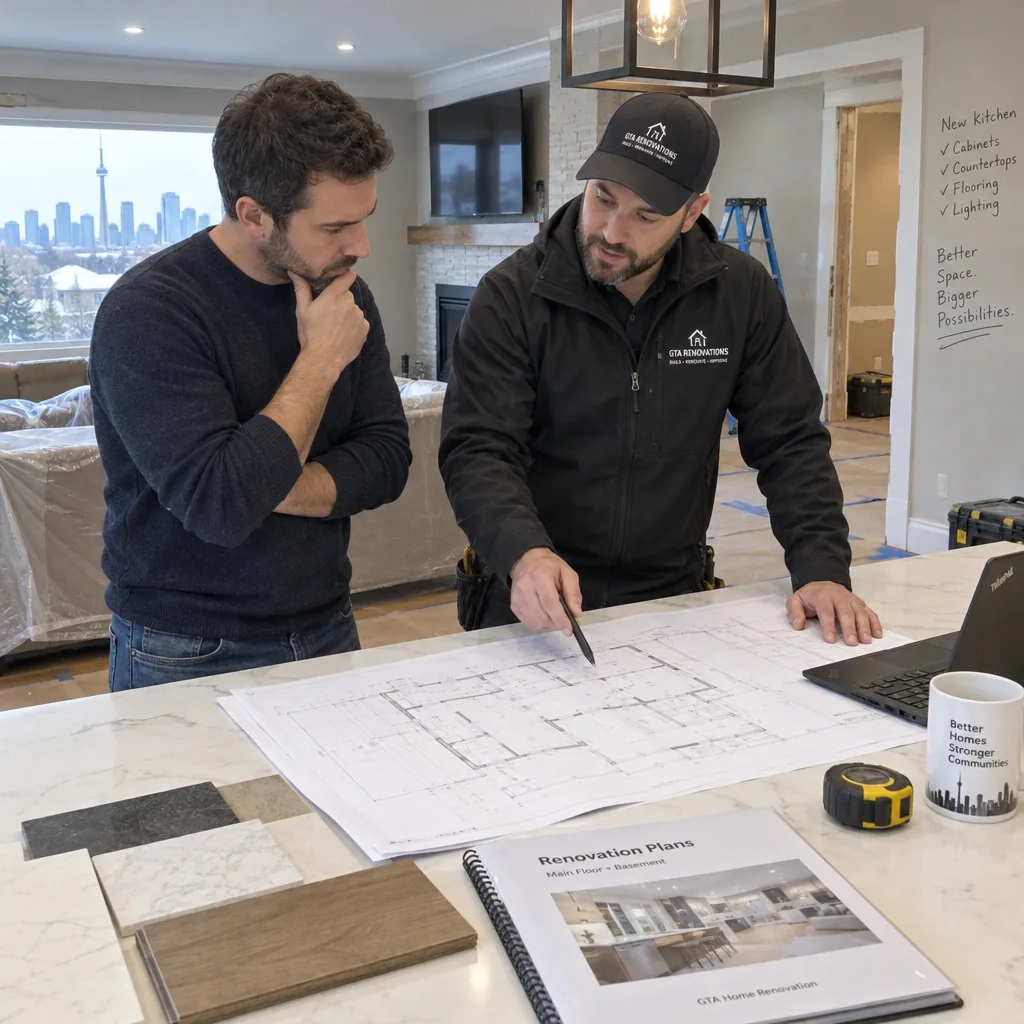
Renovating a property in the Greater Toronto Area (GTA) can add comfort, value, and function to your home or investment property, but it’s never as simple as picking up a hammer. Every project, whether it’s upgrading a kitchen, finishing a basement, or restoring after storm damage, requires careful planning, budgeting, regulatory awareness, and diligence in choosing a contractor. Missing a step, or misunderstanding a requirement, can lead to delays, surprise costs, permit problems, or safety issues.
TGV Construction Group Inc., a multi-million-dollar company with more than 200 completed projects across Toronto and the GTA, has developed thorough processes to guide clients through every stage: scope, planning, hiring, permits, construction, inspections, and project closeout. Drawing on deep experience with GTA bylaws and building conditions, this guide offers practical, local advice for residential and small commercial renovations.
For GTA homeowners, property managers, and businesses, reliable guidance and trustworthy service matter. As a construction company specializing in general contracting, emergency mitigation, design-build, and restoration, TGV Construction Group Inc. combines proven project management, safety-first practices, and a genuinely customer-centred approach.
Read on for the essentials that protect your renovation investment, keep you compliant, and reduce stress from start to finish. For our full range of services, visit our 24/7 emergency mitigation, general contracting, design-build, renovation, and restoration services page, or learn about TGV Construction Group’s experience and leadership in GTA renovations.
The 10 Things to Know Before You Renovate
Every successful GTA renovation is built on preparation. Use these ten steps to avoid costly pitfalls and complete your project smoothly.
1. Define Your Scope, Priorities, and Must-Haves
- Write a project outline: List every renovation you want, major and minor. Be specific, from functional changes (a new bathroom, an open kitchen, a waterproofed basement) to cosmetic updates (flooring, cabinetry, fixtures).
- Rank your priorities: Decide which items are must-haves and which could be scaled back or postponed if costs require.
- Decide what can stay: Consider which existing elements can be reused or upgraded, such as keeping the floor plan or refinishing cabinets, to save time and money.
- Clarify your main goals: For example, “create a legal secondary suite,” “repair water damage,” or “modernize a dated bathroom.”
A clear scope lets contractors prepare accurate estimates and reduces surprises during the project.
2. Set a Realistic Budget with a Contingency Fund
- Research local costs: Review current GTA price guides for similar projects, such as kitchens, bathrooms, basements, and additions. Labour is usually the largest expense, but materials, fixtures, and specialty trades also drive costs.
- Add a 10–20% contingency: Unexpected costs are common, such as moisture behind walls, outdated wiring, or hidden mould and asbestos, all of which turn up often in GTA homes.
- Stay flexible on features: Identify items you could downgrade or defer if your budget gets tight.
- Arrange financing in advance: Confirm your line of credit, savings, or renovation loan before signing a contract.
A common guideline is to pay no more than 10% as a deposit at signing, with progress payments tied to completed milestones. For pricing examples and budgeting tips, explore our project cost and budgeting guides for GTA renovations.
3. Check Permits, Zoning, and Property Restrictions Early
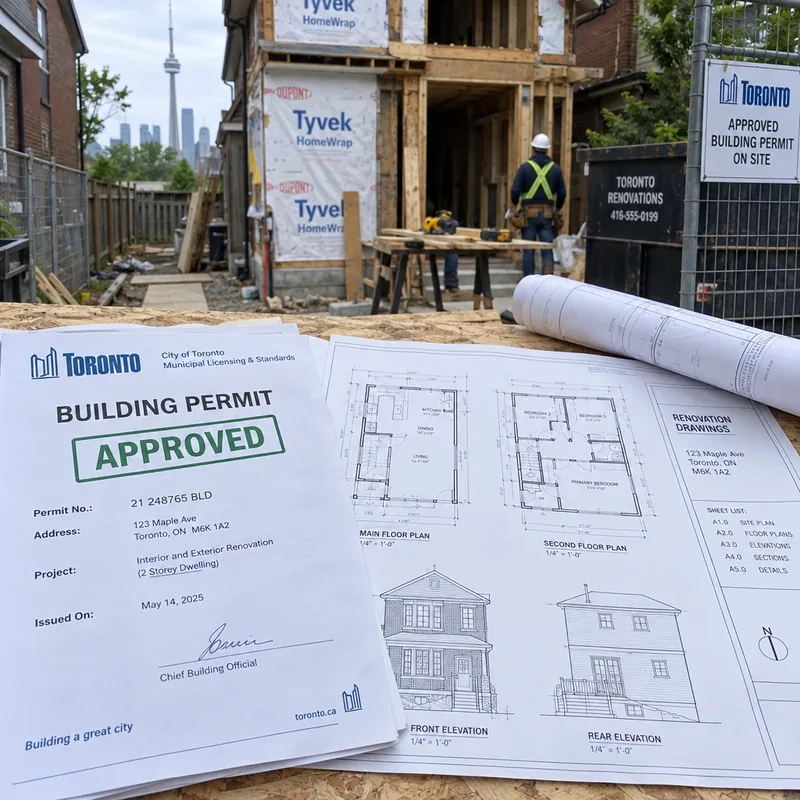
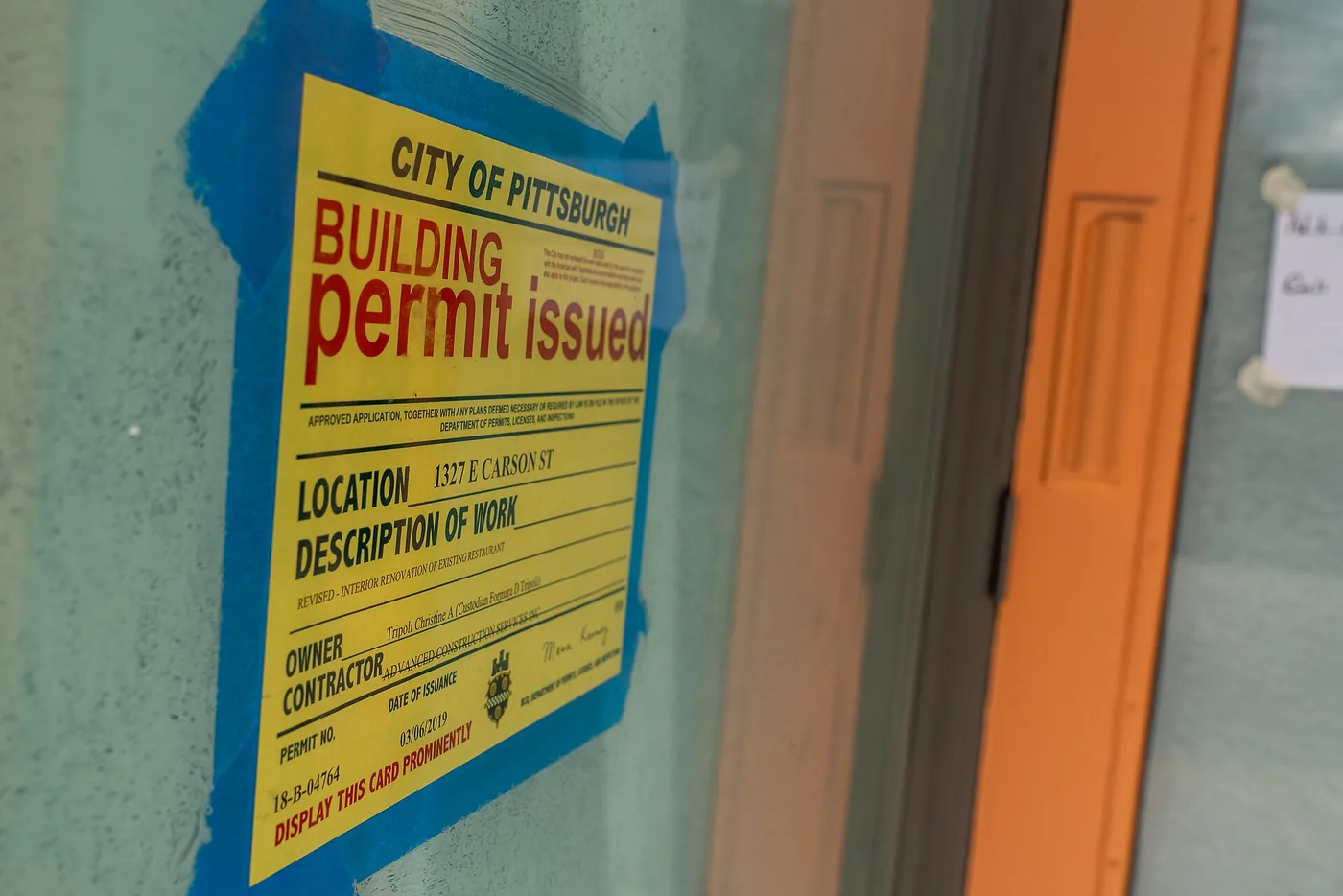
- Contact your municipality’s building department: Permit rules vary by city and project scope. Structural changes, plumbing and electrical work, and additions almost always require a permit.
- Don’t assume cosmetic work is exempt: Even replacing windows or making changes in a condo can trigger permit or condo board requirements.
- Check zoning and bylaw constraints: Setbacks, lot coverage, heritage designations, and conservation authority rules can all affect your plans.
- Condo and heritage properties: You may need condo board or heritage committee approval in addition to a city permit.
The building permit process confirms your project is safe and meets the Ontario Building Code, and it helps you avoid insurance and resale problems later.
4. Get Plans and Professional Advice When the Project Requires It
- Major renovations need formal drawings: If your project changes the structure, drains, or electrical systems, or involves an addition, you’ll need drawings from a qualified designer, architect, or engineer for both permits and quotes.
- Verify professional credentials: Use designers registered under Ontario’s Building Code Identification Number (BCIN) system, or licensed architects and engineers, for structural and mechanical plans. The province’s Qualification and Registration Tracking System (QuARTS) lets you check a designer’s registration.
- Watch for hidden issues in older homes: Homes built before the 1980s may contain knob-and-tube or aluminum wiring, lead paint, or asbestos. A specialist can identify these hazards and help prevent cost overruns and safety problems.
Getting professional plans upfront avoids rework and delays.
5. Vet Contractors and Verify Trade Qualifications
- Check experience and references: Choose a construction company with proven GTA experience, such as TGV Construction Group Inc., and contact recent clients for feedback.
- Ask for proof of insurance and WSIB coverage: Confirm that everyone, including the main contractor and all subcontractors, is properly insured.
- Check trade licences: Ontario requires specific licences for electrical contractors (Electrical Safety Authority), plumbers (Skilled Trades Ontario), and gas technicians (Technical Standards and Safety Authority). General contracting itself isn’t licensed provincially, so experience and local reputation matter.
- Understand roles and responsibilities: Know who will get permits, arrange inspections, and coordinate the trades.
- Confirm safety practices: Contractors must follow WSIB, Ministry of Labour, and other safety requirements on every site.
Reliable, qualified partners minimize risk and lead to a safe result.
6. Get a Detailed Written Contract Covering Payment and Scope
In Ontario, a written contract is required for renovation work of $50 or more. It should include:
- The contractor’s full legal business name, contact information, and any relevant licence numbers
- The exact scope of work, materials, finishes, and all exclusions
- Clear start and completion dates, plus milestones
- The payment schedule: deposit, progress payments, and the 10% holdback required under Ontario’s Construction Act
- Who is responsible for, and pays for, permits, plans, and inspections
- Warranties and service guarantees
- Responsibility for cleanup, debris removal, and site access
- A dispute resolution process
- How changes (“change orders”) are handled and approved
Never start work based on a handshake or a one-page quote. Written details protect your legal rights and make everyone’s expectations clear.
Ready to start? Request a free quote for your renovation project and get expert guidance from day one.
7. Plan Your Timeline, Key Decisions, and Long-Lead Materials
- Set a realistic timeline: Confirm when each stage should start and finish, and when key decisions (fixtures, tile, layout) need to be made.
- Order long-lead items early: Custom cabinetry, imported tile, and special-order fixtures can take a long time to manufacture or ship.
- Allow time for permits and inspections: Build in time for municipal review and mandatory inspections at key milestones.
- Plan for your household: Decide whether you’ll move out, set up a temporary kitchen or bathroom, or make arrangements for pets and children.
Good scheduling avoids costly downtime and miscommunication.
8. Prepare for Disruption and Handle Hazardous Materials Safely
- Expect disruption: Noise, dust, limited access, and vibration are normal during construction. Protect your valuables and let your neighbours know what’s coming.
- Identify and address hazards: Older GTA homes may contain asbestos, lead, or hidden mould. Never attempt to remove these yourself. This work requires trained, certified remediation professionals with the right equipment and procedures.
- Watch for water, smoke, and storm damage: Demolition can expose vulnerabilities, and flooding, wind, or fire can cause setbacks.
- Have professional help ready: TGV Construction Group Inc. offers mould and asbestos remediation, water and flood, fire and smoke, and wind and storm restoration, plus 24/7 emergency services.
Learn about restoration and emergency services that may be needed during a renovation.
9. Manage Changes, Inspections, and Payments Carefully
- Put every change in writing: Never approve extra work or costs without a signed change order showing the cost and the impact on the schedule.
- Pay only for completed work: Make progress payments only once each stage is signed off, inspections are passed, and the promised work is done.
- Follow holdback rules: Ontario’s Construction Act requires owners to hold back 10% of the value of work done, generally until 60 days after the work is completed (the period in which subcontractors and suppliers can register a lien). Don’t release final funds until all deficiencies are fixed and municipal paperwork is received.
- Keep inspection records: Save all permits, inspection reports, and agreements to avoid future legal disputes or delays when you sell.
Careful administration and payment discipline protect your investment.
10. Do a Thorough Final Walkthrough and Collect All Closeout Documents
- Final inspection: Walk through the finished project with your contractor. Make a written list of any deficiencies, with deadlines for fixing them.
- Gather your documents: Collect all permits, inspection sign-offs, warranty certificates, appliance and system manuals, receipts, and any hazardous material abatement records.
- Release final payments only when you’re satisfied: Don’t release the final payment or holdback until every deficiency is resolved and the holdback period has passed.
- Keep everything: Comprehensive records help with insurance, resale, and any future issues.
Renovation Pre-Start Checklist
Before contacting contractors or requesting quotes, use this checklist to avoid delays and mistakes:
- Define your goals: Sort your list into must-haves, nice-to-haves, and items that could wait for a future phase.
- Assess your home’s current condition: Note structural irregularities, dampness, water stains, old electrical or plumbing, and past repairs.
- Create a working budget: Include known costs plus a 10–20% contingency for unexpected discoveries.
- Contact your municipality: Confirm which permits and inspections your project needs, and gather the application forms.
- Check condo or heritage requirements: Get any additional approvals or documentation before proceeding.
- Research design and construction professionals: Look at experience and online reviews, and verify references and certifications.
- Organize your property records: Gather drawings, measurements, photos, surveys, utility information, and past permits to save time with consultants.
For financial planning, explore our project cost and budgeting guides for GTA renovations.
Typical Renovation Approvals and Contacts
Renovation Type | Approvals to Check | Who to Contact |
Cosmetic / finishes only | Property rules; possible condo or heritage restrictions | Property manager or city hall |
Structural changes | Building permit, zoning, city inspections | Municipal building department |
Electrical upgrades | ESA permit and inspection; licensed electrical contractor | Electrical Safety Authority; licensed trades |
Plumbing work | Licensed plumber; municipal permit and inspection | Licensed plumber; city permit office |
Condo or heritage property | Board or committee approval and meeting schedules | Condo board; heritage committee |
Common Questions About GTA Renovations
Do I need a building permit for my renovation?
Most projects involving structural work, plumbing, additions, or secondary suites require a building permit, and electrical work requires an ESA permit. Cosmetic updates often don’t, but rules vary by municipality and project. When in doubt, call your city’s permit office before starting.
Who is responsible for applying for and paying for permits?
The property owner is ultimately responsible for permit compliance. Many reputable contractors handle permits as part of a turnkey service, so make sure your contract states who applies, who pays, and who schedules inspections. Never start work until the required permits are issued.
What’s a reasonable deposit to pay a contractor?
A common guideline is no more than 10% of the total contract price, paid when you sign. Remaining payments should be tied to completed milestones.
What should a renovation contract include?
- The contractor’s full business information
- A detailed scope with clear inclusions and exclusions
- The timeline, milestones, and project length
- Costs, taxes, payment terms, deposit, and holdback
- The change order and dispute resolution process
- Who is responsible for permits, inspections, and cleanup
- Warranties and guarantees
Ontario requires a written contract for any renovation work of $50 or more.
Can a contractor charge more than the written estimate?
Under Ontario’s Consumer Protection Act, the final bill for an estimate-based contract can’t exceed the written estimate by more than 10% unless you agree to a change in scope or additional work. Always approve changes in writing.
Is there a cooling-off period after signing?
Yes. Under Ontario’s current Consumer Protection Act, contracts of $50 or more signed at your home come with a 10-day cooling-off period. Ontario has also passed a new Consumer Protection Act, 2023, which will replace the current law once it takes effect and could change these rules. Always check your contract and the current rules for your cancellation rights.
How do I verify that contractors and trades are qualified?
- Ask for trade licences (ESA for electrical, Skilled Trades Ontario for plumbing).
- Ask for proof of WSIB and liability insurance.
- Check at least two recent client references.
- Confirm real experience with projects like yours.
General contracting isn’t licensed province-wide in Ontario, but the regulated trades are.
Should I renovate before moving in, or while living in the home?
Renovating before you move in minimizes disruption and dust, and keeps children and pets safer. If you have to live through construction, plan sealed-off work zones, temporary setups, and a backup schedule with your contractor.
What should I do if my home may contain asbestos or lead?
If your home was built before the 1980s or you suspect hazardous materials, contact a qualified abatement professional. Never disturb these materials yourself, as the health and legal risks are significant. TGV Construction Group Inc. is experienced in mould and asbestos abatement and restoration.
What documents and warranties should I receive when the project is done?
- Inspection sign-offs and closed permits
- Written warranty certificates
- Itemized receipts and payment records
- As-built drawings or specifications
- Manuals for new systems and fixtures
- Confirmation that any hazardous materials were handled or removed safely
- A written list of any open deficiencies, with a schedule for fixing them
Complete documentation protects you for insurance claims and resale.
A Final Note on Local Requirements
- Permit rules are local: GTA municipalities have different requirements and review times for similar projects. Always confirm with your city or township.
- Don’t overlook other approvals: Zoning, heritage and conservation approvals, condo board consent, and the Toronto Green Standard may all apply.
- Licensed trades are non-negotiable: Only licensed, certified trades can do electrical and plumbing work, and it must be inspected under Ontario codes, whatever the property type.
- Know your financial protections and obligations: Ontario law sets rules for contracts, estimates, payments, and holdback, but the details vary. Consumer protection rules may change when the new Consumer Protection Act, 2023 takes effect.
- Check current resources: Regulations and permit fees change, so confirm with your local building department or a knowledgeable contractor at the start.
This article provides general guidance only and does not replace legal, financial, or technical advice. Every renovation depends on the property, scope, and local rules. Review your contract carefully, confirm requirements with the appropriate authorities, and consult professionals for advice specific to your site.
Start Your GTA Renovation with Confidence
If you experience major damage from fire, wind, or water, immediate restoration protects your health and property value. TGV Construction Group Inc. offers prompt, professional help for large-loss, fire and smoke, water and flood, and storm restoration, bringing a safety-first approach and proven expertise to every call.
For tailored advice, explore our emergency, residential renovation, and commercial restoration services, or request a free quote to start your renovation project. For emergencies, call us 24/7 at (905) 669-2727.