Hardwood floors can look worn long before they are truly finished. Scratches, dull finish, small gaps, and faded traffic lanes often look serious, but many can be fixed without tearing out the floor. The bigger question is whether the wood is still a good candidate for refinishing, or whether replacement will save money and frustration over the long run.
For homeowners and business owners in Ontario, the right choice usually comes down to floor thickness, damage, budget, timeline, and the look you want. The guide below compares both options in practical terms.
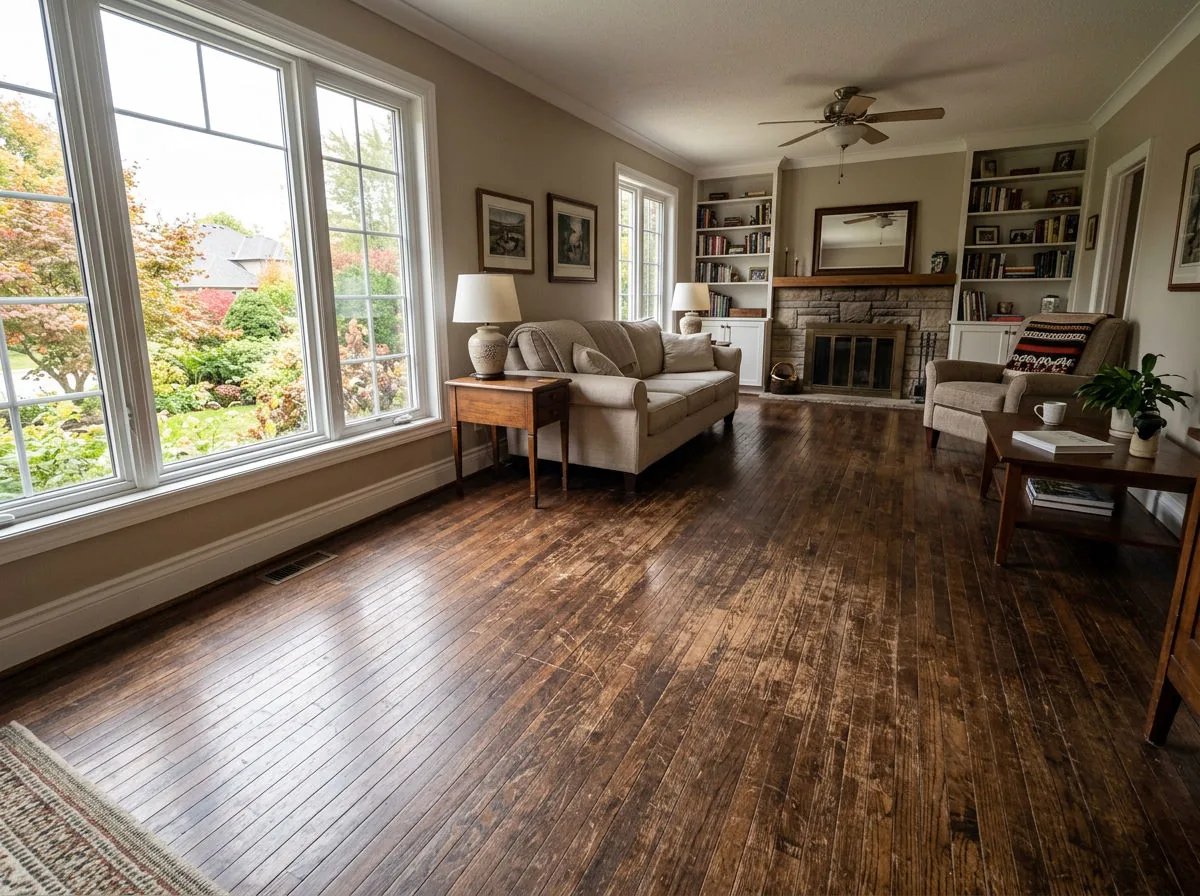 Surface wear does not always mean the floor needs to be replaced.
What refinishing hardwood floors usually involves
Refinishing means sanding away the old finish and a thin layer of wood, then applying stain if desired and sealing the surface with a protective finish. The National Wood Flooring Association notes that solid hardwood can often be sanded and refinished multiple times, depending on how much wood remains above the tongue and groove.
A typical refinishing project may include:
- Removing furniture and floor vents
- Sanding the old coating and surface scratches
- Repairing small gaps, loose boards, or minor stains
- Applying stain, if the colour is changing
- Applying several coats of finish
Allowing curing time before heavy use
Pros of refinishing
Lower cost than replacement in many cases
Refinishing usually costs less because the existing floor stays in place. Labour, sanding, finish, and minor repairs are still involved, but there is no full demolition, disposal, or new flooring material cost.
Preserves original hardwood
Older homes often have high-quality solid wood that is difficult or expensive to match today. Refinishing keeps that character while improving the surface.
Less material waste
Because the floor is reused, refinishing creates less waste than a full tear-out. That matters in larger homes, rental units, restaurants, offices, and retail spaces.
Good for surface-level wear
If the floor is dull, scratched, sun-faded, or lightly stained, refinishing can make it look dramatically better.
Cons of refinishing
It cannot fix every problem
Deep pet stains, severe water damage, rot, major cupping, or boards that have been sanded too many times may not refinish well.
There is dust, odour, and downtime
Modern dust containment helps, but sanding is still disruptive. Oil-based finishes can also have stronger odours than water-based products. Business owners should plan around customer traffic and staff access.
Colour changes have limits
Stains can change the tone, but they cannot make every species look like another species. For example, red oak will still have its natural grain and undertone.
What replacing hardwood floors usually involves
Replacement means removing the existing floor and installing something new. That could be solid hardwood, engineered hardwood, luxury vinyl plank, laminate, or tile, depending on the space.
According to the Consumer Reports flooring buying guide, flooring choice should account for wear, moisture, pets, and room use. That is especially relevant in Ontario homes where entryways see snow, salt, and water during winter.
Pros of replacement
Fixes structural or moisture-related problems
If boards are warped, loose, rotten, or damaged below the surface, replacement may be the safer choice. It also gives contractors a chance to inspect and repair the subfloor.
Allows a completely new look
Replacement gives full control over species, plank width, colour, texture, grade, and pattern. If the existing floor is narrow strip oak and the goal is wide-plank engineered hardwood, replacement is the direct route.
Better for layout changes
Renovations that remove walls, move kitchens, or combine rooms often expose gaps where old flooring never existed. Replacing the floor can create a consistent finish across the whole area.
Can improve performance in tricky areas
Basements, condos, commercial spaces, and high-traffic areas may benefit from engineered products or other materials designed for stability and wear.
Cons of replacement
Higher total cost
Replacement includes demolition, disposal, new materials, installation, trim work, transitions, and sometimes subfloor repairs. Costs vary widely based on material and site conditions.
Longer project time
Ordering flooring, acclimating wood, removing the old floor, and installing the new one can take longer than refinishing.
More disruption
Replacement often affects baseboards, doors, thresholds, appliances, and adjoining rooms. In commercial spaces, this can mean more downtime or phased scheduling.
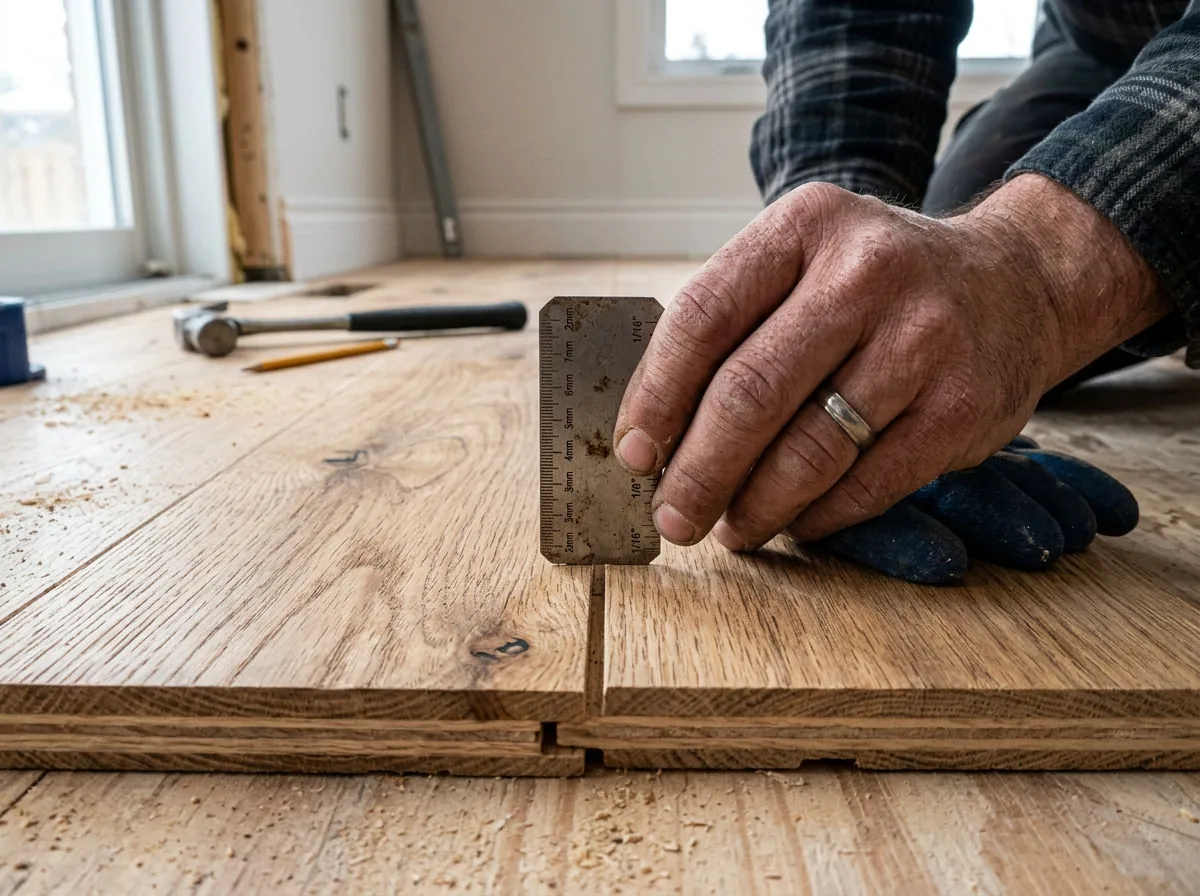 Board thickness is one of the clearest clues in the refinish-or-replace decision.
Cost, time, and condition compared
Factor | Refinishing | Replacement |
Typical cost | Often lower when the floor is structurally sound | Often higher because it includes removal and new materials |
Timeline | Usually faster, though curing time matters | Usually longer, especially with material lead times |
Best for | Scratches, dull finish, minor stains, faded colour | Severe damage, thin boards, major layout changes |
Design flexibility | Moderate, mainly stain and finish choices | High, including species, width, colour, and material type |
Disruption | Sanding, dust control, odour, limited access | Demolition, noise, disposal, trim and transition work |
Longevity | Strong if enough wood remains | Strong if the right product is chosen and installed well |
A practical refinishing and floors comparison starts with one question: is the wood still healthy enough to save? If the answer is yes, refinishing often gives the best value. If the answer is no, replacement prevents repeated repairs.
How to decide what your floor needs
Use these checks before asking for a quote.
Check the remaining wood thickness
Look at floor vents, transitions, or exposed edges. If the wear layer is very thin, sanding may expose nails or weaken the boards. Engineered hardwood also varies. Some engineered floors have a thick enough top layer to refinish once, while others do not.
Look for water damage
Dark staining, cupping, soft spots, musty smells, or boards that move underfoot can point to moisture problems. The Canada Mortgage and Housing Corporation has homeowner resources on moisture and housing performance, which is useful when water damage is part of the issue.
Identify the damage type
Surface scratches usually favour refinishing. Deep gouges, broken boards, and widespread stains may need board replacement first, or full replacement if the damage is spread across the floor.
Think about the room’s use
A quiet bedroom has different needs than a café, clinic, rental unit, or busy family kitchen. High-traffic spaces may need a tougher finish, a different product, or a maintenance plan.
Compare the full project cost, not just the floor
Include moving furniture, temporary accommodations, baseboard work, stair nosing, transitions, disposal, and business downtime. A cheaper line item can become expensive if it causes longer disruption.
When refinishing is the better choice
Refinishing is often the smart option when:
- The floor is solid hardwood with enough material left
- Damage is mostly scratches, dullness, or colour fading
- The layout is staying the same
- The subfloor feels stable
The goal is to refresh the space without a full renovation
It is especially worthwhile for older hardwood with character, such as oak, maple, ash, or birch floors common in many Ontario properties.
When replacement is the better choice
Replacement usually makes more sense when:
- Boards are thin, split, loose, rotten, or deeply stained
- Water damage has reached the subfloor
- The existing floor has been refinished too many times
- A renovation changed the floor plan
- You want a very different plank width, species, or product
The floor is not real hardwood, or it has a non-refinishable wear layer
For commercial properties, replacement may also be the better choice when durability, code requirements, or fast phased installation matter more than preserving existing wood.
How our flooring company can help
A proper decision starts with an on-site assessment, not guesswork. Our team can inspect the existing hardwood, check thickness where possible, look for moisture or subfloor issues, and explain whether refinishing or replacement is the better fit.
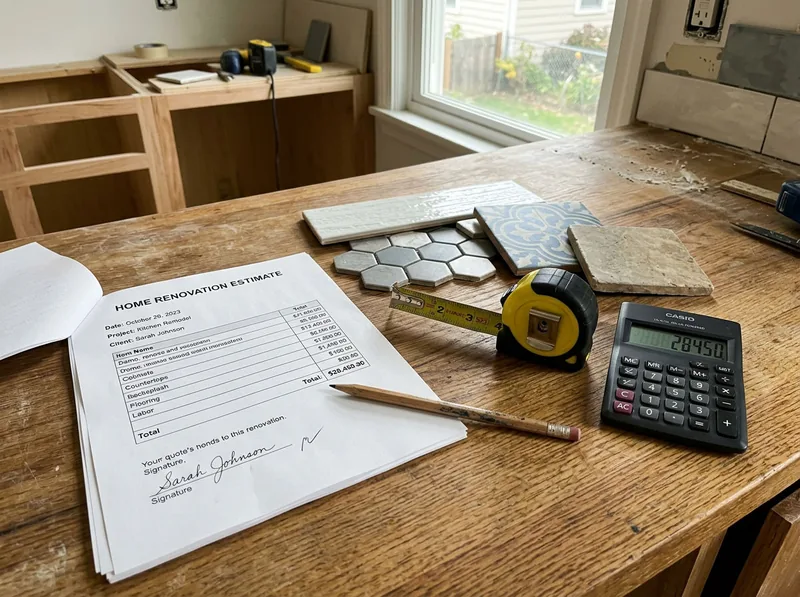
We can also prepare a clear quote that separates the major parts of the job, such as sanding, finish type, board repairs, removal, new flooring, transitions, and trim work. That makes it easier to compare options and avoid surprises.
For the most accurate quote, have these details ready:
- Approximate square footage
- Photos of damaged areas
- The age of the floor, if known
- Whether the floor is solid or engineered
- Your preferred timeline
Any pets, tenants, customers, or staff who need access during the work
FAQ
Can all hardwood floors be refinished?
No. Solid hardwood can often be refinished if enough wood remains. Some engineered hardwood can be refinished, but only if the top veneer is thick enough. Thin veneer floors usually cannot be sanded safely.
Is refinishing always cheaper than replacing?
Refinishing is often cheaper, but not always. If the floor needs many board repairs, stain treatment, or subfloor work, replacement may offer better value.
How long before furniture can go back after refinishing?
Light furniture may be allowed back after the finish has dried enough, but full curing can take longer. The exact timing depends on the finish used, humidity, ventilation, and manufacturer guidance.
Should business owners refinish or replace during operating hours?
Usually no. Both options create noise and restricted access. Refinishing also involves sanding and finish curing. Many commercial projects work best after hours, over a closure period, or in phases.
What finish is best for high-traffic areas?
Water-based and oil-based finishes both have strengths. For busy homes or commercial spaces, ask about wear rating, maintenance, drying time, and odour before choosing.
The best choice is the one that matches the floor you already have
Refinishing is ideal when the hardwood is structurally sound and mainly needs a fresh surface. Replacement is the better choice when damage runs deeper, the floor is too thin, or the project calls for a completely new look.
Before deciding, inspect the floor closely and get a written quote for both options when possible. A side-by-side estimate gives the clearest answer, and it helps protect the budget before work begins.
Not sure whether your floors can be saved? TGV Construction Group Inc. provides residential and commercial renovation, flooring, and restoration services across the Greater Toronto Area and Ontario. If your floors were damaged by a leak or flood, our team can also handle 24/7 emergency mitigation and restoration before repairs begin, so moisture problems are fixed at the source rather than covered up.
With over 200 completed projects and a focus on safety, quality, and clear communication, we’ll give you an honest assessment and a detailed, itemized estimate. Request a free quote for your flooring project or contact TGV Construction Group to book an on-site assessment.