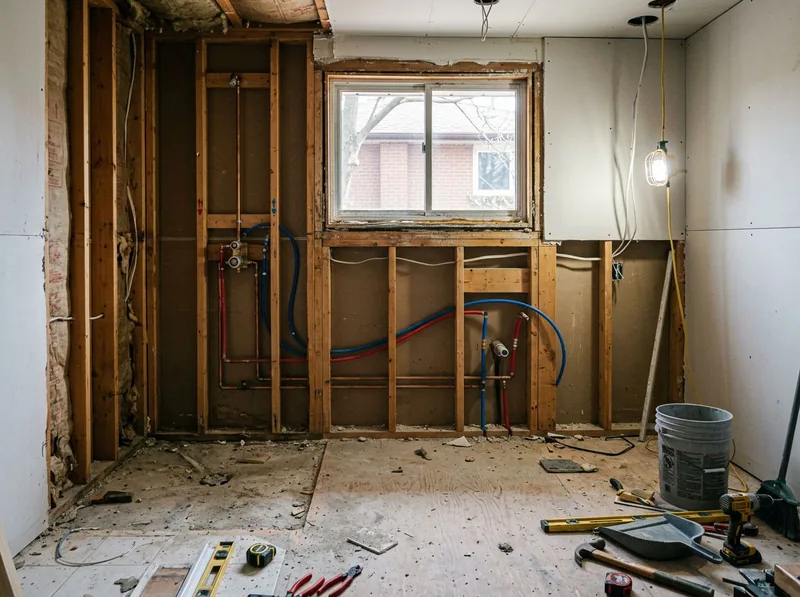
A low quote can look attractive until the missing details start costing real money. Renovation quotes are not just prices. They are working documents that define what will be built, what materials will be used, when the work should finish, and how payment risk is shared.
For a home, retail space, clinic, restaurant, or office unit, the safest comparison starts with one rule: compare the same job, not just the final number.
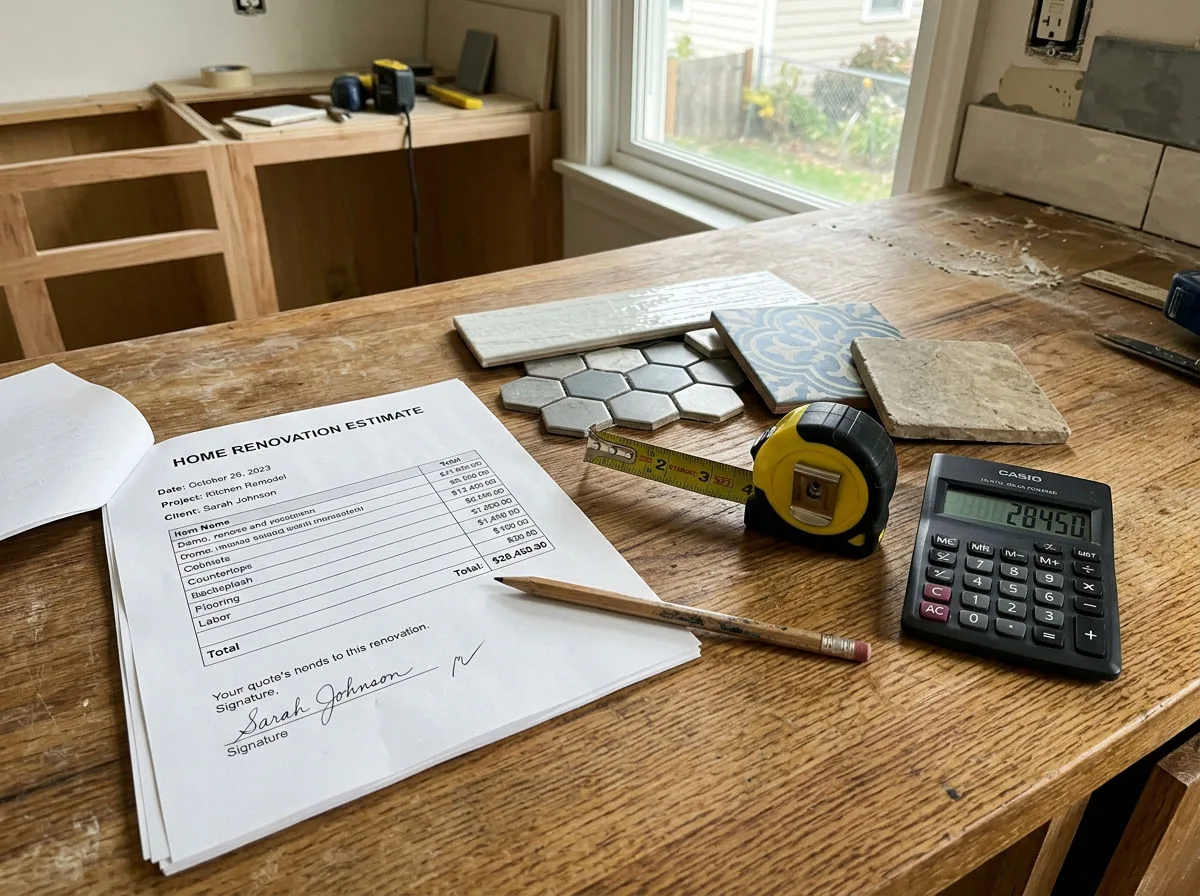 Good quote comparisons start with the same scope and material assumptions.
Read the cost breakdown before looking at the total
The total price matters, but it should be the last thing you judge. A useful quote separates the major cost categories so it is clear what is included.
Look for separate lines for:
- Demolition and disposal
- Framing, drywall, plastering, or carpentry
- Plumbing, electrical, HVAC, and other trades
- Fixtures, fittings, tiles, cabinetry, flooring, and paint
- Permits, inspections, and engineering if needed
- Site protection and cleanup
- Taxes
Contingency or provisional allowances
If one contractor lists “bathroom renovation” as a single amount and another provides 20 itemized lines, the two quotes are not equally useful. Ask the first contractor to provide an itemized estimate before deciding.
Allowances deserve special attention. An allowance is a placeholder for something not fully selected yet, such as tiles, taps, lighting, or cabinetry hardware. If Quote A includes AED 35 per square metre tiles and Quote B includes AED 120 per square metre tiles, the prices may look unfairly far apart. The cheaper quote may rise later once actual materials are chosen.
For Ontario projects, consumer guidance from the Government of Ontario recommends getting written estimates and contracts for home renovations, not relying on verbal promises. See the province’s renovation guidance at Ontario.ca.
Check whether the scope of work matches your expectations
The scope of work is the heart of the quote. It explains what the contractor is agreeing to do. A vague scope creates room for disputes.
A strong scope should answer questions such as:
- Which rooms or areas are included?
- What will be removed?
- What will be repaired, replaced, or installed?
- Who buys materials?
- Who handles permits?
- Are drawings, engineering, or inspections included?
- What finishes are included?
What is excluded?
Exclusions are not automatically bad. They can make a quote clearer. For example, a contractor may state that hidden water damage, asbestos removal, structural changes, and permit fees are excluded unless confirmed in writing. That is better than silence.
For business owners, scope details are even more critical. A commercial renovation may affect fire safety systems, accessibility, signage, working hours, security, and business interruption. If the contractor must work after hours, protect stock, or keep washrooms operational during the project, those requirements should appear in the quote.
A practical way to compare is to create a simple table:
Item | Quote A | Quote B | Quote C |
Demolition included | Yes | Yes | No |
Permit fees included | No | Yes | No |
Flooring allowance | AED 90 per m² | AED 65 per m² | Not stated |
Cleanup included | Yes | Not stated | Yes |
Payment schedule clear | Yes | Yes | No |
This kind of renovation, price, compare exercise quickly shows whether the lowest number is actually the best value.
Compare timelines with the same level of scrutiny
A quote should give more than a start date and a hopeful finish date. Renovation work often depends on permits, inspections, material lead times, and trade scheduling. A realistic timeline should include the major phases.
Ask for:
- Estimated start date
- Estimated completion date
- Key milestones
- Lead times for custom items
- Who is responsible for ordering materials
- How delays will be communicated
Whether the contractor is working on other projects at the same time
A short timeline is not always a better timeline. If one contractor says a kitchen will take 10 working days and two others estimate four to six weeks, ask how the faster contractor plans to staff and sequence the job. There may be a valid answer, such as prefabricated cabinetry already in stock. There may also be missing work.
For commercial spaces, timeline risk can affect rent, staffing, inventory, and opening dates. Build those costs into the comparison, not just the contractor’s quoted amount.
 Material allowances can explain why two quotes are far apart.
Understand payment terms before signing
Payment terms show how risk is shared between the client and the contractor. A reasonable schedule usually links payments to progress, not just calendar dates.
Common payment stages include:
- Deposit at contract signing
- Payment after demolition or rough-in work
- Payment after materials arrive
- Payment after substantial completion
Final payment after deficiencies are fixed
Be cautious with very large upfront payments, especially if materials have not been ordered or work has not started. A contractor may need a deposit to reserve time or buy custom materials, but the quote should explain what the deposit covers.
Ask these questions before paying:
- Is the deposit refundable in any situation?
- Are taxes included?
- What payment methods are accepted?
- When are progress payments due?
- What happens if the project scope changes?
How are change orders approved?
For Ontario projects, written contracts and clear records help protect both sides. The Government of Ontario’s consumer protection information is a useful starting point for understanding contract expectations and cancellation rights. Review it at Ontario’s consumer protection page.
Make the comparison fair before choosing
A fair comparison starts with giving every contractor the same information. Provide the same drawings, measurements, site photos, finish preferences, and access details. If one contractor visits the site and another quotes from a short message, their quotes will not carry the same reliability.
Use these steps to keep the process fair:
Ask for itemized estimates
Itemization helps reveal missing work, low allowances, and unclear exclusions.
Separate materials from labour
Labour pricing reflects skill, crew size, insurance, supervision, and time. Materials reflect quality, availability, freight, and waste. A quote with cheap materials and high labour is different from one with premium materials and efficient labour.
Check reputation, not just price
Read recent reviews, ask for references, and look for patterns. One poor review may not tell the full story. Repeated complaints about delays, poor communication, or unfinished work should carry weight.
Verify insurance and worker coverage
In Ontario, many businesses can request a WSIB clearance to confirm a contractor’s standing for workplace insurance purposes. The official WSIB clearance information is available at WSIB Ontario.
Watch for pressure tactics
The Competition Bureau of Canada warns consumers and businesses about deceptive marketplace conduct and provides guidance on fair competition. Its resources are available at competition-bureau.canada.ca.
The best quote is usually the one that is clear, complete, realistic, and backed by a contractor who can explain every number.
FAQ
Should I always choose the lowest renovation quote?
No. Choose the lowest quote only if the scope, materials, timeline, payment terms, and contractor reputation are comparable. A low quote with missing items can become expensive later.
How many renovation quotes should I get?
Three quotes is a practical target for most projects. It gives enough range to spot unusually high or low pricing without slowing the project too much.
What should I do if two quotes are very different?
Ask each contractor to confirm the scope, allowances, exclusions, and assumptions in writing. Large gaps often come from different material quality, labour time, permit assumptions, or missing work.
Are verbal renovation quotes reliable?
Verbal quotes are risky. Ask for written details before approving work or paying a deposit. Written records reduce confusion if the scope or price changes.
What is a change order?
A change order is a written approval for work that differs from the original quote or contract. It should state the price, timeline effect, and exact change before the work proceeds.
The smart choice is the clearest quote
A professional quote should make the project easier to understand, not harder. Read the details, question unclear items, and compare each contractor on the same scope. If a quote explains the costs, work, timing, payment schedule, and exclusions in plain language, it gives a much stronger basis for a confident decision.
Get a free renovation quote in Ontario
TGV Construction Group Inc. renovates across Ontario, with more than 200 projects completed since 2017 and free quotes on every job.
See our general contracting and renovation services, then send your project details through our Get a Quote page. You can also call our office at (905) 669-2727 or email estimating@tgvconstructiongroup.ca.