Interior painting in Toronto looks simple until you see the difference between a quick coat and a job done properly. Fresh paint over cracked plaster, nail pops and greasy kitchen walls looks fine for a week and then shows every flaw. Good results come from preparation: repairing the surfaces, priming where needed, choosing the right finish for each room, and protecting the home during the work. This guide explains how a professional interior painting job runs in Toronto homes and condos, and what to ask before you book.
TGV Construction Group Inc. has completed more than 300 projects in the GTA and Ontario since 2017, and painting is part of most of them, from a single room to a whole house after a renovation. See home renovation for full projects and handyman services for small repairs before painting.
Toronto homes and their walls
Older houses with plaster. Many houses in neighbourhoods such as the Annex, Leslieville, Riverdale and High Park have original plaster walls. Plaster cracks along the lath, bulges where the keys have failed and shows old repairs. It can be painted beautifully, but cracks need proper repair, not just filler, or they return.
Post-war houses with drywall. Bungalows and two-storeys from the 1950s to the 1980s have drywall with nail pops, tape seams that show and years of small dents. Repairs are faster, and a good primer evens out patches.
Condos. Smooth drywall, high ceilings and big windows, but strict building rules about hours, elevators and protecting common areas.
New finishes after a renovation. New drywall needs a primer made for it; without one, the finish coat flashes and looks patchy.
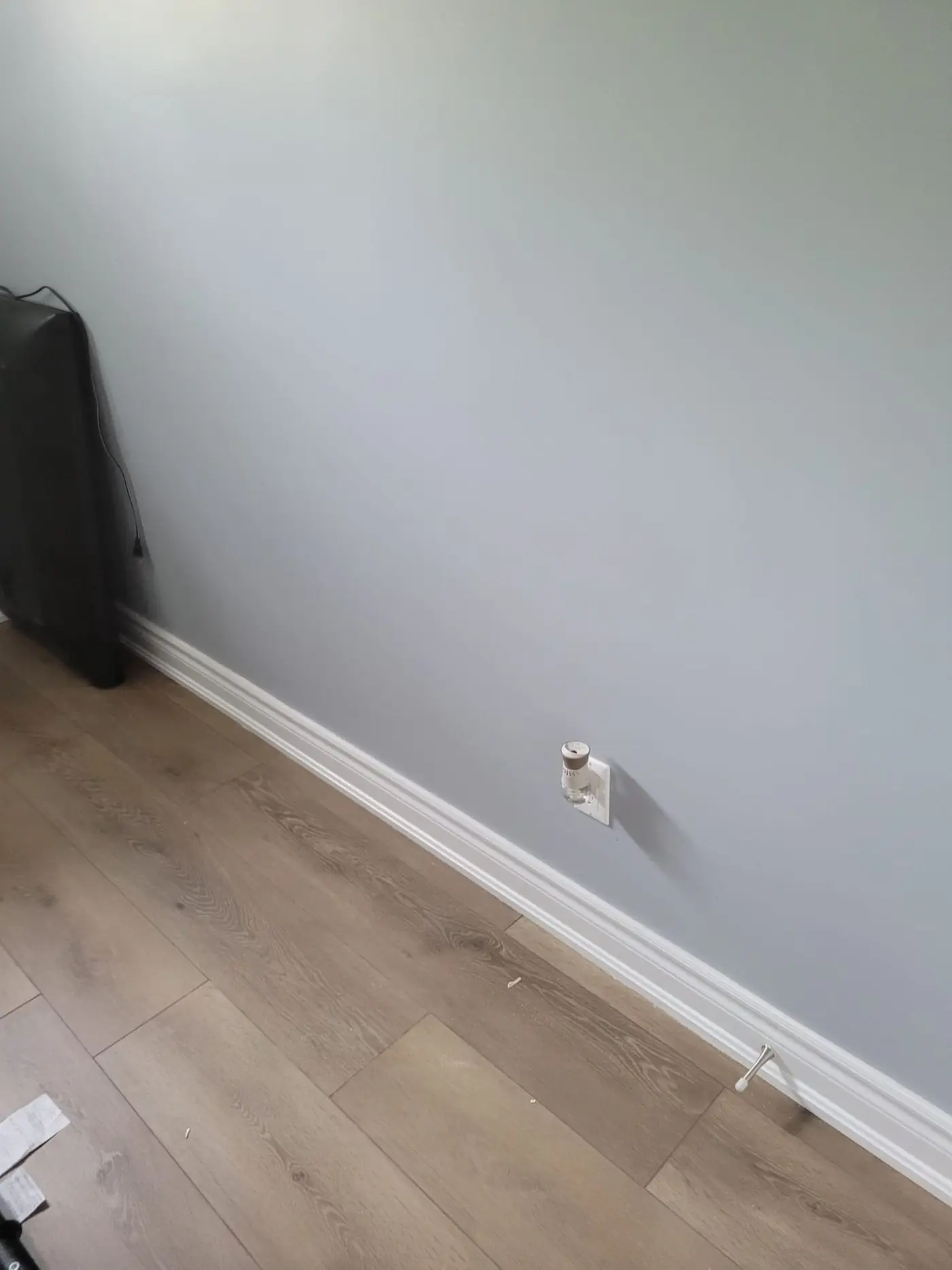
Interior painting in Toronto, step by step
- Walk the rooms. We note colours, ceiling heights, wall condition, trim and doors, and anything that needs repair before paint.
- Agree on colours and sheens. You choose colours; we suggest the right finish for each surface and room.
- Move and cover. Furniture is moved to the centre and covered, floors are protected and switch plates are removed.
- Repair the surfaces. Holes, cracks and dents are filled, loose tape and nail pops are fixed, and patched areas are sanded smooth.
- Prime where needed. New drywall, patches, stains and colour changes get primer so the finish coats look even.
- Caulk the trim. Gaps between trim and walls are caulked for clean lines.
- Paint ceilings first. Ceilings are rolled before walls so any spatter is covered later.
- Two coats on walls. Walls are cut in and rolled, with two coats for full colour and durability.
- Trim and doors. Baseboards, casings and doors are painted last in a harder-wearing finish.
- Clean up and touch up. Furniture goes back, plates are reinstalled, and we walk the rooms with you to touch up anything missed.
Choosing paint and finishes
Good paint covers better and lasts longer, so it often saves a coat. For most living spaces, a matte or eggshell finish hides small wall flaws and still cleans reasonably well. Kitchens, bathrooms, kids' rooms and hallways benefit from a more washable finish. Trim and doors take the most knocks, so they get a harder satin or semi-gloss. Ceilings are usually flat white to hide imperfections. Low-odour, low-VOC paints let you stay in the home during the work with good ventilation.
Colour tips
- Test on the wall. Paint large samples on two walls and look at them in morning and evening light; Toronto's grey winter light changes colours.
- Keep connected rooms related. Open layouts look calmer with one main colour and accents in separate rooms.
- Do not forget the ceiling. A slightly tinted ceiling can soften a room; pure white is the safe choice for low ceilings.
- Think about resale. If you plan to sell soon, warm neutrals appeal to most buyers; see our article on renovating before selling.
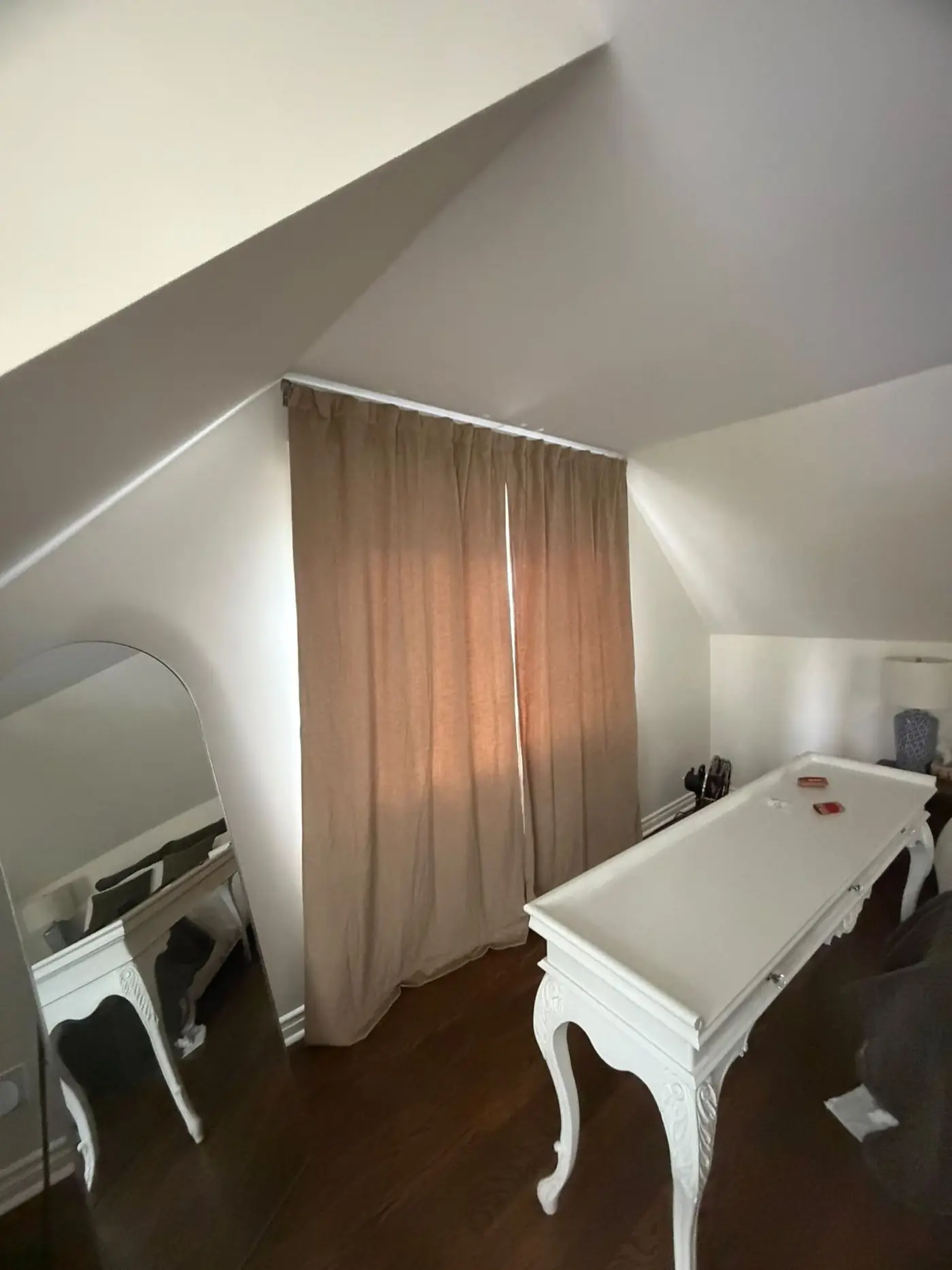
Painting after water damage or repairs
Stains from leaks bleed through ordinary paint, so they need a stain-blocking primer first, and the leak must be fixed and the material dry before painting. After water or smoke damage, painting is the last step of the repair, following drying, drywall replacement and cleaning. Our water damage restoration crews handle the whole sequence, so the finished room matches the rest of the house.
An example: a semi-detached house in Leslieville
The owners of a century semi want the main floor and the stairwell painted before they move in. The plaster walls have hairline cracks, an old patch above the stairs and several layers of paint on the trim. Testing finds lead in the oldest layer on the window trim, so that trim is prepared with dust-controlled methods. Cracks are opened and repaired, the ceilings and walls are primed where patched, and walls get two coats of a matte finish, with satin on the trim and doors. The work takes several days with the furniture moved and covered room by room.
Frequently asked questions
How long does interior painting take?
A typical room is often done in a day or two, including repairs and two coats. A whole house usually takes several days to a couple of weeks, depending on the size, the repairs and whether ceilings, trim and doors are included.
Which paint finish should I use?
Flat or matte for ceilings, matte or eggshell for most walls, satin or semi-gloss for trim, doors, kitchens and bathrooms where you need to wipe surfaces. Higher sheen is easier to clean but shows wall flaws more.
Is paint safe in an older Toronto house?
Houses built before 1960 may have lead paint under newer coats. Sanding or scraping it releases dust that must be controlled. We test suspect surfaces in older homes and use safe methods where lead is present.
Do you paint condos in Toronto?
Yes. We follow the building rules: booked elevators, working hours, protection of common areas and the insurance certificate many condo corporations ask for.
Can painting be combined with other work?
Yes, and it is a good idea: painting after drywall repairs, new trim, flooring or a renovation gives one clean finish. We often paint as part of kitchen, basement and whole-home projects.
Book interior painting in Toronto
We paint homes and condos across Toronto and the GTA, as a single job or as part of a renovation. The visit and written quote are free.
Phone (365) 363-6995, email estimating@tgvconstructiongroup.ca, or tell us about your painting project in Toronto on the Get a Quote page.