Emergencies like flooding, fires, and sudden structural damage can happen without warning, putting both property and health at risk. An effective response takes more than determination. It requires the right technology, technical skill, and strict safety practices. Across the Greater Toronto Area and Ontario, property restoration calls for coordinated equipment, professional assessment, and ongoing monitoring that only qualified experts can provide.
With more than 200 completed projects, TGV Construction Group Inc., led by Tamara Gavrilenko, brings advanced resources and a client-focused approach to every emergency, 24/7. Understanding which restoration equipment is used, and why, helps property owners and managers know what to expect after water, fire, smoke, mould, or storm damage. This article reviews the essential equipment types, how professionals use them, and why expert involvement is critical for safety, compliance, and the best results.
This article presents general information and industry best practices for educational purposes. For situations involving regulated materials or potential health risks, such as mould, asbestos, or structural instability, always consult a qualified restoration professional who follows Ontario safety standards.
Understanding Emergency Restoration Equipment
Choosing the right equipment is crucial to minimizing damage and protecting occupants. Restoration work, and the equipment it uses, generally falls into three phases:
- Mitigation: Immediate actions such as stopping leaks, shutting off power, setting up containment barriers, and extracting standing water, all aimed at limiting ongoing damage and making the site safer.
- Remediation: Targeted steps to remove or neutralize hazards like mould, asbestos, smoke residue, and hazardous chemicals so spaces can be safely used again.
- Restoration: Rebuilding, cleaning, drying, and finishing to return the property to full function and its original or better condition.
How equipment is selected:
- The type and scale of damage (water, fire, smoke, wind, mould, or a combination)
- The affected materials (drywall, subflooring, structural supports, fixtures)
- Environmental risks, such as exposed wiring, contaminated water, or structural weakness
- Regulatory requirements, including the Ontario Building Code and public health standards
A professional on-site assessment should always come before equipment is deployed. Experienced contractors evaluate not only visible damage but also what’s below the surface, potential environmental hazards, and the safety measures needed before choosing tools. Our full range of restoration and mitigation services shows how each response is tailored to the situation.
Professional insight: Equipment used correctly, under expert supervision, leads to a safer, faster, and more complete recovery, with work that meets local codes and workplace safety requirements.
Core Equipment Used in Most Emergencies
Certain categories of equipment show up in almost every emergency response, each playing a vital role in protecting people and property. Professional-grade tools are selected and operated by trained staff for effectiveness and safety.
Personal protective equipment (PPE)Respirators, gloves, goggles, disposable coveralls, and safety boots protect against contaminants, biohazards, physical hazards, and airborne particles. PPE is matched to the specific risks on site, whether chemical, biological, or physical.
Inspection tools
- Moisture meters measure moisture content in walls, floors, and ceilings. Both pin and pinless models are used for accuracy.
- Thermal imaging cameras reveal cooler areas that may indicate hidden moisture or leaks behind walls and under floors.
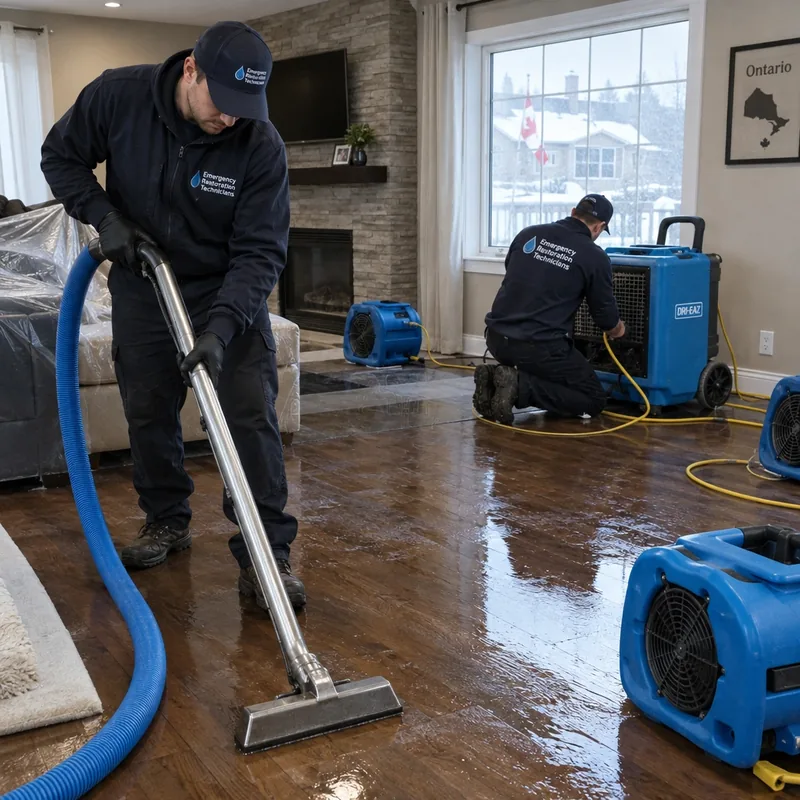
Water extraction equipmentSubmersible pumps and truck-mounted or portable extractors quickly remove large volumes of water, far beyond what household wet/dry vacuums can handle.
Drying equipment
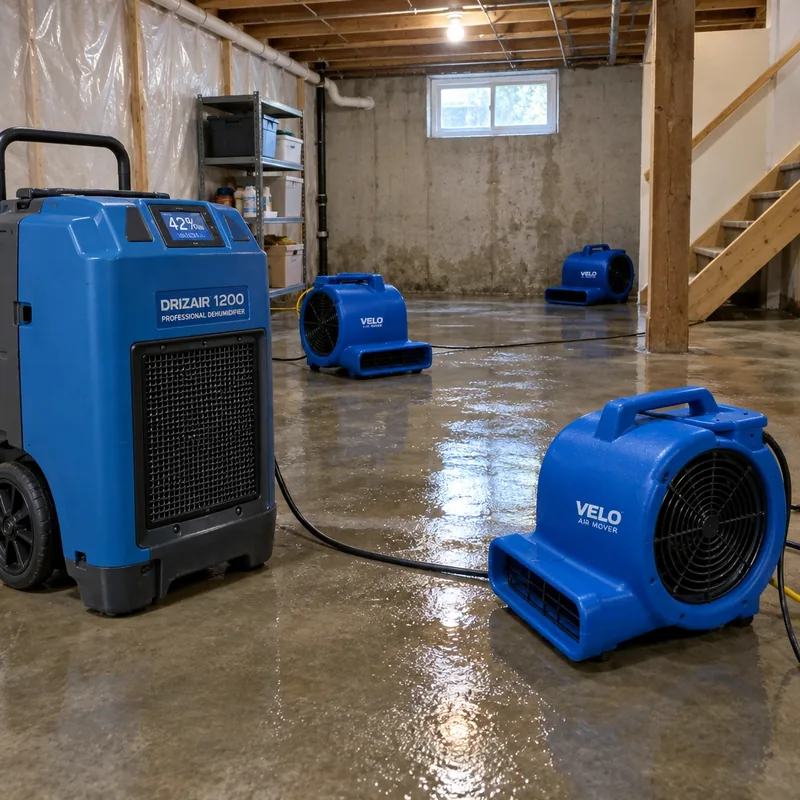
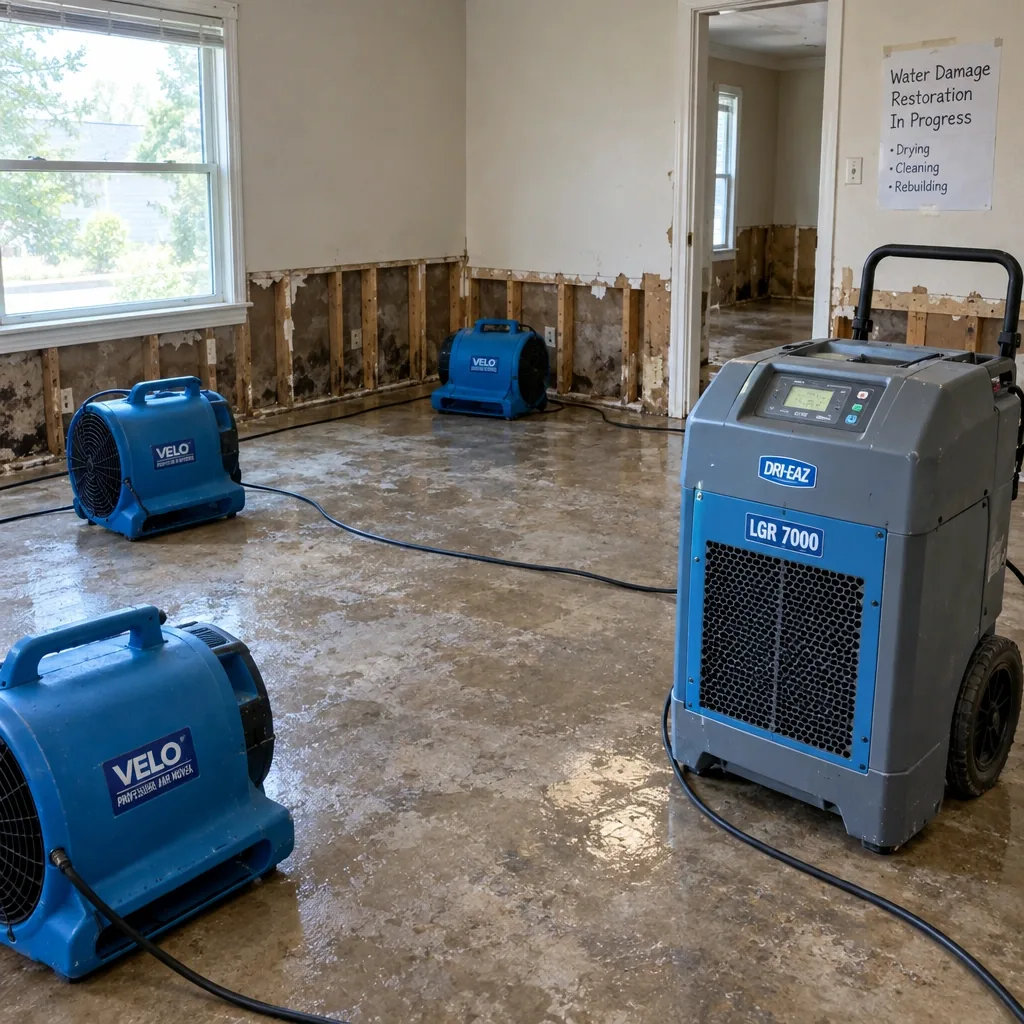
- Air movers are high-capacity fans that push air across wet materials to speed up evaporation from surfaces and underlying structures.
- Dehumidifiers are heavy-duty refrigerant or desiccant units that pull moisture out of the air, which is essential for fully drying building materials.
Air filtration equipment
- HEPA vacuums trap fine dust, soot, mould spores, and microscopic debris with high-efficiency particulate air filtration.
- Air scrubbers draw air through multi-stage HEPA filters to remove airborne contaminants in real time during cleanup and repairs.
Checklist for safe equipment deployment:
- Check the space for hidden dangers, such as live electrical, unstable ceilings or floors, and hazardous contaminants.
- Make sure all staff have and use the correct PPE.
- Inspect thoroughly, including hidden and hard-to-reach areas.
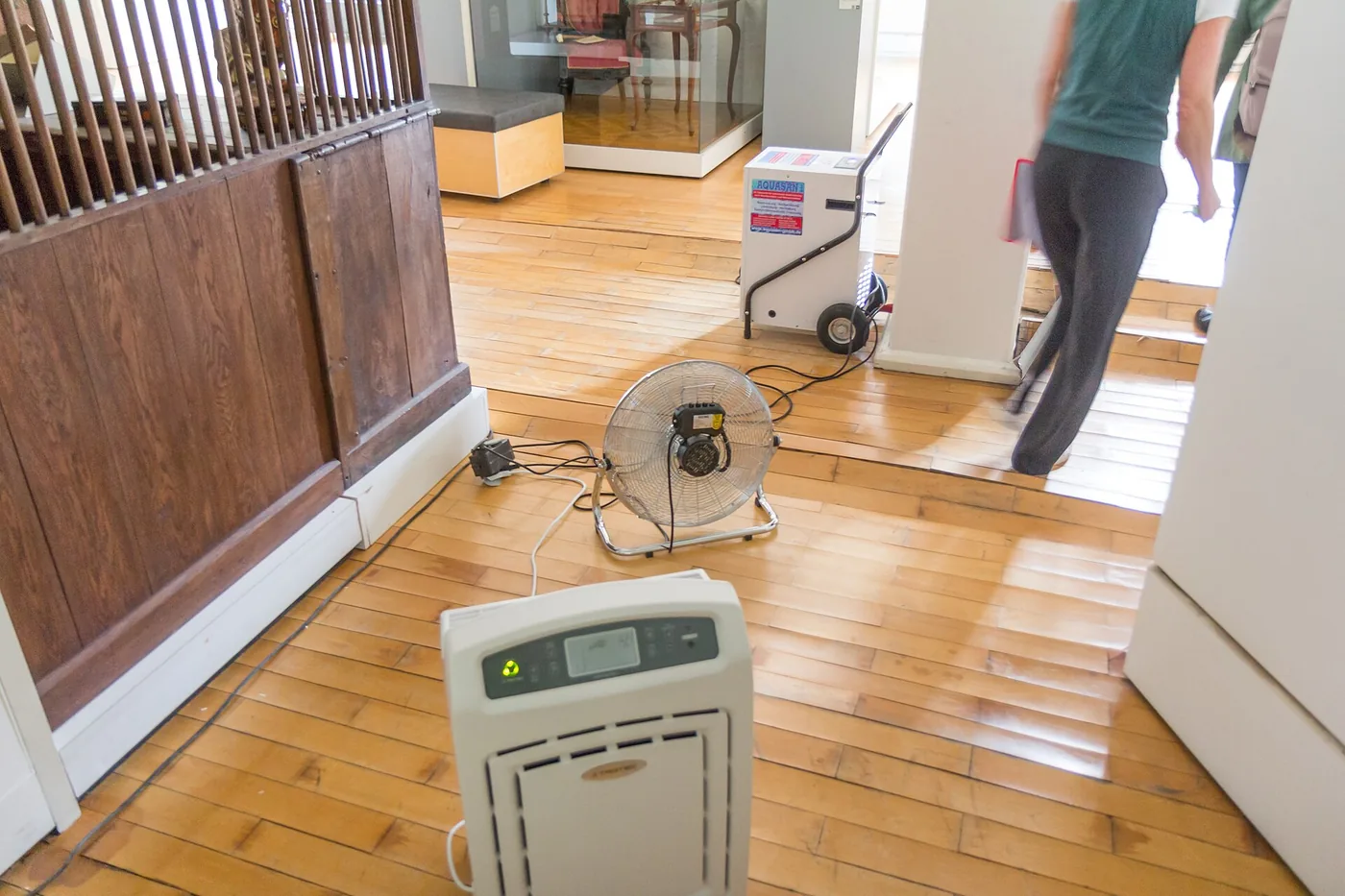
- Use only industrial, restoration-grade equipment for cleanup and drying, never household appliances or makeshift fans.
Safety note: Specialized equipment should only be operated by trained professionals. Improper use can create new hazards or make existing problems worse.
Core Restoration Equipment at a Glance
Equipment | Main Use | Typical Application | Key Limitation |
Pumps & extractors | Bulk water removal | Flooded spaces | Can’t confirm moisture behind walls |
Air movers | Speed up surface evaporation | Drying after extraction | Must be part of a controlled drying plan |
Dehumidifiers | Remove moisture from the air | Structural drying | Efficiency depends on temperature and humidity |
Moisture meters | Detect and track hidden dampness | Verifying drying | Accuracy varies by material |
Thermal cameras | Show temperature differences | Finding likely wet areas | Cool spots suggest, but don’t prove, moisture |
HEPA air scrubbers | Remove airborne particles | Dust, soot, and odour events | Supplement cleaning; never replace it |
HEPA vacuums | Capture dust and residue | Final cleanup after mould or fire | Require methodical, careful use |
Specialized Equipment for Water Damage Restoration
Ontario properties face frequent threats from plumbing leaks, severe weather, and accidental overflows. Responding quickly to water intrusion prevents further harm like mould, rot, and structural failure, and specialized equipment makes that possible.
1. Bulk Water Extraction
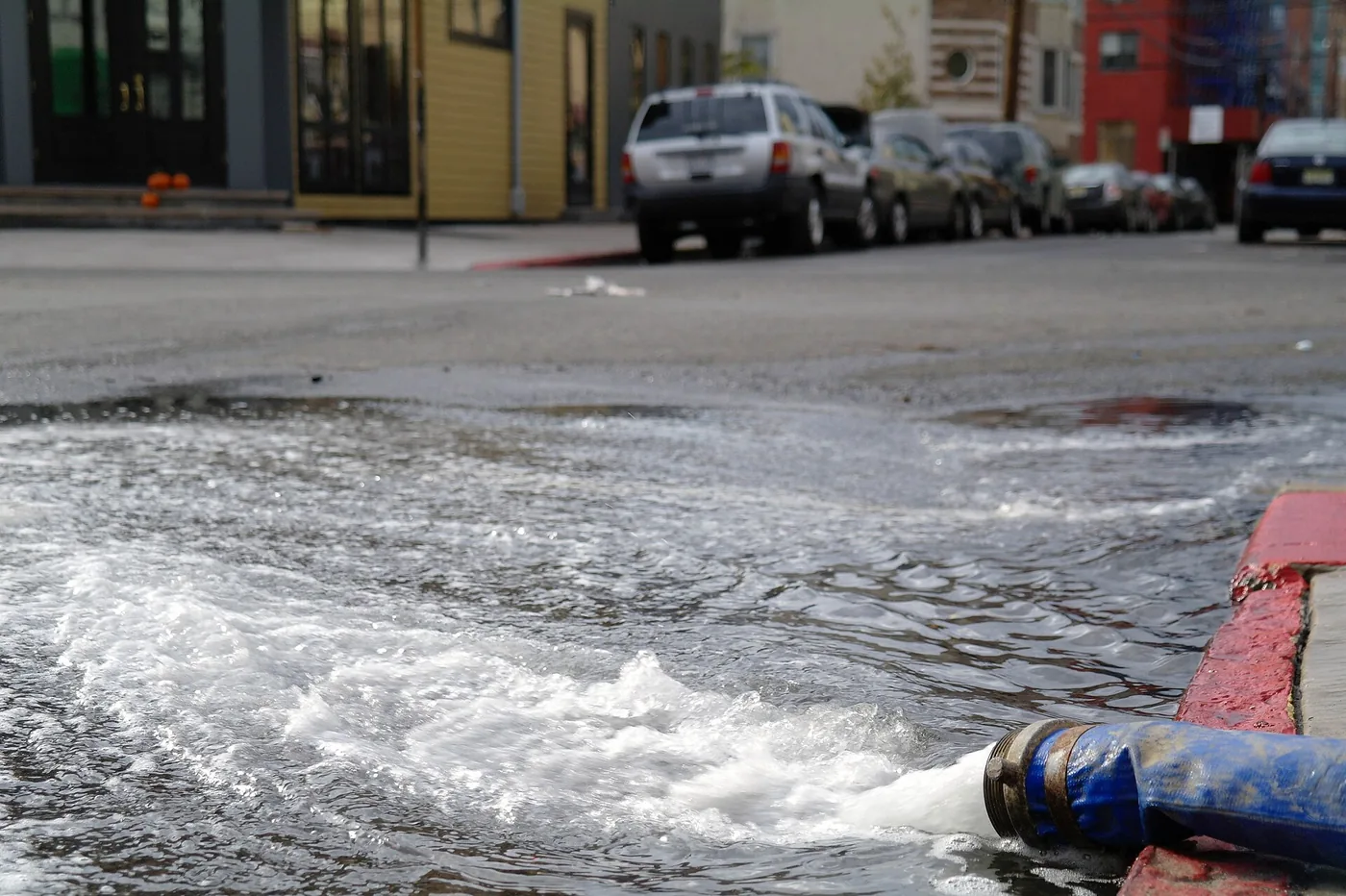
- Submersible pumps clear standing water from basements, mechanical rooms, and other flooded areas.
- Portable and truck-mounted extractors remove large amounts of water from carpet, hard flooring, and building cavities without unnecessary disruption to materials.
2. Controlled Drying
- Air movers are positioned strategically to move air across wet walls, subfloors, and crawlspaces.
Industrial dehumidifiers come in two main types:
- LGR (low grain refrigerant) units work efficiently in heated spaces and are common on residential jobs.
- Desiccant units are used in colder sites or where refrigerant models are less effective.
3. Drying Hidden Spaces
- Cavity drying systems direct air into wall assemblies, spaces behind cabinets, and voids under flooring.
- Hardwood floor drying mats pull moisture out of wood flooring to help prevent cupping and buckling.
4. Data-Driven Monitoring
- Moisture meters provide daily readings at marked locations to track drying progress.
- Thermal cameras and hygrometers monitor surface and air moisture to confirm drying goals are actually met.
Water Mitigation Equipment by Stage
Restoration Stage | Equipment | Main Function | Monitoring Required |
Water removal | Pumps, truck-mounted and portable extractors | Remove standing water | Yes |
Surface and material drying | Air movers | Speed up evaporation | Yes |
Humidity control | LGR or desiccant dehumidifiers | Lower humidity and continue drying | Yes |
Hidden space drying | Cavity drying systems, floor mats | Remove deep or trapped moisture | Yes |
Progress verification | Moisture meters, hygrometers | Confirm drying is progressing | Yes |
How much equipment is needed, and for how long, depends on the property’s size, insulation, finishes, temperature, and humidity. Professionals rely on measured conditions, not fixed timeframes.
Equipment for Fire and Smoke Damage Restoration
Restoring a property after a fire, electrical failure, or heavy smoke exposure requires specialized equipment to deal with soot, odours, air quality, and water damage from firefighting.
- HEPA air scrubbers capture visible and microscopic particles from fire residue, ash, and lingering airborne pollutants.
- Negative air machines create controlled pressure zones that draw contaminated air through HEPA filters and exhaust it outdoors, preventing smoke from spreading.
- Soot cleaning tools and supplies:
- Dry cleaning sponges, specialized cleaning agents, and misting tools clean surfaces without spreading residue.
- Commercial HEPA vacuums remove fine particles with minimal disturbance.
Odour treatment:
- Thermal foggers release a deodorizing vapour that follows the same paths as smoke, reaching deep into materials.
- Ozone generators break down lingering odour molecules, but are used only in unoccupied spaces under strict supervision for safety.
Water restoration equipment: When firefighting water has soaked the building, the full range of water removal and drying equipment is also used, adapted to post-fire conditions.
Safety reminders:
- Air filtration must accompany cleaning and residue removal, never replace it.
- Ozone and thermal fogging treatments are only safe under professional control. People and pets must stay out until treatment is complete and the area is cleared.
- Fine soot is harmful to the lungs. Proper equipment and professional cleaning methods reduce risk and leave the property safe to occupy.
Mould Remediation Equipment and Best Practices
Mould can begin growing within 24–48 hours of water damage. Ontario’s climate and older building stock make professional-grade remediation essential for safe removal and prevention.
Essential remediation equipment:
- Containment barriers: Heavy plastic sheeting, airlocks, and zipper doors keep spores and hazardous dust from spreading into clean areas, while ducted filtration units maintain negative air pressure.
- Negative air machines and HEPA filters: These continuously capture and remove airborne spores and contaminants inside the sealed work zone.
- HEPA vacuums: Used for initial cleaning, for safely collecting spores disturbed during demolition, and for final cleanup of exposed and adjacent areas.
- Moisture detection devices: Moisture meters, hygrometers, and thermal cameras show where water remains, so drying and removal can be targeted to prevent future growth.
- Removal tools: Hand and power tools for carefully controlled demolition of affected materials, always used together with air filtration and full PPE.
Safety and compliance:
- Asbestos removal is regulated in Ontario and must be done by trained workers following provincial requirements. Mould remediation should follow recognized industry standards and be done by qualified professionals.
- PPE (respirators, gloves, coveralls) is required throughout remediation.
- Final clearance inspections, which may include air testing, confirm the results before a space is reoccupied.
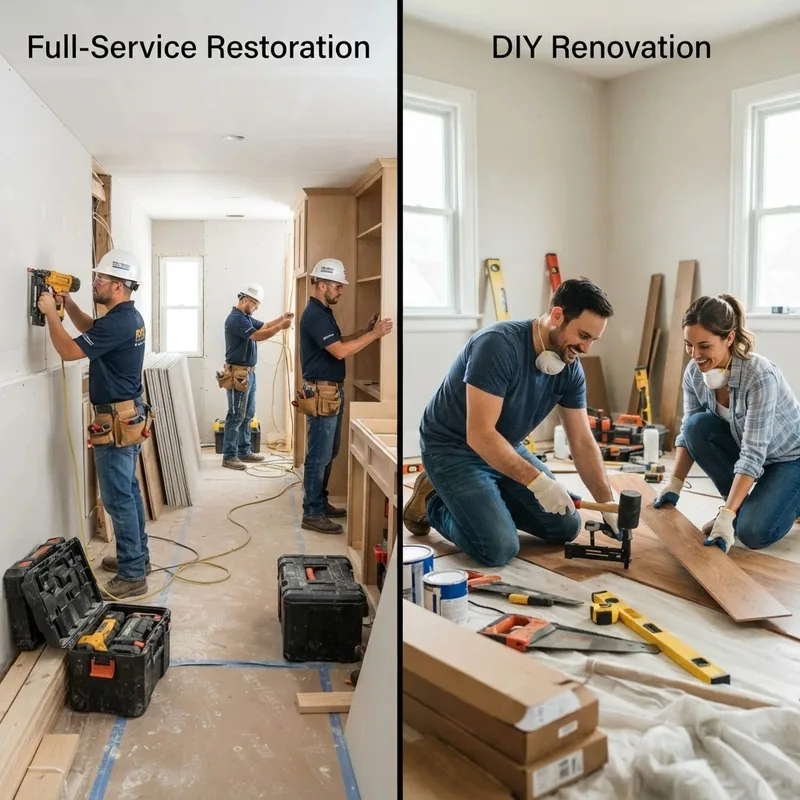
DIY attempts can spread contamination or create long-term health hazards. Trust experienced professionals for anything larger than a minor spot.
How Professionals Plan, Deploy, and Monitor Equipment
Effective recovery depends as much on planning and monitoring as on the equipment itself. TGV Construction Group Inc. follows a measurement-driven approach guided by safety, compliance, and client priorities.
- Comprehensive assessment: Site inspections identify all affected areas, structural and electrical hazards, and possible hidden damage. Baseline readings are taken before work begins.
- Custom equipment plan: Every plan is based on the actual materials, dimensions, and type of loss, whether that means designing airflow paths, setting up containment for mould or fire, or bringing in extra-high-capacity pumps for commercial spaces.
- Ongoing monitoring: Moisture, temperature, and humidity readings are logged throughout the job. Equipment is adjusted or repositioned as drying progresses to target remaining problem areas and avoid unnecessary run time.
- Documentation and transparency: Before-and-after readings, photos, equipment lists, and daily progress notes are shared with clients and insurers. This documentation is essential for compliance and claims.
- Final reassessment: No equipment is removed until drying, cleaning, and remediation goals are confirmed by both readings and professional judgment.
By working with TGV Construction Group, under the leadership of Tamara Gavrilenko, clients get a safety-first, customer-focused approach backed by years of successful emergency response and a commitment to diversity and community.
When to Call Emergency Restoration Experts
Some situations are best left to qualified professionals to keep everyone safe, prevent the damage from growing, and make sure the work meets provincial and insurance requirements.
Signs it’s time to call a professional:
- Widespread damage: Floods, fires, or storms affecting more than one room, several floors, or complex building systems
- Contaminants or hazardous materials: Suspected sewage, mould, asbestos, or persistent smoke odour
- Safety hazards: Sagging structures, exposed wiring, risk of ceiling collapse, or ongoing water intrusion
- Regulatory needs: Work that requires permits, safety inspections, or insurance documentation
The dangers of DIY restoration:
- Accidentally spreading hazardous spores or chemicals
- Incomplete drying that leads to long-term mould or hidden rot
- Structural or fire risks from working around wet electrical systems
- Delayed recovery or claim problems due to incomplete records
TGV Construction Group’s 24/7 emergency restoration and mitigation services mobilize trained teams with specialized equipment quickly throughout the GTA and Ontario, providing peace of mind when you need it most.
Frequently Asked Questions About Emergency Restoration Equipment
What equipment is essential for water damage restoration?
The core tools are high-capacity submersible pumps, portable or truck-mounted extractors, strategically placed industrial air movers, and large dehumidifiers. Technicians use moisture meters, and often thermal imaging, to confirm the extent of the damage and track drying. Reliable, documented readings ensure safety and quality.
How are air movers different from dehumidifiers, and why use both?
Air movers push air rapidly across damp surfaces to speed up evaporation. Dehumidifiers then remove that moisture from the air, controlling humidity so both visible and hidden materials dry thoroughly. Structural drying only works when both are used together.
Can thermal imaging reliably confirm moisture?
No. Thermal cameras detect surface temperature differences that suggest moisture, but don’t confirm it. Professionals always verify with moisture meters or other tests before taking action.
How do professionals know drying is complete?
Technicians take and record moisture readings at the same locations throughout the job, compare affected materials with unaffected ones, and track humidity levels. Equipment is only removed, and repairs only begin, once all materials meet their target values.
What equipment is specific to fire and smoke cleanup?
HEPA air scrubbers, negative air systems, soot removal tools, and specially formulated cleaning agents are standard. Odour control may involve thermal foggers or ozone equipment, always used in controlled, unoccupied conditions.
What is negative air pressure, and when is it used?
Negative air pressure means air is constantly drawn into the work area and filtered before it’s released. This keeps particles and spores from escaping into clean areas, which is crucial for mould remediation and severe smoke damage, and protects both occupants and workers.
For more homeowner and property manager resources, visit our restoration blog.
Take the Next Step
Whether you’re facing a household flood or a fire at a commercial property, a successful recovery depends on professional assessment, advanced equipment, and ongoing safety monitoring. TGV Construction Group Inc. offers 24/7 emergency services and proven general contracting and restoration expertise across the GTA and Ontario, earning trust through completed projects and attentive, transparent service.
Protect your property and regain peace of mind.Get a free quote from TGV Construction Group for your restoration needs, or call us 24/7 at (905) 669-2727.