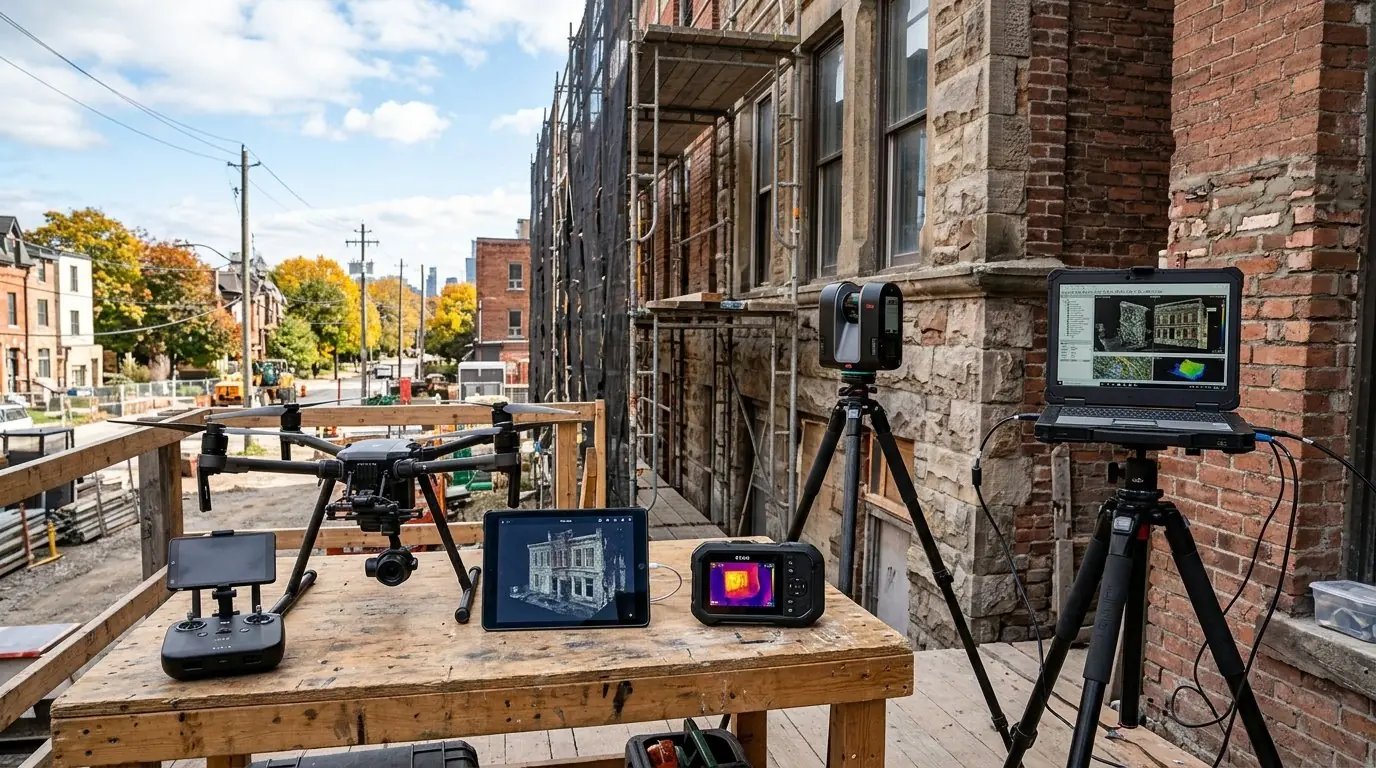
Restoration work in the Greater Toronto Area (GTA) and Ontario often presents a range of challenges, from sudden emergencies like water and fire damage to the gradual effects of time and weather. Hidden issues behind walls, complex site conditions, and the need for swift, informed decisions make restoration a demanding field. Reliable data, expert judgment, and strong project management are all required - particularly when safety and property value are on the line.
TGV Construction Group Inc. combines advanced inspection and documentation technology with professional expertise, a safe and hygienic approach, and dedication to quality assurance at every project stage. As a leader in general contracting and restoration services, TGV Construction leverages industry experience, licensed trades, and customer-focused processes to bring clarity and confidence to owners. By integrating technology as a supporting tool - not a substitute for human skill - TGV Construction provides transparent assessments, precise repairs, and lasting peace of mind throughout the GTA and Ontario.
Better Information for Informed Restoration Decisions
Restoration projects rarely present simple problems or one-size-fits-all solutions. Homes and commercial buildings often exhibit damages that are not always visible, such as moisture inside walls, smoke contamination, or structural weakening after storms. In emergencies, decisions must be both rapid and accurate to prevent further damage and control costs.
Obtaining true condition information is critical for:
- Creating informed repair plans and accurate budgets
- Coordinating the work of various licensed trades and specialists
- Documenting compliance for insurance, building permit, or safety requirements
- Providing property owners with clear updates and accountability
TGV Construction Group Inc. applies technology to strengthen every phase of the restoration process. Yet, technology is always integrated with a hands-on, skilled approach and supported by a commitment to customer satisfaction, community leadership, and safety standards. For more on these integrated services and the company’s range, see TGV Construction's comprehensive restoration and mitigation services.
Why Technology Matters in Restoration
The restoration process has evolved as property risks, customer expectations, and regulatory demands have increased. Technology is now an essential part of achieving precise results and avoiding costly oversights. TGV Construction applies advanced tools and systems for several direct benefits:
- Discovery of hidden or inaccessible conditions
- Moisture behind drywall, trapped smoke residues, roof leaks, or wind storm aftermath can now be detected sooner and with less guesswork.
- Worker and occupant safety
- Drones and remote sensors reduce or eliminate risky site access, especially on damaged or high sites. This minimizes exposure to hazards like unstable roofs or contaminated zones.
- Enhanced team coordination
- High-resolution imagery, digital floorplans, and secure project records bring everyone onto the same page. Owners, project managers, insurance partners, and skilled trades have a shared, up-to-date view.
- Lasting project records
- Digital documentation - organized by time and area - provides a clear audit trail. This protects against future disputes and simplifies maintenance, insurance claims, or compliance verifications.
Without reliable, specific data, restoration becomes slower, less predictable, and potentially more invasive. TGV Construction’s approach combines technology with time-tested craftsmanship and knowledge of GTA and Ontario regulatory requirements, ensuring quality outcomes even in urgent situations.
Key Technologies Used by TGV Construction in Restoration
Advanced technology is selected to suit site realities, project scope, and regulatory requirements. Each of these tools serves a specific purpose and is used with professional expertise to guide effective restoration:
- Drones (Unmanned Aerial Vehicles) & High-Resolution Photography
- Licensed drone pilots collect safe, detailed imagery of roofs, building envelopes, and otherwise inaccessible exterior or interior areas. Drones obtain comprehensive views rapidly, making it easier to assess storm or fire damage, plan safe repairs, and reduce disruption.
- Infrared Thermography
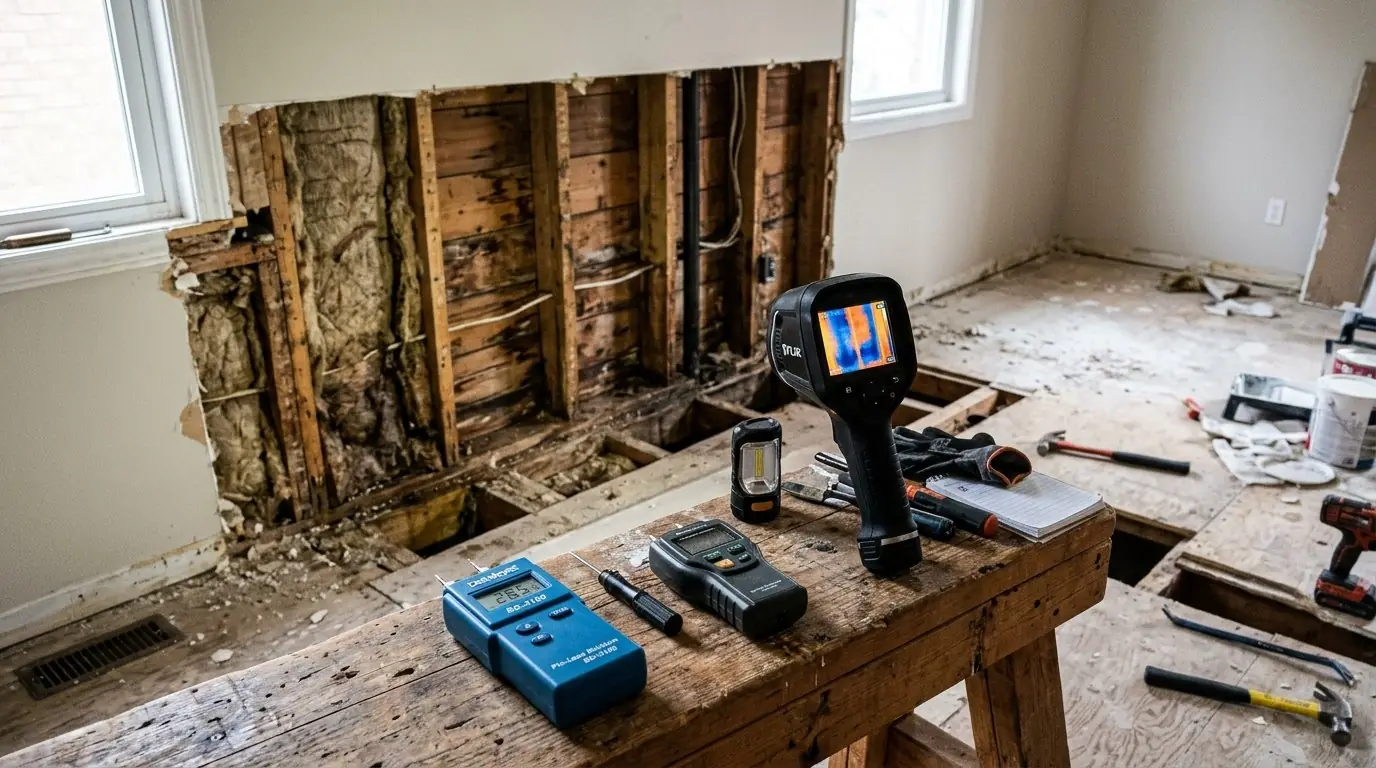
- Thermal cameras highlight temperature differences in building materials. These readings can signal moisture behind surfaces, insulation failures, or HVAC issues. Early detection enables targeted intervention and reduces unnecessary demolition.
- 3D Scanning, LiDAR, Photogrammetry
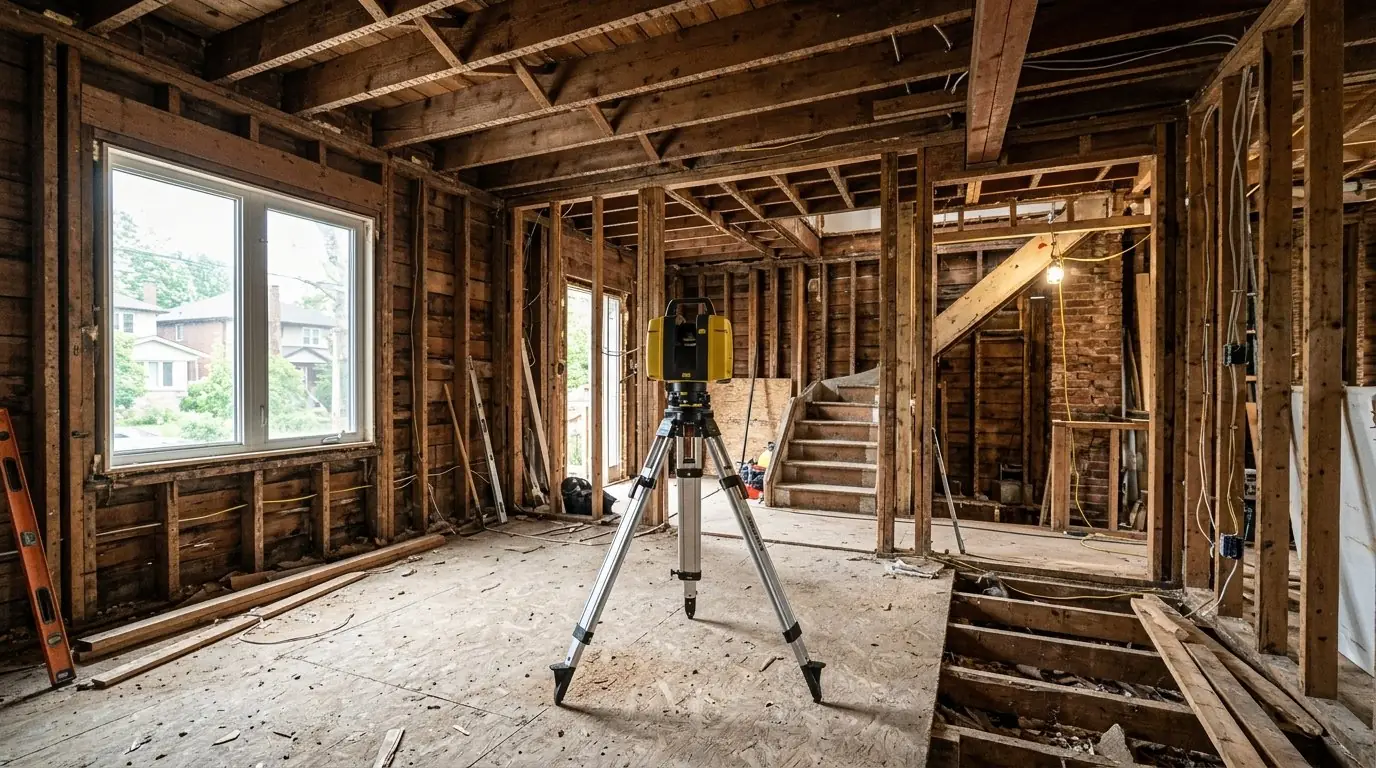
- These methods capture property dimensions and surface conditions with precision. Photogrammetry turns a series of photographs into a 3D model, while LiDAR uses laser measurement for high accuracy - especially for complex or large spaces. Results inform repair planning, renovations, and code compliance.
- Digital Models & Project Documentation
- Data from scans, photographs, and inspections are incorporated into secure digital models. These models serve as a single point of truth for all stakeholders, improving repair tracking, documentation, and communication.
- Sensors for Ongoing Monitoring
- Moisture, temperature, air quality, and structural movement sensors can be placed before, during, or after restoration. Their readings provide continuous feedback, helping to identify ongoing risks or confirm that repairs are holding up over time.
The table below summarizes the main technologies, typical uses, and important limitations:
| Technology | Common Restoration Use | Limitation |
|---|---|---|
| Drone photography | Access and document roofs/facades, assess site conditions | Weather and airspace limits; no tactile diagnosis |
| Infrared thermography | Locate hidden moisture, HVAC problems, insulation issues | Requires expert interpretation; anomalies ≠ proof |
| 3D scanning & photogrammetry | Model dimensions, track project progress | Depends on capture quality and site access |
| LiDAR | Map complex spaces and capture damage with high accuracy | More costly; specialized equipment and expertise |
| Digital project models | Organize all records, images, and test results | Must match project scope - excess data can overwhelm |
| Sensors (moisture, etc.) | Track trends post-restoration or in evolving situations | Needs ongoing analysis; false positives are possible |
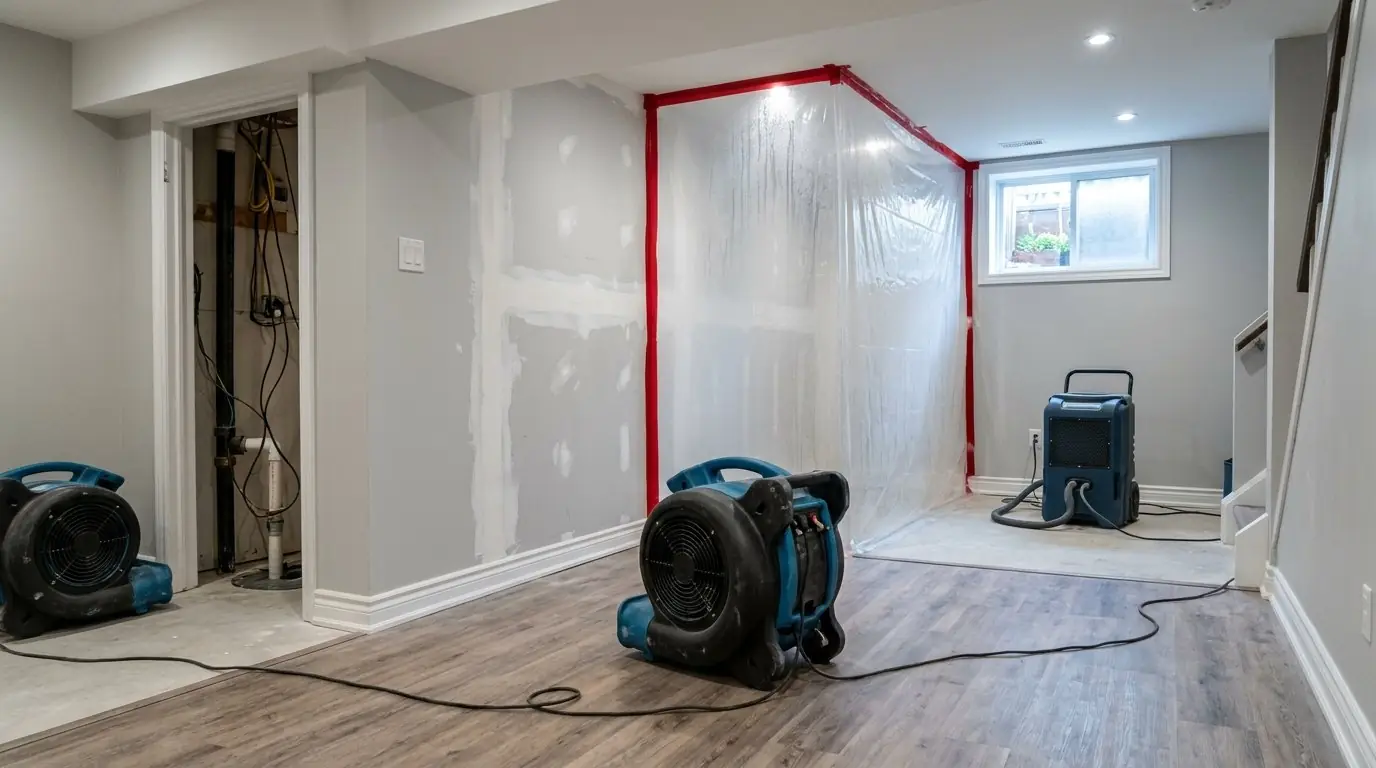
These technologies give TGV Construction a data-rich foundation to guide each restoration or renovation, balancing efficiency, safety, and lasting value. For sensitive projects, such as Mold & Asbestos remediation, technology supports both compliance and protection of occupants.
Incorporating Technology Into the Restoration Workflow
To maximize technology’s advantages while controlling project costs and disruption, TGV Construction integrates these tools throughout its restoration process:
1. Initial Assessment & Baseline Documentation
- Drone surveys and 3D scans are performed immediately after a loss event or at the start of a renovation.
- All images, models, and findings are time- and location-stamped for future comparison.
- The archival record enables an accurate starting point - critical for insurance, compliance, and warranty documentation.
2. Targeted Investigation
- Remote or surface thermal imaging identifies specific problem zones: wet insulation, leaking pipes, concealed fire or smoke residue.
- Targeted sampling, further opening, or trades intervention is planned only where indicated, controlling costs, time, and disturbance.
3. Repair Coordination and Progress Monitoring
- All project partners consult a shared digital model. This keeps work in sync and highlights issues promptly.
- Ongoing drone or camera documentation supports clear communication and validates quality assurance checks.
- Licensed trades - including plumbers, electricians, and specialty restoration teams - act on validated findings.
4. Final Verification & Handover
- Post-repair scans, photographs, and sensor data confirm that the work matches restoration goals and safety standards.
- Data-driven completion reports are compiled for property owners. These assist in maintenance, future upgrades, or compliance verification.
Real-life evidence of this approach can be found in many property types, including commercial spaces and homes across the GTA and Ontario. Explore TGV Construction's successful restoration projects for detailed examples.
Technology Supports, But Does Not Replace, Professional Inspection
While technology is powerful, expert assessment and human judgment remain at the core of reliable restoration.
- Technology guides, but does not dictate, conclusions
- A drone captures a roof’s condition, but cannot feel for soft patches. A thermal camera reveals cool spots - potential water, but also possible shade or ventilation issues.
- Professional inspection is essential
- Hands-on checks determine actual material status, the presence of odours, or the texture that reveals fire or water impacts. Testing for hazardous materials (like asbestos) involves controlled procedures and lab analysis.
- Accurate interpretation is key
- Site context, building history, and local code knowledge turn technological findings into effective repairs. Tools never replace the knowledge of trained professionals.
- Safety and regulatory compliance remain non-negotiable
- All TGV Construction technology use complies with Canadian regulations. Drone pilots are licensed and flights adhere to Transport Canada rules - covering site safety, privacy, and operational limits. The privacy of occupants and neighbouring properties is always respected.
More on the company’s principles and hands-on capabilities is available at about the leadership and expertise at TGV Construction.
What Property Owners Can Expect Working With TGV Construction’s Technology-Enhanced Restoration
Partnering with TGV Construction for restoration or mitigation projects means transparency, safety, and professional results at every step:
- Comprehensive, clear reports Owners receive annotated photos, floorplans, as-built diagrams, and written assessments - explanations are provided in plain language.
- Rigorous safety protocols
- All drone and sensor use complies with Transport Canada and Ontario codes. Workers check for hazardous materials before sampling or demolition begins, ensuring occupant safety.
- Repair plans based on real data
- Qualified estimators and project managers translate images and sensor readings into repair specifications, budgets, and contingency plans.
- Accountability and compliance
- Progress payments reflect actual completed milestones. Work proceeds with building permit compliance where needed, and all electrical/plumbing is performed by licensed trades.
- Ongoing communication
- Owners receive updates and answers at every stage - from initial site visit to final project signoff.
- Rapid response for emergencies
- TGV Construction provides 24/7 Emergency Services. Trained teams secure the site, prevent further damage, and launch immediate assessment and planning. Learn more at TGV Construction's comprehensive restoration and mitigation services and 24/7 emergency restoration and mitigation.
- Access to proven expertise
- TGV Construction manages the coordination of all skilled trades, ensures adherence to building codes, and implements safe work practices throughout every phase of the project.
For inspiration and confidence in your restoration journey, Explore TGV Construction's successful restoration projects.
Ready to safeguard your home or facility? You can request a free quote for your restoration project for a prompt, professional response.
Frequently Asked Questions About Technology in Restoration
What does advanced technology add to a restoration inspection? It sharpens inspection accuracy - identifying conditions rapidly, offering objective records, and highlighting issues that might otherwise be invisible or missed. It helps ensure nothing critical is overlooked and assists with timely decisions.
Can drones replace onsite inspections of roofs or façades? Drones provide invaluable imaging and safe access to challenging areas. However, they do not eliminate the need for physical assessment in cases where tactile inspection, material testing, or sampling is necessary.
Does thermal imaging confirm leaks or moisture? No. Thermal imaging offers clues via temperature differences, suggesting where moisture or air leaks might exist. Proper follow-up (using moisture meters, sampling, or opening walls/floors) validates those findings.
What is the difference between photogrammetry and LiDAR in restoration? Photogrammetry produces 3D models from a set of digital photographs - a flexible tool for many properties. LiDAR offers high precision using laser scanning, ideal for large or geometric spaces and tight regulatory requirements.
How are 3D scans and digital models used practically? These tools inform repair planning, monitor repair progress, support permit or code compliance, and preserve documentation for insurance purposes.
Can technology monitor a building after repairs? Yes. Sensors and monitoring systems can be left in place to track conditions like moisture or movement, providing alerts if issues recur.
Does every restoration project require drones or advanced sensors? No. TGV Construction selects appropriate technology for each situation - many smaller repairs still benefit most from skilled on-site inspection. Technology is deployed only where it adds value.
How does TGV Construction ensure safety during technology use? The company follows all Canadian and local regulations. Drone pilots are certified, operations registered, and bystander safety is maintained at every site. Hazardous materials (such as asbestos) are reviewed and managed before intrusive work begins. All trades (e.g., electrical, plumbing) are licensed and projects are inspected as the building code requires.
The TGV Construction Commitment: Technology, Craftsmanship, and Community
TGV Construction Group Inc., under the leadership of Tamara Gavrilenko, blends cutting-edge methods with a strong foundation in craftsmanship, project management, and advocacy for underrepresented groups in construction. Each restoration project draws on experience with over 200 completed assignments across residential, commercial, and large-loss properties, always supported by 24/7 Emergency Services, quality assurance, and robust documentation.
The team’s dedication extends beyond technical skill. Committed to community leadership, regulatory compliance, and inclusive opportunity in the building trades, TGV Construction is a trusted partner for property owners, facility managers, and local organizations alike.
Restoration is not just about repairs - it is about protecting investments, ensuring safety, and restoring confidence. Technology is just one of the many tools that TGV Construction uses to deliver lasting results, backed by integrity and responsive customer service. If you are considering restoring or upgrading a property in the GTA or Ontario, contact TGV Construction for evidence-based excellence supported by professional insight.
This article is for informational purposes only and does not constitute engineering, legal, or regulatory advice. Each project requires professional assessment by qualified personnel. For help with your specific restoration needs, please request a free quote for your restoration project.